Notice: unserialize(): Error at offset 3643 of 11438 bytes in /home/u180473161/domains/jesus.tf/public_html/wp-content/plugins/ad-inserter/ad-inserter.php on line 5551
Homepage – Town Talk - Magfeeds.net - Page 11
Home Blog Page 11

Opinion: Trump’s treatment of Zelensky shows an ugly truth at the White House

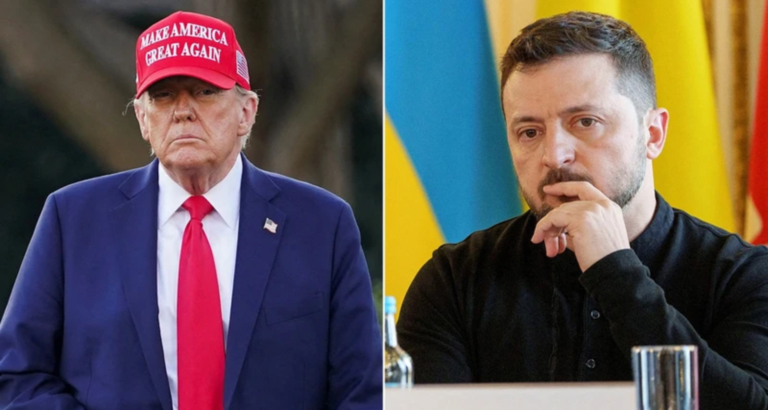
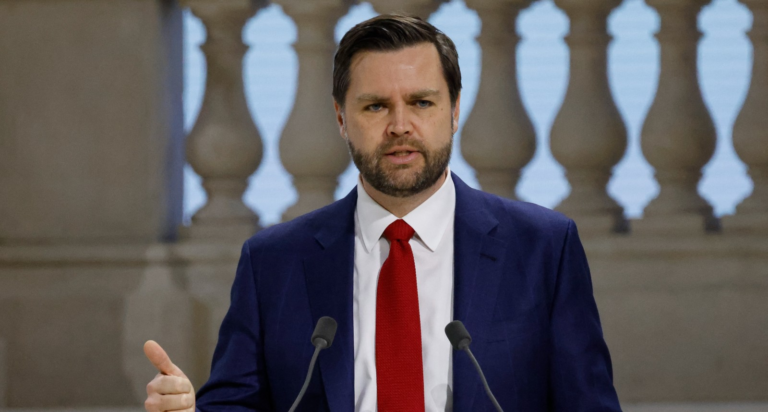
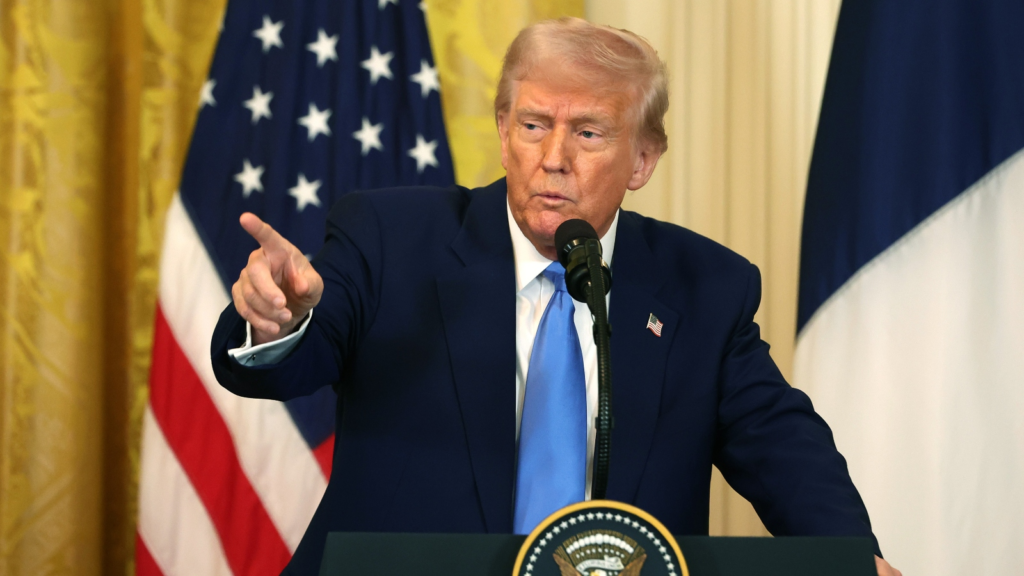
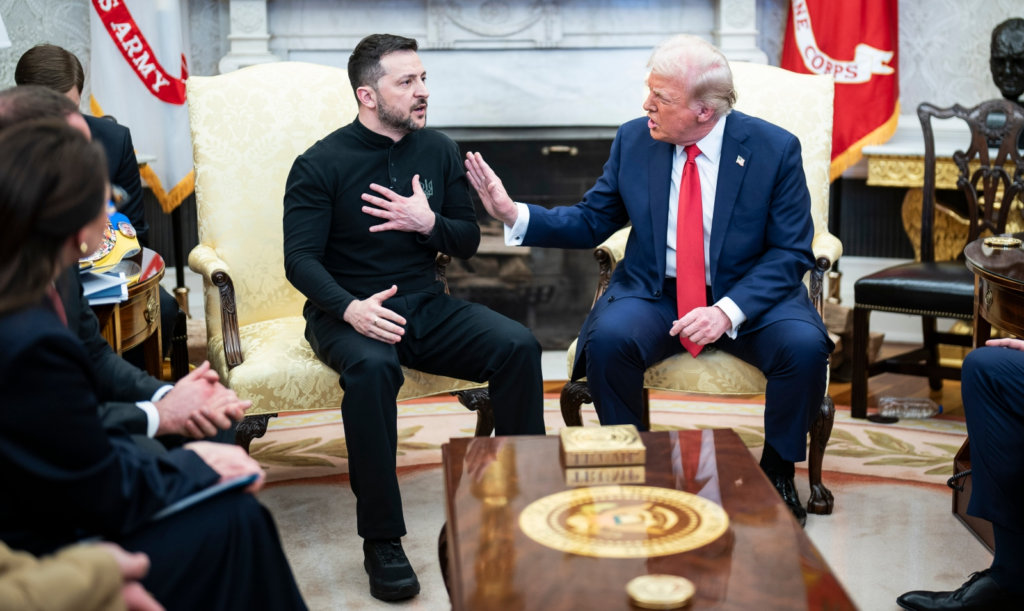
The headlines from the past few days have been dominated by President Donald Trump and Vice President J.D. Vance’s fateful meeting with Ukraine’s president Volodymyr Zelensky.

The meeting that started off civilly enough soon descended into an incredibly uncomfortable situation. Personally, watching it was almost too painful because of the uncomfortable truth it revealed.

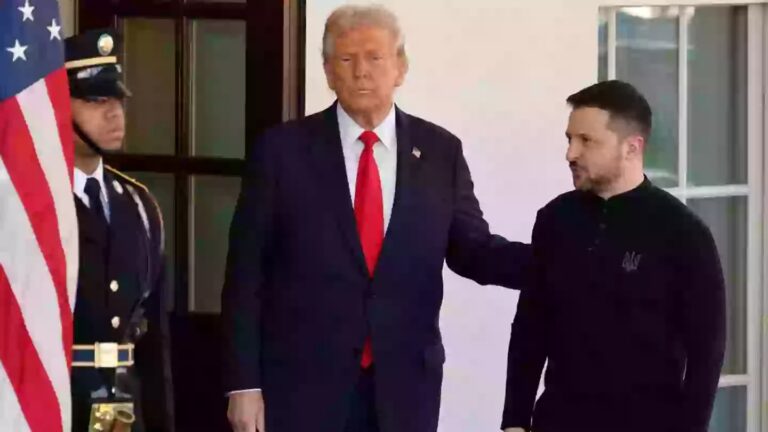
When Ukraine’s president Volodymyr Zelensky arrived at the White House on Friday last week, he was hoping to sign a minerals deal giving the US a real stake in his country’s future.

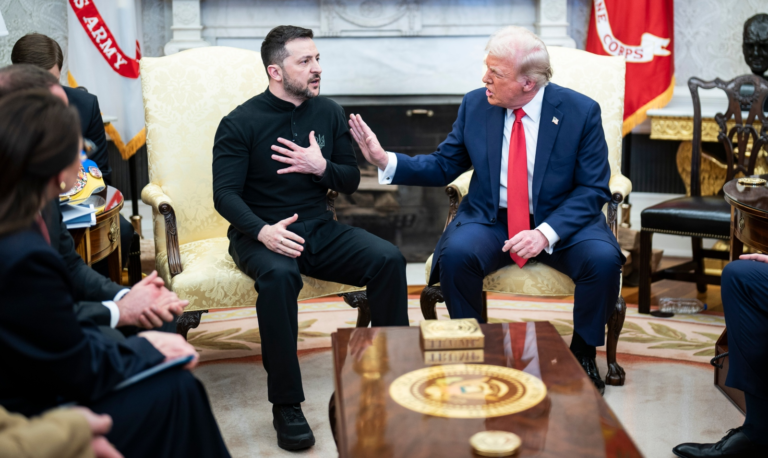
However, the meeting, which was set with the best of intentions, soon descended into a tense spat between the premiers of both countries. Zelensky was verbally strongarmed by both Trump and Vance in front of the entire world’s media as they asked him to be more appreciative of the US support he had been receiving ever since the war broke out between Ukraine and Russia.

As I saw the scene unfold, I had a lot of respect for Zelensky, who despite the raised voices and verbal onslaught from two of the world’s most powerful men held his calm and did not back down. He did not immediately fold and agree with President Trump and Vance, instead he held his own.

As I watched the Ukrainian president sitting there and trying to respectfully disagree with what was being said to him, I felt not only respect for him but also sympathy. There sat a man whose country has been ravaged by war since 2022, looking for help to fend off a much bigger power on the other side. Instead of the compassion and help he thought he might get, he was publicly humiliated for all of the world to see.

President Donald Trump and Vice President J.D. Vance both insisted that Zelensky needs to work harder towards a ceasefire deal with Vladimir Putin. When he disagreed with them, he was labelled as disrespectful. The message I got from this is that either you agree with the American premier or suffer the consequences of getting a verbal lashing.

I understand the United States has reservations about the mammoth amount of funding they have been giving Ukraine since the war began, but the idea of Putin watching as his adversary was given a verbal lashing in the Oval Office and finding a psychological edge in that has been horrifying to imagine.

A war is not just a physical fight, but there are a lot of psychological aspects of it. Russia already knows they are powerful both in manpower, resources, and size. Ukraine had US support on her side, but now when the world has seen the US humiliate their premier, that edge has in a way been tainted. For Russia this is a big win because they have discovered another weakness in Ukraine’s armor. One that they will undoubtedly use against them in the war.

Following all of this, Zelensky was then asked to leave the White House early, before the scheduled news conference. The minerals deal both sides were looking forward to signing lay forgotten. This was another sign to the Russian opposition of Ukraine’s deteriorating relationship with her biggest ally.

When during the meeting, Vance pointed out the troubles Ukraine has had with manpower during the war, Zelensky said something which ended up upsetting Trump quite a bit, “During the war, everybody has problems, even you. But you have a nice ocean and don’t feel [it] now, but you will feel it in the future.”

What was Zelensky warning Trump about how appeasing Russia might end badly for the US, as the country will not just stop with their attack on Ukraine.

Trump was angered and responded, “Don’t tell us what we’re going to feel. You’re in no position to dictate that,” his voice audibly louder.

When Zelensky alluded to how Ukraine had been alone, that further infuriated Trump who said, “You haven’t been alone. We gave you – through this stupid president – $350bn,” referring to Biden. This was another disappointing comment made by Trump during the meeting. Badmouthing a former President and calling him ‘stupid’ in front of the entire world’s media is never a good thing. Trump might have immensely disagreed with Biden’s decisions, but to sit with another world leader in the Oval Office as the media surrounded them, and call the former President stupid, that just does not sit right with me. They might be on different ends of the political spectrum, but they are still united in their respect for America.

“You’re not winning, you’re not winning this,” Trump said to Zelensky at one point. “You have a damn good chance of coming out OK because of us,” he added. The entire exchange was heated and uncomfortable for everyone to watch.

“Just say thank you,” Vance had said during the meeting, a sentiment he echoed a few times. The entire thing did not need to play out in front of the media. As world leaders, these men have a bigger responsibility to act civilly. No matter what their personal opinions might be or how angry they might get, it is important that they save face in front of the world so that morale for any person or country is not weakened.

Hopefully in the future, tempers will not run this high, at the very least, not on camera.

Do you agree with this opinion? Let us know in the comments and share this with others to see what they think.

Melania Trump “leads her own life” amid White House absence

Since Inauguration Day a month ago, Melania Trump has largely stayed out of the spotlight. The First Lady traveled with her husband, President Donald Trump, to Los Angeles during the devastating wildfires—where she was praised for her way of treating with the victims—but besides that, she has barely been seen. Many have wondered where exactly Melania is, and that’s become a recurring theme in and of itself over the last few years.

Melania has gone on record to state that her second tenure at the White House will be different. The First Lady won’t be living at the White House full-time, for example, and now a new source has come forward to explain what her life is really like. To put it bluntly, it seems as though she doesn’t have that much time for politics.

When Donald Trump won the 2024 Presidential Election, Melania clarified her stance regarding her impending second term at the White House. In the last few years, she has pretty much stayed out of the spotlight, instead focusing on helping and supporting her and Donald’s son, Barron.

Barron, remember, has moved back to his home city, New York, and started his studies at Stern Business School at New York University. Although Melania has said she will take on many duties in her capacity as First Lady, she won’t live in Washington full-time.

“I will be in the White House. And you know when I need to be in New York, I will be in New York. When I need to be in Palm Beach, I will be in Palm Beach. But my first priority is, you know, to be a mom, to be a first lady, to be a wife. And once we are in on January 20, you serve the country,” Melania told Fox News.

Melania was with her husband on Election Day and at his side on Inauguration Day. However, besides that, the First Lady of the United States has barely been seen.

Melania has become a true American since she arrived in the US in the 1990s, but she has not let go of her Slovenian heritage. Donald and Melania traveled to Los Angeles last month, where they met with Governor Gavin Newsom to discuss rebuilding the many areas destroyed by the wildfires.

Melania Trump praised for speaking Slovenian to wildfire victim

On X, one user posted a touching 30-second clip in which Melania comforted victims of the wildfire, including one where she spoke with a woman in Slovenian. Social media users were quick to praise the First Lady for her caring demeanor, as well as for speaking in her native language.

“Seeing Melania so much more involved this time around is amazing,” one user wrote, per the Daily Mail. Another added: “When we speak to people in their native tongue they feel heard, they feel listened to, they feel the love! What an incredible First Lady.”

A third stated: “First Lady Melania Trump speaks her native language to comfort those devastated by the wildfires. Even in a ballcap Melania shows her beauty and grace.”

Melania wasn’t in attendance alongside her husband for the Super Bowl in New Orleans, and it’s said she has spent a lot of time in Florida since Trump took office. As First Lady, some might have thought Melania would be at the White House when Donald Trump welcomed a few world leaders who visited 1600 Pennsylvania Avenue.

Per CNN, Donald has welcomed Israeli Prime Minister Benjamin Netanyahu, Japanese Prime Minister Shigeru Ishiba, Jordan’s King Abdullah II, and Indian Prime Minister Narendra Modi, but Melania has not been there. She was also absent when Donald signed executive orders at the Oval Office, and when he welcomed women’s sports teams after winning their championships.

Where is Melania Trump?

What Melania has been doing has been hidden from the public, giving rise to speculation. Speaking to People Magazine, an unnamed source claimed that Melania has spent much time recently filming her Amazon documentary.

The political source told the news outlet that Melania’s absence from the spotlight during Trump’s first month in office “should not come as a surprise because this is how she lives.” The source added that Melania “will never be a traditional first lady” and has “her own ideas on what she wants to do.”

Further, People Magazine wrote that the first lady “has been involved with moving ahead on her own projects, and recently she has been in the White House for that.”

“Melania has been busy shooting her documentary and that has taken place in several locations, including the White House,” the Miami political source told People.

On January 6, Amazon confirmed they had begun filming a new behind-the-scenes film about Melania. Besides the documentary, which will be released in theaters later this year, a follow-up documentary series is reportedly also being produced.

As per Puck News, three people familiar with the deal said it’s worth $40 million in licensing. The project began filming in December 2024 and will be released in theaters and on the streaming platform in the second half of 2025.

“Prime Video will be sharing more details on the project as filming progresses and release plans are finalized,” Amazon said in a statement. “We are excited to share this truly unique story with our millions of customers around the world.”

Melania Trump set to star in new documentary

In early January, Melania appeared on Fox & Friends to discuss the new documentary. She explained that her memoir was “such a success” that she felt people would love to hear more from her.

“So I had an idea to make a movie, to make a film about my life. My life is incredible. It’s incredibly busy and I told my agent I have this idea so please go out and make a deal for me. We started the production in November and we are shooting right now. So it’s a day-to-day life. What I’m doing, what kind of responsibilities I have, people they don’t really know and they will see it,” Melania told Fox.

“It’s day-to-day from transition team to moving to the White House, packing, establishing my team, the First Lady office, moving into the White House. What it takes to make the residents your home, to hire the people that you need.”

She also discussed moving into the White House again, explaining that this time would be different as she now knows the process.

“I have the plans, I could move in, I already packed, I already selected the furniture that needs to go in, so it’s a very different transition this time, second time around,” Melania said. “What happened is on January 20, the transition team has only five hours to move Bidens out and to move us in, so everything needs to be planned to the minute.”

“I’m standing on my own to fit”

When Melania first became First Lady in 2016, many feared she wasn’t up to the challenge. Melania told Fox that people “didn’t accept” her or “didn’t understand” her the first time, and she subsequently didn’t receive much support.

“Maybe some people they see me as just the wife of the president, but I’m standing on my own to fit, independent. I have my own thoughts, I have my own yes and no. I don’t always agree what my husband is saying or doing, and that’s okay,” she added.

Though Melania has been away from Washington – and the spotlight – for quite a while, she’s now returned to the White House. CNN reports that the First Lady attended the Governors Ball last weekend, and now fan wait to see when she will be seen in public again.

Over the last month, she has split her time between the Trump family’s Mar-a-Lago estate in Palm Beach and the White House. However, a People Magazine source says that Melania hasn’t been in the capitol on any official First Lady duties.

“[Donald and Melania] both live at Mar-a-Lago and have quarters in the White House,” the source said. “But she leads her own life and joins him when appropriate in either place,” adding that when she is in Palm Beach, she “keeps to herself” but does accompany Donald to dinner “on occasion.”

Melania Trump ‘to improve’ Donald Trump’s diet at the White House

During her first term at the White House, Melania focused heavily on her Be Best campaign, aiming to help children fight bullying. The Slovenian-born former model told Fox in January that she hopes to expand the awareness campaign further in the next few years.

“I didn’t have much support from anyone. I invited all of the streaming platforms to the White House,” Melania stated. “I had the roundtable, and I didn’t have much support from them. And imagine what we could do in those years if they will rally behind me and teach the children and protect them about social media and their mental health.”

Besides working on her Be Best campaign, Melania has been rumored to have another important task at the White House in the coming years. Her husband is not known to have the best diet, but according to PageSix, she aims to change that while Washington.

A source told the news outlet that Melania is set to campaign to improve her husband’s diet. And who does she have to potentially help? Robert F. Kennedy Jr.

“RFK Jr. and Melania are ‘ganging up’ on the President-elect to eat in a more heathy way. Think fewer Big Macs and less KFC, and more lean protein, salad and veggies for energy and to improve his overall well-being,” the source said.

“Famously watches every bite she takes”

Moreover, the source said that Melania has even been cooking herself, trying to “encourage” her husband to make healthier choices.

“Melania famously watches every bite she takes… She has also guided their son’s eating habits since he was a toddler. Mar-a-Lago members say they spot her heading to the spa, to work out and have regular skin care and hair treatments,” the source added.

Still, another Trump source told PageSix: “Nonsense! Trump eats whatever he wants.”

What do you think of Melania Trump and her work as First Lady? Please share this article on Facebook with friends and family and give us your opinion!

Gene Hackman’s neighbors admit they barely saw him

Gene Hackman’s neighbor has made an admission regarding how often he saw the late superstar, almost a week after the bodies of the actor and his pianist wife were discovered.

The entertainment industry was shocked to its core last Wednesday (February 26) as Hackman and his wife, Betsy Arakawa, were found dead at their residence in Santa Fe, New Mexico.

Though initial reports claimed that no foul play was suspected in their deaths, there have been several updates since then, including one that suggests that circumstances were suspicious enough to warrant an investigation.

As per reports, Hackman, 95, was found in a mudroom, partially mummified, while Arakawa’s body was discovered in the bathroom, beside pills that Santa Fe sheriff Adan Mendoza described as a “significant” piece of evidence.

In light of the tragedy, Hackman’s daughter, Elizabeth Jean Hackman, shared in an interview with TMZ that the family wasn’t entirely sure what led to the deaths, but that they suspected carbon monoxide poisoning could be to blame.

“The house is fairly modern, built in 2000,” Elizabeth explained, “but we don’t know if there were any issues with gas leaks or if there were any recent service calls to the property.”

As part of the subsequent investigation into the deaths, Santa Fe City Fire department have seemingly ruled out carbon monoxide leak or poisoning as they found no signs present at the home.

It’s reported that the New Mexico Gas Company also found no signs of this after carrying out tests on the gas line and around the residence.

What exactly occurred is a question that requires further investigation, but there’s been no shortage of speculation and rumor regarding the case. Hackman was a two-time Oscar winner who had featured in over 70 movies, remember, and the sudden nature of he and his wife’s passing has naturally become global news.

Sheriff Mendoza said on Friday, February 28, that Hackman’s pacemaker recorded its final heartbeat on February 17, making it ‘a very good assumption’ that it was the last day of his life.

Now, approximately one week on from the discovery of the bodies, neighbors of Hackman and Arakawa have shed light on just how much they saw them.

Speaking with the New York Times, members of the private community – which lies five miles from Sante Fe – said they barely saw the couple.

“They have a gate, and we have a gate, and we just have never even seen each other,” said James Everett, who lived part-time in a house next door for around five years.

Another neighbor, Bud Hamilton, lived in the other house next door for around 20 years. He told how he’d had dinner with Hackman and Akarawa just once during that time.

Harvey Chalker, a longtime resident of the area, said he met Hackman once.

“He wanted to be quiet, he didn’t want to be bothered, and I don’t blame him,” Chalker said.

Justice Dept. Arrests Potential New Orleans ‘Copycat’ Terrorist Suspect

Federal prosecutors have charged a Minneapolis man with attempting to join ISIS, alleging the New Year’s Day massacre in New Orleans inspired him.

The Department of Justice (DOJ) announced terrorism charges against Abdisatar Ahmed Hassan in a Friday press release, stating that he attempted to travel to Somalia in December to join ISIS as a militant.

The DOJ also noted that Hassan had “praised” ISIS follower Shamsud-Din Jabbar for his January 1 attack that left 15 people dead, reinforcing prior concerns that the massacre could inspire copycat extremists, the Daily Caller reported.

“On Feb. 21, Hassan also posted a video of himself driving while holding a small ISIS flag inside the vehicle, as well as another video of himself driving with an open knife on his lap,” said the DOJ after an investigation of Hassan’s social media posts. “On Feb. 26, the FBI observed Hassan driving while again holding the ISIS flag.”

Jabbar similarly drove a truck, which had the Islamic group’s flag inside, into a crowd before dying in a shootout with police.

The DOJ alleged that Hassan attempted to travel but was unsuccessful while carrying a naturalization certificate, indicating he was born outside the U.S. and later obtained citizenship. The agency did not disclose the reason his travel attempt failed.

Hassan has been charged with attempting to provide material support to a foreign terrorist organization, a crime that carries a sentence of up to 20 years in prison.

The FBI and Department of Homeland Security released a warning in January about “possible copycat or retaliatory attacks” after the New Year’s Day killings “due to the persistent appeal of vehicle ramming as a tactic for aspiring violent extremist attackers.”

They asked “that the public remain vigilant.”

The New Year’s Day attack and the overthrow of Syria’s Assad regime by rebel forces in December have raised concerns about a potential increase in ISIS activity. A federal inspector general report said ISIS took advantage of the power vacuum in Syria “to acquire some quantities of weapons and supplies from supply depots abandoned by regime forces.”

The DOJ also charged a Tajik man on Wednesday with sending funds to the terrorist organization, The Daily Caller added.

Americans were warned in a bulletin to be alert for potential copycat vehicle attacks that target “crowded public venues, including festivals and commercial centers,” according to a joint memo titled “Threat of Copycat Attacks after ISIS-Inspired Vehicle Attack in New Orleans.”

The agencies say they don’t have anything specific to watch out for, and it’s unclear at this time if the warning was based on any specific, new threat or plot that investigators uncovered.

“Due to the highly personal nature of radicalization to violence and mobilization to violence, it can be difficult to assess specific characteristics indicating the intent of US-based violent extremists to conduct violence,” the memo states.

“The Federal Bureau of Investigation (FBI) and Department of Homeland Security (DHS) are issuing this Public Service Announcement to highlight a potential public safety threat from violent extremists in response to the New Year’s Day attack in New Orleans, Louisiana. As with any potential threats to the United States, we will coordinate with our state and local law enforcement partners to ensure they have the resources and information necessary to keep our communities safe,” the memo stated.

“The FBI and DHS are concerned about possible copycat or retaliatory attacks due to the persistent appeal of vehicle ramming as a tactic for aspiring violent extremist attackers. Previous attackers inspired by foreign terrorist organizations (FTOs) who have conducted vehicle attacks in the United States and abroad have used rented, stolen, and personally owned vehicles, which are easy to acquire. Some have used additional weapons, such as firearms and knives, to attack individuals after the vehicle has stopped,” the memo added.

Kash Patel Announces Dozens MS-13, Other Gang Members Arrested

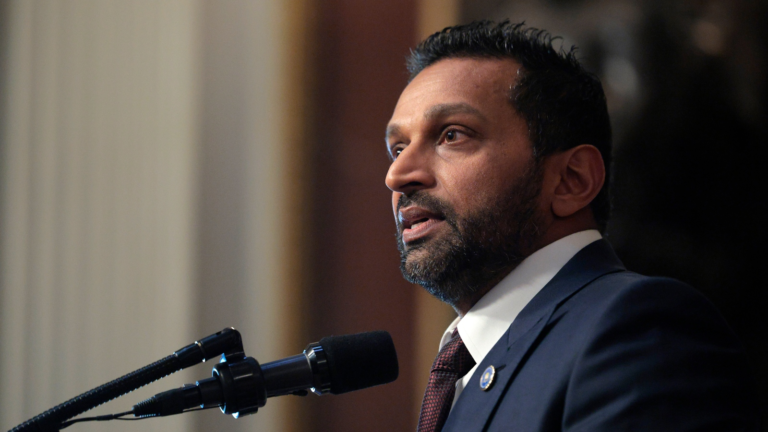
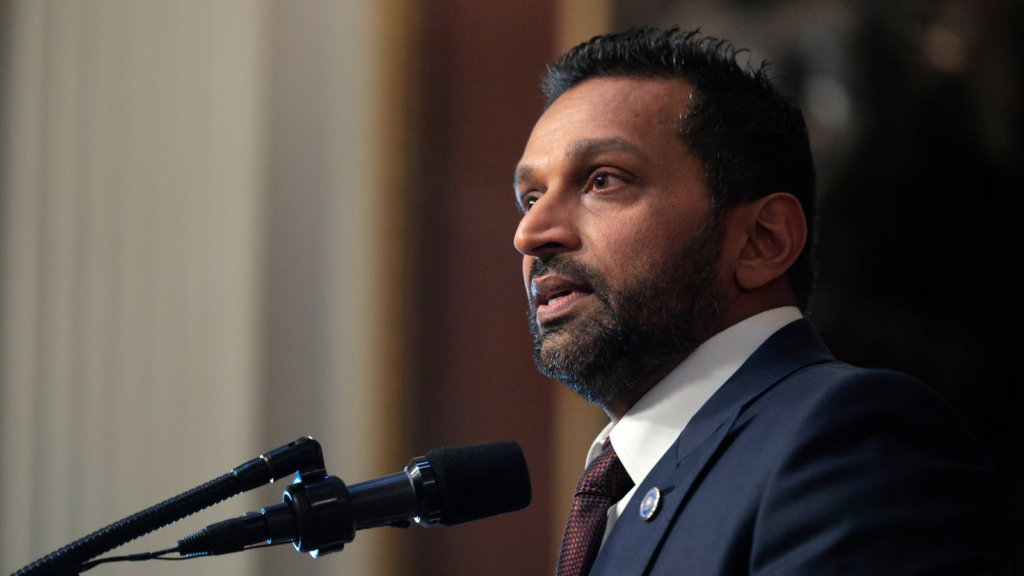
FBI Director Kash Patel announced the first major arrest since he was sworn in to lead the bureau.

Patel took to X on Monday night to announce that the FBI’s Virginia Homeland Security Taskforce arrested dozens of MS-13 and other gang members.

“Today the FBI’s Virginia Homeland Security Taskforce arrested 39 individuals, including MS13 and other gang members, as part of our mission to secure the border and enforce immigration laws. Thank you to all our partners bravely doing their jobs and executing the mission,” Patel wrote.

On Monday, the FBI and U.S. Immigration and Customs Enforcement announced the arrest of a high-ranking MS-13 leader who controlled gang activities in the United States, Mexico, and Europe.

When officers arrested David Alejandro Orellana-Aleman, 27, on February 27 in Hyattsville, Maryland, they caught an illegal alien from El Salvador who was charged in his home country with having a gun, extortion, and supporting terrorism.

For many years, Orellana was the top leader of the international terrorist group MS-13 and was in charge of MS-13 groups in the US, Mexico, and Europe.

“The apprehension of David Alejandro Orellana-Aleman strikes a significant blow to the leadership and organization of the MS-13 terrorist organization,” said ICE Enforcement and Removal Operations acting Field Office Director Matthew Elliston. “This arrest speaks volumes about the cooperation enjoyed between ICE and the FBI. We will continue to prioritize public safety by arresting and removing illegal alien offenders from our communities.”

“Maryland is immediately safer because of this arrest. Working together, we took custody of one of the highest-ranking gang members in the United States,” said FBI Baltimore Special Agent in Charge William J. DelBagno. “David Alejandro Orellana-Aleman is no longer in his alleged position of power directing violence. His arrest demonstrates the success we can have when we collectively investigate and disrupt violent criminals seeking to exploit our communities.”

Orellana was arrested in El Salvador on December 1, 2016, and charged with having a gun, extortion, and being a member of MS-13, which is a terrorist group.

Orellana came into the U.S. illegally on an unknown date and in an unknown place, without being checked out, admitted, or given parole by a U.S. immigration official.

A police officer in Prince George’s County caught Orellana driving without a license on December 9, 2024. Orellana is still being held by ICE after being arrested.

Patel made headlines earlier this week when he proposed strengthening the FBI’s ranks with assistance from the Ultimate Fighting Championship (UFC).

According to sources familiar with Patel’s proposal, the initiative involves collaboration with the martial arts entertainment giant, whose CEO, Dana White, was a key supporter of President Donald Trump’s reelection, ABC News reported.

During a teleconference Wednesday with the leaders of the FBI’s 55 field offices, Patel suggested establishing a formal partnership with the UFC to develop fitness programs aimed at enhancing agents’ physical conditioning, sources briefed on the call said.

The weekly virtual meeting with special agents in charge of each field office has been a longstanding tradition, but this marked the first call led by Patel since he was sworn in as director on Friday.

Within hours of the Wednesday call, news of Patel’s UFC proposal spread to current and former FBI officials across the country, with some embracing it.

“If they’re trying to up their physical fitness, the UFC is very specific in their fitness,” ABC News contributor Rich Frankel, the former special agent in charge of the FBI’s Newark, New Jersey, office, told the network.

Leavitt Swats Down CNN Reporter Asking About Elon Musk

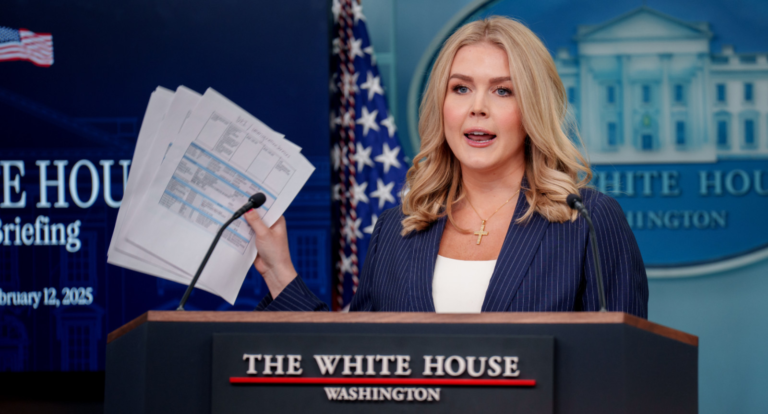
White House Press Secretary Karoline Leavitt smacked down reporters asking about whether billionaire Trump ally Elon Musk had received security clearance or passed a background check.

“Can you confirm that Elon Musk is a special government employee?” asked CNN chief White House correspondent Kaitlan Collins. “And what kind of security clearance does he have?”

“I can confirm he’s a special government employee. I can also confirm that he has abided by all applicable federal laws. As for his security clearance, I’m not sure, but I can check back with you,” Leavitt responded.

Collins pressed, “Did he pass a background check, do you know?” That led the press secretary to respond, “I don’t know about the security clearance, but I can check.”

Pressed further as to whether she knew if anyone on Musk’s team had received a security clearance, Leavitt again responded, “I don’t, no, but again, I can check on that for you.”

Also Monday, CNN reported that Musk’s designation as a special government employee means he “is not a volunteer but also not a full-time federal employee.” The outlet also reported that an unnamed source claimed that Musk had been given “a top-secret security clearance.”

CNN guest and attorney Arthur Aidala argued last month that Musk shouldn’t need a background check to work in government because he had “gotten us into space” and “gotten us to the moon.”

On that point, Musk vowed in January to bring home two astronauts who have been stranded in space for nearly eight months “as soon as possible” and criticized the Biden White House for failing to retrieve them sooner.

The SpaceX CEO and head of the Department of Government Efficiency revealed in a social media post that President Donald Trump personally requested his help in rescuing astronauts Butch Wilmore and Suni Williams. The pair has been in space since last June on what was originally planned as a weeklong mission.

Plans to use a SpaceX capsule for their return had been in place since Biden’s presidency, but the mission was repeatedly delayed, the New York Post reported.

The two NASA pilots traveled to the International Space Station aboard a Starliner, which was Boeing’s first flight into space. However, issues arose with the capsule, including helium leaks and thruster malfunctions. As such, NASA ordered the Starliner back to Earth last year after technicians determined it was not safe to have humans aboard.

“The @POTUS has asked @SpaceX to bring home the 2 astronauts stranded on the @SpaceStation as soon as possible. We will do so,” Musk wrote on his social media app, X, Tuesday evening. “Terrible that the Biden administration left them there so long.”

NASA had initially planned for astronauts Butch Wilmore and Suni Williams to return to Earth aboard a SpaceX capsule by February. However, the mission was pushed back to March or early April due to delays.

While the SpaceX capsule designated for their return is already in orbit, Musk’s company postponed the launch of the replacement crew, who must first arrive at the space station before Wilmore and Williams can depart, The Post noted.

The outlet said that typically, NASA likes to have overlapping crews at the station for an easier transition. SpaceX, meanwhile, postponed the launch of its capsule to work on it.

Initially, Musk and entrepreneur Vivek Ramaswamy were tapped to lead DOGE, though Ramaswamy has since bowed out to run for governor of Ohio. Both were vocal throughout Trump’s campaign about the need to reduce the size and power of the federal government.

“I am pleased to announce that the Great Elon Musk, working in conjunction with American Patriot Vivek Ramaswamy, will lead the Department of Government Efficiency [DOGE],” Trump wrote on his Truth Social platform in November.

Majority Of Americans Support Trump’s Handling Over Russia-Ukraine Conflict

A sizeable majority of Americans back President Donald Trump’s handling of the Russia-Ukraine war, according to new polling data from CNN.

In addition, far more Americans support Trump’s approach to the conflict than those who supported now-former President Joe Biden’s handling of it.

“So I think the easiest way we can kind of just ask this is, do Americans like the way that Trump is handling his job, and compare it to how they felt about Joe Biden,” CNN data analyst Harry Enten said during a show segment on Monday.

“So this is the net approval rating. You look at Joe Biden back in 2024, he was 22 points underwater. Holy cow. You look at Donald Trump. It‘s just a different planet entirely. I mean, the gulf between these two is wider than the Gulf of America or Mexico, depending on which side of the aisle you stand on. He‘s at plus-two,” Enten continued.

“So, look, at this particular point, Americans are giving Donald Trump the benefit of the doubt. He‘s doing considerably better than Joe Biden was doing on the handling of the Russia-Ukraine conflict. And so on this simple question, I think Americans are saying, ‘Okay, Donald Trump is doing all right on this,’” he said.

Host Kate Bolduan then asked, “What about specifically on how they feel about bringing the war to an end?”

“So, you know, look, questions on this can be quite complicated, but I think this kind of gets at sort of where the American trend line is. Americans on the Russia-Ukraine war want a quicker end of the war, but Russia keeps its captured land. Look at this: 50 percent. Fifty percent, [a] bare majority…coming in here,” Enten continued.

“Support Ukraine‘s right to fight, even if it means a longer war, that‘s at 48. This is very, very close. But the trend line on this question is so important because that ‘Want a quick end of the war,’ look at this, you go back to August of 2022, it was at 31 percent,” he said. “Now we‘re at 50 percent. I mean, that is a rocket ship upwards in terms of the Americans who want a quick end to the war, even if it means Russia keeps the captured Ukraine land.

“Americans are moving closer and closer to wanting a compromise, even if it means that Ukraine doesn‘t really get what it set out to want, at least at the beginning of this war,” he added.

Vance opened up on Monday night about the tense Oval Office meeting last week during an appearance Monday evening on Fox News with host Sean Hannity.

Below is a transcript of the exchange:

Hannity: “Let’s go back to the Oval Office Friday, from your perspective?”

Vance: “Yeah, great TV, as the president said.”

Hannity: “Yeah.”

Vance: “It was — well, you know, it’s funny. So, we have a 40, 45-minute press conference, and the president normally does this, and I’ve seen this now 3 or 4 times with foreign leaders, where he likes to bring the media in, likes to have a conversation, but answer questions with the press. As you know, he’s very open with reporters. And what I noticed is that for the first 25, 30 or so minutes, he tried to sort of bend over backwards to be gracious and kind to Zelenskyy. Even when Zelenskyy was kind of needling him, even when Zelenskyy was saying things that I thought were untrue, the president just tried to be diplomatic. Right? I think that’s his natural instinct in that situation. And then when it really went off the rails, of course, is when I asked — or you had a Polish journalist who asked a question, the president answered it, and then I answered it. And then something about my answer just really sets Zelenskyy off, so then he came at me.”

10+ Foods to Help Lower Your Blood Sugar

Maintaining your blood sugar level is essential to your overall health and helps prevent or delay serious issues. Potential factors that influence your blood sugar levels include genetics, stress levels, activity, and body weight. However, you can also lower blood sugar levels by adopting a healthy diet. To help you choose the best foods possible to achieve this goal, we have compiled a list of 10+ foods that will lower blood sugar. 

Pumpkin

pumpkin soup and pumpkins on a table
Credit: Pexels

Pumpkins are rich in antioxidants and fiber, making them the perfect choice for the regulation of blood sugar levels. In many countries such as Iran and Mexico, pumpkin has been traditionally used as a diabetes remedy for many years. Yummy pumpkins are packed with polysaccharides, a type of carbohydrate that has long been studied for its potential to regulate sugar levels. Pumpkins are also enriched with protein and healthy fats, making them perfect foods for the management of blood sugar levels. 

Seafood

a plate of seafood
Credit: Pexels

Seafood is full of healthy fats, vitamins, minerals, protein, and antioxidants that can assist in lowering blood sugar levels. Protein helps prevent postmeal spikes in blood sugar levels, slows digestion, and enhances the feeling of being full. Regularly eating fatty fish such as sardines and salmon can also enhance blood sugar regulation. One study involving 68 obese subjects revealed that eating 750 grams of fatty fish weekly was linked to improved postmeal sugar levels in comparison to those who ate lean fish instead. 

Broccoli 

brocolli on a table
Credit: Pexels

https://go.ezodn.com/charity/http/charity-ads.s3.amazonaws.com/charity_ads/1134/728×90.png×Sulforaphane is a plant chemical with blood sugar-reducing properties produced when broccoli is chewed or chopped. Broccoli extract is rich in sulforaphane and has been shown to possess potent antidiabetic effects in several animal, test-tube, and human studies. These properties help enhance insulin sensitivity and reduce oxidative stress markers. Broccoli sprouts are rich in glucosinolate, compounds that also help promote sensitivity to insulin and reduce blood sugar levels in individuals diagnosed with type 2 diabetes.

Beans and Lentils

beans
Credit: Pexels

Both lentils and beans are packed with nutrients that can help in bringing down blood sugar levels, such as fiber, protein, and magnesium. They also contain significant quantities of resistant starch and soluble fiber which aid in slowing down digestion and improving postmeal blood sugar response. In a study involving 12 female subjects, it was shown that adding chickpeas or black beans to rice notably reduced blood sugar levels after a meal compared to a meal of rice alone. 

Chia Seeds

a spoon of chia seeds
Credit: Pexels

Consuming chia seeds may help with blood sugar management. According to several studies, eating chia seeds reduces blood sugar levels and improves sensitivity to insulin. A review of several animal studies conducted in 2020 found that consuming chia seeds may reduce the risk of developing certain diseases, including diabetes. A study involving humans revealed that subjects who consumed 25 grams of ground chia seeds along with a sugar solution exhibited a 39% blood sugar level reduction in comparison to subjects who only consumed the sugar solution. 

Okra

okra on a table
Credit: Pexels

Okra is a fruit rich in compounds that lower blood sugar, including polysaccharides and flavonoid antioxidants. The seeds also contain properties that lower blood sugar, making them a suitable natural remedy for diabetes. Okra has been found to contain potent antidiabetic compounds such as polysaccharides, as well as the flavonoids quercetin 3-O-gentiobioside and isoquercitrin. While animal studies have shown much promise, more human trials are needed to verify these properties. 

Avocados

avocado cut in half on a table top
Credit: Pexels

Avocados are full of fiber, minerals, healthy fats, and vitamins. This means that adding them to any meal will offer substantial blood sugar regulation benefits. Multiple studies suggest that avocados may help lower blood sugar levels in addition to protecting against the development of metabolic syndrome. This syndrome refers to a cluster of conditions that increase the risk of chronic disease, such as high blood sugar. 

Berries

an assortment of berries
Credit: Pexels

Berries are rich in vitamins, fiber, antioxidants, and minerals. All of these nutrients make berries a good alternative for individuals who struggle to manage their blood sugar. A study from 2019 indicated that consuming 250 grams of red raspberries with a meal high in carbohydrates lowered postmeal insulin and blood sugar substantially in individuals with prediabetes compared to a control group.

Eggs

eat boiled eggs to lower blood sugar
Credit: Pexels

Several studies have found that eating eggs can help regulate blood sugar levels. This is because eggs are high in minerals, vitamins, antioxidants, healthy fats, and protein. One study revealed that eating on large egg every day led to a 4.4% reduction in fasting blood sugar in obese adults with either prediabetes or type 2 diabetes. Additionally, eating one large egg per day also improved insulin sensitivity. 

Oats

a bowl of oats and glass of orange juice
Credit: Pexels

Oats are high in soluble fiber, which means that it is the perfect breakfast option. This is because soluble fiber has been shown to reduce blood sugar levels. A review of 16 different studies revealed that consuming oats significantly reduced fasting blood sugar levels and HbA1c compared to control meals. Another study found that drinking water mixed with oat bran before consuming white bread reduced blood sugar after meals. This was when compared with just drinking water on its own. 

Yogurt and Kefir

a glass of yogurt
Credit: Pexels

Both Yogurt and Kefir are fermented dairy products that can potentially assist in regulating blood sugar levels. One study showed that drinking 600ml of kefir substantially reduced HbA1c and fasting blood sugar levels in people with type 2 diabetes. A review of several studies revealed that daily yogurt consumption was linked to a 7% decrease in risk of developing type 2 diabetes. 

The moment Shakira leaves the stage

In September 2024, Shakira left the stage at Miami’s LIV nightclub after spotting a fan trying to film up her skirt.

Fans supported her response, calling for respect toward performers.The incident followed her move to Miami after splitting from Gerard Piqué.

Despite this, she released Soltera and launched her Las Mujeres Ya No Lloran tour in 2025,

Vance, Family Moved To Safe Location After Being Targeted By Protesters

Vice President J.D. Vance’s family was moved to an “undisclosed location” due to security concerns after pro-Ukraine protesters gathered at a Vermont ski resort ahead of their planned vacation over the weekend, according to reports.

Vance, his wife, Usha, and their three young children were met by protesters who lined up outside the Sugarbush Resort just a day after a tense Oval Office meeting between President Donald Trump, Vance, Secretary of State Marco Rubio, and Ukrainian President Volodymyr Zelensky.

What began as a cordial meeting quickly descended into chaos when Zelensky refused to sign an agreed-upon economic deal and continued pushing for increased military aid.

After pushback from Vance, Zelensky warned that the U.S. would soon face national security threats if the Trump administration refused to continue the war, a remark that sparked a furious reaction from Trump. The president quickly decided to halt negotiations for the time being and announced that he would not invite Zelensky back to the White House in the foreseeable future.

The following day, Democrats continued a growing trend by organizing protests outside the Vance family’s planned ski trip. The majority of the protesters, mostly older liberal women, held signs labeling Vance a “traitor” and urging him to “go ski in Russia.”

“Have you no shame? Support Ukraine,” one sign read.

Counter-protesters also made their presence known, with pickup trucks flying “Make America Great Again” flags lining the opposite side of the road. According to a report from the New York Post, other groups of counter-protesters engaged in a shouting match with the anti-Vance crowd outside the resort.

The protests grew so intense that some demonstrators camped out by a ski lift, hoping to catch a glimpse of where they believed the Vances were skiing.

While the protests had been planned earlier in the week, they escalated following the heated Oval Office confrontation, where Zelensky argued publicly with both Vance and Trump during a visit meant to finalize a mineral rights deal. The deal was canceled, and Zelensky was reportedly escorted out of the White House.

Vermont Republican Gov. Phil Scott urged protesters to be mindful of Vance’s planned visit to the state last week.

“I hope Vermonters remember the Vice President is here on a family trip with his young children and, while we may not always agree, we should be respectful,” Scott said in a statement Thursday. “Please join me in welcoming them to Vermont, and hoping they have an opportunity to experience what makes our state, and Vermonters, so special.”

Vermonters were originally planning to protest the cuts to the federal government implemented by the Trump administration, The Post noted.

“Some of us are scared about losing Social Security or Medicaid or parks or having measles epidemics or climate change,” protest organizer Ginny Sassaman of the Indivisible Calais group told outlet VT Digger.

Trump and Republicans have said — repeatedly — that they are not planning any cuts to entitlement benefits but rather are going to look for, and eliminate, waste, fraud and abuse.

The diverse coalition of activists included members from the LGBTQ+ community.

“As a trans person and as a person of color, I’m extremely concerned about the new policies about trans people. I’m concerned about the ICE raids. I have friends who are trans. I have friends who are immigrants who’ve been reaching out to me and saying, ‘We’re scared,’” organizer Katayoun Lam told VT Digger.

During the heated Oval Office meeting with Zelensky on Friday, Vance took a strong stance in front of international media, even going so far as to call out the wartime leader for failing to say “Thank you” for the aid the United States has provided to his country.

“Mr. President, with respect, I think it’s disrespectful for you to come into the Oval Office to try to litigate this in front of the American media,” Vance told Zelensky.

“Right now, you guys are going around and forcing conscripts to the front lines because you have manpower problems. You should be thanking the president for trying to bring an end to this conflict,” he added.

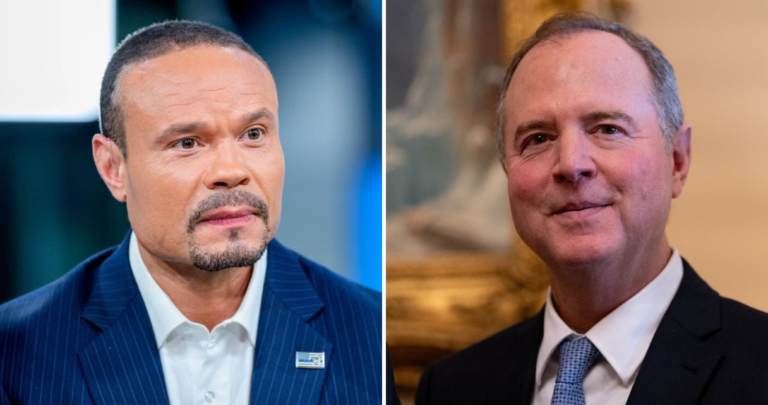
Bongino Called Out Schiff Before Trump Appointed Him Deputy FBI Director

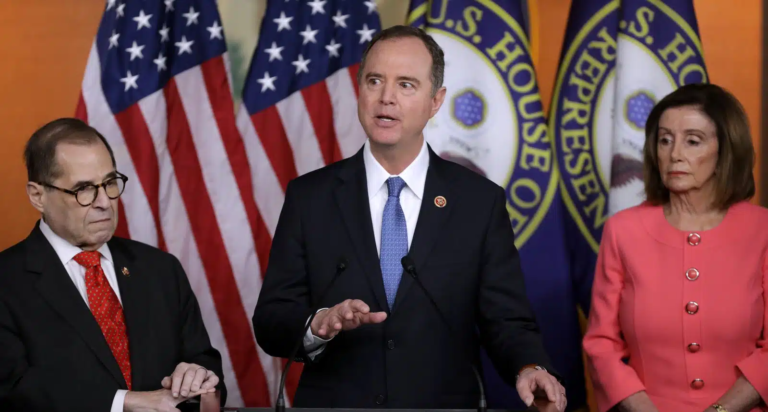
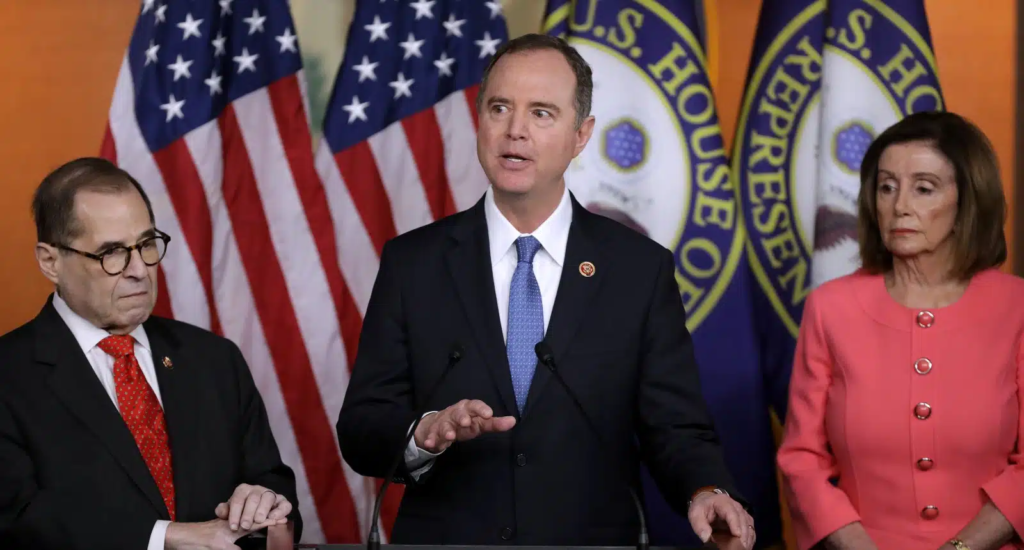
Dan Bongino called out Sen. Adam Schiff (D-Calif.) on his popular podcast just a few days before President Donald Trump named him deputy director of the FBI.

“Why is Adam Schiff so worried? I strongly encourage you to go back and take another look today at the Russia collusion hoax,” Bongino began during a segment.

After noting that the story is now several years old, Bongino added: “I’m gonna be straight with you. I don’t wanna move on.”

“We had the FBI in conjunction with the Department of Justice, officials in Congress, foreign governments and intel people fabricate a story, invent a story that could have caused and done serious long-term harm to international relations with a nuclear-powered foe,” he added. “It’s kind of a big freakin’ deal.”

“Listen to me — this is gonna be very important in the coming days,” he went on, perhaps dropping a hint that he was about to be appointed to the FBI.

“I’m not letting this go. I wanna find out what happened because it can never happen again. Not to a Democrat. Not a Republican. Not to a Libertarian. Not to any United States citizen,” Bongino said.

“You do not get to alter or try to change the course of electoral politics by fabricating a story hijacking the justice system then to give the patina of truth to a fake story,” he continued. “You don’t get to do that.”

“Why do I bring that up now? Because who was the ringmaster of that circus? Yes, Adam Schiff, and no, I’m not letting it go,” he added.

WATCH:

It should be noted that former President Joe Biden granted Schiff a pre-emptive pardon for his role on the Democrat-controlled Jan. 6 Commission, though he went on to call it “unnecessary” and “unwise.”

“I continue to believe that the grant of pardons to a committee that undertook such important work to uphold the law was unnecessary, and because of the precedent it establishes, unwise,” Schiff said in a statement. “But I certainly understand why President Biden believed he needed to take this step in light of the persistent and baseless threats issued by Donald Trump and individuals who are now some of his law enforcement nominees.”

Notably, however, Schiff did not reject the pardon outright.

Those “full and unconditional” pardons cover any offenses tied to the “activities or subject matter” of the committee and are not restricted to a specific time period, The Hill reported. But it isn’t clear — yet — if the pre-emptive pardon covers any potential illegality that Schiff may have allegedly engaged in regarding his repeatedly false claims that Trump was a Russian asset or that he was acting on behalf of Russian President Vladimir Putin.

Rep. Bennie Thompson (D-Miss.) chaired the committee, and former Rep. Liz Cheney (R-Wyo.) served as second-in-command as vice chair. Other members included then-Reps. Adam Kinzinger (R-Ill.), Elaine Luria (D-Va.) and Stephanie Murphy (D-Fla.), current Reps. Zoe Lofgren (D-Calif.), Pete Aguilar (D-Calif.) and Jamie Raskin (D-Md.).

In a joint statement Monday, Thompson and Cheney said they were pardoned “not for breaking the law but for upholding it.”

“These are indeed ‘extraordinary circumstances’ when public servants are pardoned to prevent false prosecution by the government for having worked faithfully as Members of Congress to expose the facts of a months-long criminal effort to override the will of the voters after the 2020 elections, including by inciting a violent insurrection to thwart the peaceful transfer of power,” they said in the statement.

Flashback: Schiff Likened Presidential Pardon Of Son to ‘Obstructing Justice’

Senator-elect Adam Schiff is back in the spotlight this week after President Joe Biden went back on his word and pardoned his son, Hunter Biden, over remarks the California Democrat made about such pardons.

The president issued the pardon late Sunday, which included any and all criminal activities his son allegedly engaged in dating back to 2014. The pardon came after House Republicans said they discovered evidence Hunter Biden and his president father engaged in legally questionable activities dating back to their mutual involvement in Ukraine during the Obama administration.

In a 2018 interview with then-CNN host Don Lemon, Schiff said he was set to propose a bill that would require investigative files to be turned over to Congress if a president pardons anyone who is currently a subject of a congressional inquiry.

“Yeah. So [then-President Donald Trump’s] pardon of Scooter Libby, congressman, has inspired you to propose new legislation. What exactly will it do?”

“What it will do is say that in the event the president pardons anyone in an investigation in which the president is a witness, a subject or the target, those investigative files will all be turned over to the Congress,” Schiff responded. 

“The Congress ought to know whether the president is using the pardon power to obstruct justice. The American people have a right to know. I think it is clearly constitutional. It doesn’t prohibit him from granting a pardon, even a pardon he shouldn’t grant, but it does say that we will be able to at least find out whether the president is using this power to shield himself from liability,” Schiff continued.

“I think it is clearly constitutional. It doesn’t prevent him from granting a pardon, even a pardon he shouldn’t grant, but it does say that we will be able to at least find out whether the president is using this power to shield himself.”

“It offers transparency at the very least,” Lemon said.

“Absolutely,” Schiff noted

Democrats were notably silent on Monday, a day after Biden issued a “full and unconditional” pardon for his son, covering the past 11 years. The pardon nullifies a felony conviction on gun charges and spares Hunter Biden from a sentencing hearing later this month, which could have resulted in prison time.

It also includes a pardon for a felony tax evasion case, both of which were prosecuted by special counsel David Weiss.

On Sunday, Trump criticized the pardon, describing it as an “injustice.” He promised to use pardons to defend his own family if they face politically motivated prosecution. Mainstream media analysts, including Elie Honig at CNN, largely agreed with his sentiment.

“Without question, there has long been a fair debate on both sides whether Hunter Biden is being treated overly leniently or overzealously because of his status as Joe Biden’s son. I think there are points to both sides of that. But I think that what’s not disputable is this is a historic act of political nepotism,” Honig said on Monday.

Following the pardon, which Biden and White House Press Secretary Karine Jean-Pierre repeatedly stated for a year would not occur, KJP confronted the media for the first time on Monday. She was asked by a reporter if the American people “could be seen as lies” by those earlier remarks.

“You have said repeatedly, yourself, since the election, and the president has said for months, no pardon was coming. I just — you know, I wanted to ask you, could those statements not be seen as lies from the American people? Is there really a credibility issue you’re giving now this announcement?” a reporter asked.

“No, no. First of all, one of the things that the president always believes is to be truthful to the American people,” Jean-Pierre began, immediately getting defensive.

“That is something that he always truly believes. And if you see the end of his — I — I assume that you’ve read his statement and you look at the end of that statement, and he actually says that in the first line in the last paragraph, and — and respects the thinking and how the American people will actually see this and his decision-making, and I would encourage everyone to read it full, the president’s statement. I think he lays out his thought process,” Jean-Pierre added.

Joe Biden Announces Decision on Pardoning Cheney, Fauci

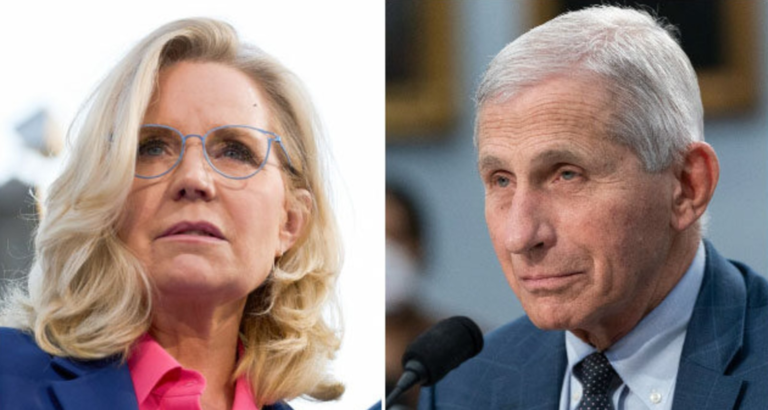
President Joe Biden issued historic preemptive pardons for former NIAID Director Anthony Fauci, House Jan. 6 committee members, and others on Monday, granting them broad immunity just hours before President-elect Trump’s White House return.

Biden stunned many when he issued the blanket pardons before Trump’s swearing-in at the U.S. Capitol on Monday.

“Our nation relies on dedicated, selfless public servants every day. They are the lifeblood of our democracy. Yet alarmingly, public servants have been subjected to ongoing threats and intimidation for faithfully discharging their duties,” Biden wrote.

“In certain cases, some have even been threatened with criminal prosecutions, including General Mark A. Milley, Dr. Anthony S. Fauci, and the members and staff of the Select Committee to Investigate the January 6th Attack on the United States Capitol. These public servants have served our nation with honor and distinction and do not deserve to be the targets of unjustified and politically motivated prosecutions,” he added.

“General Milley served our nation for more than 40 years, serving in multiple command and leadership posts and deploying to some of the most dangerous parts of the world to protect and defend democracy. As Chairman of the Joint Chiefs of Staff, he guided our Armed Forces through complex global security threats and strengthened our existing alliances while forging new ones,” Biden said.

“For more than half a century. Dr. Fauci served our country. He saved countless lives by managing the government’s response to pressing health crises, including HIV/AIDS, as well as the Ebola and Zika viruses. During his tenure as my Chief Medical Advisor, he helped the country tackle a once-in-a-century pandemic. The United States is safer and healthier because of him,” Biden added.

“On January 6, 2021, American democracy was tested when a mob of insurrectionists attacked the Capitol in an attempt to overturn a fair and free election by force and violence. In light of the significance of that day. Congress established the bipartisan Select Committee to Investigate the January 6th Attack on the United States Capitol to investigate and report upon the facts, circumstances, and causes of the insurrection. The Select Committee fulfilled this mission with integrity and a commitment to discovering the truth. Rather than accept accountability, those who perpetrated the January 6th attack have taken every opportunity to undermine and intimidate those who participated in the Select Committee in an attempt to rewrite history, erase the stain of January 6th for partisan gain, and seek revenge, including by threatening criminal prosecutions,” he continued.

Biden concluded, “I believe in the rule of law, and I am optimistic that the strength of our legal institutions will ultimately prevail over politics. But these are exceptional circumstances, and I cannot in good conscience do nothing. Baseless and politically motivated investigations wreak havoc on the lives, safety, and financial security of targeted individuals and their families. Even when individuals have done nothing wrong—and in fact have done the right thing—and will ultimately be exonerated, the mere fact of being investigated or prosecuted can irreparably damage reputations and finances.”

After more than 50 years in politics and with low approval ratings, President Biden is leaving Washington and his official public life behind.

Biden has spent the last few weeks drafting executive orders that will be difficult for President Donald Trump to revoke after withdrawing from the political limelight after resigning as the Democratic presidential nominee for 2024.

Biden is departing Washington with one of his lowest approval scores, even though polls improved soon after his withdrawal.

According to RealClearPolitics, a CNN poll this week revealed that his approval was 37% and his disapproval was 63%, with an average net negative rating of 18 percentage points.

THE GUY WHO BULLIED ME THROUGH HIGH SCHOOL NEEDED MY HELP IN THE ER

I’ve been a nurse for six years now. Long shifts, aching feet, barely enough time to eat—but I love it. It’s the one place where I feel like I truly matter. Nobody cares what I look like, just that I do my job well.

But today? Today threw me back to a time I’d rather forget.

I walked into the ER room with my chart, barely glancing at the name. “Alright, let’s see what we got—” Then I looked up.

Robby Langston.

He was sitting on the bed, wincing as he held his wrist, but when he saw me, his eyes went wide. For a second, I thought maybe he didn’t recognize me. But then he did a quick, awkward glance at my face—at my nose—and I knew.

Middle school, high school… he made my life hell. “Big Becca,” “Toucan Sam,” all the creative ways to make a girl hate her own reflection. I spent years wishing I could shrink, disappear, be anyone else. But here I was, standing in scrubs, holding his chart, and he was the one needing me.

“Becca?” His voice was hesitant, almost nervous. “Wow, uh… it’s been a while.”

I kept my face neutral. “What happened to your wrist?”

“Basketball injury,” he muttered. “Just a sprain, I think.”

I nodded, checking his vitals, doing my job like I would with anyone else. But inside, I was battling old ghosts. I had imagined a moment like this before—facing my past, getting some kind of closure. Maybe even some kind of justice.

Then, as I wrapped his wrist, he let out a small, almost embarrassed laugh. “Guess karma’s funny, huh? You taking care of me after all that.”

I met his eyes. For once, he wasn’t the cocky guy from school. Just another patient, just another human.

And then he said something that made my hands pause.

“Listen…” Robby swallowed hard, shifting on the bed. “I want to say I’m sorry. For everything I did back then.”

I blinked, taken aback. An apology? From the guy who made me dread going to class, who gave me nicknames I still remember in my worst moments? I forced myself to keep my professional composure, setting aside the gauze and grabbing a wrist brace from the supply cart.

“You don’t have to say anything,” he continued, voice quieter now. “I know I was a jerk, and I can’t fix it. But I’ve thought about it a lot. Especially when I found out you became a nurse.”

He gave a weak chuckle. “I figured if anyone deserved to do something meaningful, it was you.”

I focused on Velcro straps and making sure the brace fit correctly. Part of me wanted to tell him exactly how much he hurt me—how I spent weekends hiding in my room, how I tried every ridiculous remedy to ‘shrink’ my nose, how I once begged my mom for surgery I didn’t need. But another part of me, the nurse part of me, the older, maybe wiser part of me, reminded me that I was here to help. Even if it was him.

“Well,” I said finally, testing the brace, “I appreciate that.”

There was silence for a moment, thick with everything left unsaid. I caught him watching me like he was waiting for me to unload on him. But I held my tongue. I wasn’t sure I was ready to forgive him just yet, apology or not.

Before I could say anything else, Robby winced and cradled his wrist again. “Is this supposed to hurt this much?” he asked.

I frowned. “Let me take another look.”

I checked his pulse, did a quick neurological check, then glanced at his chart. His X-rays weren’t back from Radiology yet, but something about his pale face and the way he gritted his teeth made me wonder if it was more than just a simple sprain.

“We’ll know more once the doctor reads the scans,” I said, pressing two fingers against his forearm. “Does it hurt here?”

He nodded. “Yeah, right there.”

“Okay, we’ll keep it wrapped and immobilized. Try to stay calm.”

I stepped out into the hallway, my thoughts racing. Knowing how athletic Robby was in high school—captain of the basketball team, the guy everyone cheered for—maybe he overdid it or took a bad fall. But I had a nagging feeling there was something else.

As I waited by the nurses’ station for his results, memories flashed through my mind. I remembered the day in tenth grade when Robby and his friends were mocking me in the cafeteria. I spilled my lunch all over my shirt, and they roared with laughter. I ended up in the bathroom, tears streaming down my face, wishing I could vanish.

A fellow nurse, Dina, must have seen the clouded look on my face because she nudged my arm. “Everything okay, Becca?”

I shook myself out of the memory. “Yeah, I’m alright,” I said, forcing a small smile. “Just…someone from my past showed up, that’s all.”

She gave me a sympathetic look. “Take a breather if you need it. We’re all covered for a few minutes.”

I nodded and stepped away, heading toward the staff break room. Once inside, I tried to calm my nerves with a few deep breaths. I knew I had to keep it professional, but my stomach was in knots. Robby’s presence was stirring up an old hurt I’d worked so hard to bury.

I returned to find the doctor, Dr. Yun, reading Robby’s X-rays on one of the computer screens. She frowned, tapped a few keys, then motioned me over.

“Fracture here,” she said, pointing to a tiny crack near the wrist joint. “It’s not major, but it’s definitely more than a sprain. We’ll need to put him in a cast. Could be a hairline fracture.”

I nodded, inwardly relieved to have something concrete to focus on. “Do you want me to prep the materials?”

She nodded. “Yes, and I’ll talk to him about aftercare.”

I gathered the supplies for casting—a roll of plaster, padding, some warm water—and wheeled them into Robby’s room. Dr. Yun followed.

“There’s a small fracture near your radius,” she explained to Robby. “You’ll need to be in a cast for a few weeks. We’ll do a follow-up to check on the healing.”

He slumped, looking genuinely bummed. “That means I can’t play for a while, huh?”

“Probably not,” Dr. Yun said gently. “You’ll want to rest it, keep it elevated, and do some exercises once the cast comes off.”

As she finished giving instructions, I moved in, carefully wrapping a layer of padding around his wrist and lower arm. The room was quiet—just the sound of the tape unrolling and Dr. Yun’s occasional reminders about recovery guidelines.

I tried to focus solely on the procedure, but I kept noticing Robby watching me. It was a different kind of look than the mocking stares he used to give in high school—this time, his gaze was weighted with something else. Maybe regret. Maybe curiosity.

When we were done, Dr. Yun left to see another patient, leaving me to clean up. Robby flexed his fingers carefully and sighed. “Well, guess I’m out of the next tournament.”

I shrugged, packing up the casting materials. “Better to heal properly than push yourself and make it worse.”

He nodded slowly, then looked at me with a seriousness I hadn’t seen in him before. “Hey, Becca, you got a minute?”

Part of me wanted to say no. But I also felt a strange nudge to see what he had to say. “Sure,” I murmured, setting the supply tray aside.

“I’ve been volunteering with a youth basketball league downtown,” he said, looking almost sheepish. “I was gonna help them with a fundraiser next month, but now I’m not sure how much I can do. Maybe just talk to them, help plan things…”

I stood there, arms folded, not quite sure where he was going with this.

He cleared his throat. “Look, I know I don’t have a right to ask you for anything. But I remember you used to be really good at organizing school events—you were always volunteering for the student council, setting up dances, fundraisers. I—uh, I could use some help, if you’re interested.”

He must have seen the shock on my face. I opened my mouth, then closed it, trying to form words.

“Why would I—” I began, then stopped. My first instinct was to shut him down. But the second instinct was curiosity. Could this be real? Was Robby genuinely trying to build a bridge?

He ran a hand through his hair, looking embarrassed. “You’re right. Forget I said anything. I just—I guess I wanted to show you I’m not that jerk anymore.”

I looked down at his cast. The old me would have silently rejoiced at the idea of him dealing with the inconvenience. The new me knew that wasn’t who I wanted to be. Still, I wasn’t ready to jump on board some grand basketball fundraiser project with him. “Let me think about it,” I finally said. “I appreciate the offer, but…just give me some time.”

He nodded, and I could see a flicker of relief cross his face. “Take all the time you need. I’d be grateful for any help. Here—” He scribbled a phone number on a scrap of paper. “If you decide to consider it.”

That night, I was off at seven, which was almost a miracle in the ER world. I trudged home, threw my bag down by the door, and sank onto my couch. My cat, Pinto, meowed his usual greeting, weaving around my ankles. I scooped him up, pressing my face into his soft fur, trying to clear my head.

Why on earth would I help Robby Langston of all people? The same guy who once made me trip in front of the entire cheer squad, who told me no one would ever want to date “Big Becca”?

I remembered how I used to keep a diary back then, writing long entries about how badly I wanted to be invisible. Yet here I was, a grown woman—a nurse, someone who’s helped hundreds of patients, someone who’s finally embraced the fact that my nose is just part of my face, not some giant, defining flaw. I even learned to wear bright lipstick, something I never dared to do in high school, because I was afraid it would draw attention to my face.

But that was then. This is now. Robby was different today—quieter, even remorseful. And he had apologized, which was more than I ever expected.

A week passed. During that time, I kept busy with back-to-back shifts. I tried to shove any thoughts of Robby aside. But one afternoon, as I was checking my phone during a break, I came across a flyer for the youth basketball league’s fundraiser—some of my coworkers had shared it on a local community group. Turns out they needed volunteers for everything from setting up tables to organizing raffles.

I felt a twinge of nostalgia. I used to love planning school events. There was a rush in seeing everything come together, in helping people have a good time for a good cause. And these were kids. Kids who might not have had all the advantages in life. Kids like me, who felt small or overlooked.

Without overthinking it, I typed a message to the league’s general email, offering to help. I didn’t mention Robby at all. If they needed an extra pair of hands, I was willing. That night, one of the coordinators, a woman named Ms. Calderon, wrote back, thrilled to have another volunteer.

So that’s how I found myself at the community center the next Saturday, wearing a volunteer badge, scanning the gym for Ms. Calderon. Kids were running around, bouncing basketballs, squealing with laughter. Parents chatted in the bleachers. It felt warm and welcoming.

When I spotted Ms. Calderon, I introduced myself. She gave me a quick tour, explaining how the fundraiser would help pay for new uniforms, equipment, and possibly a refurbished court. “We’re so thankful for the help, Rebecca,” she said. “We’ve got a small but dedicated group. Do you know Robby by any chance? He usually leads the practice sessions, but he’s injured right now.”

I swallowed. “Yeah, we went to high school together,” I said, keeping it vague.

She nodded with a smile. “Good guy, that one. The kids adore him. He’s always so patient with them.”

I nearly choked on my own breath. Patient? Robby? The same guy who used to make me feel like trash? I forced a polite smile and nodded.

Half an hour later, I was sorting T-shirts for the fundraiser when I felt a presence behind me. Turning around, I came face to face with Robby. He had his cast tucked against his side, and his expression hovered between apologetic and hopeful.

“Hey,” he said softly. “Didn’t expect to see you here.”

I shrugged, shifting my stack of shirts. “I saw the post about the fundraiser. Figured it was for a good cause.”

He gave a small smile. “Thanks for coming. I really appreciate it.”

We spent the next hour side by side, going over raffle donations. Despite the awkwardness, we found a sort of rhythm—filling out forms, labeling items, brainstorming ideas for silent auction baskets. I watched Robby interact with the kids—cheering them on, offering pointers on dribbling techniques. It was like seeing a whole new version of him.

At one point, a kid named Devin ran up, face shining. “Coach Robby, look! I can dribble with both hands now!”

Robby high-fived him, grin spreading wide. “Dude, that’s awesome! Keep practicing, and you’ll be unstoppable.”

Devin scampered off, and Robby turned back to me, cheeks a little red. “He calls me Coach, but I’m just a volunteer.”

I closed a file folder. “Looks like the kids look up to you.”

He hesitated, cradling his cast. “I want them to have the confidence I never really had, if that makes sense.”

I nearly laughed at the irony. “Didn’t you always seem confident in high school?”

He sighed, leaning against the table. “I pretended. My home life was—rough. My dad was strict, and I wasn’t good at meeting his expectations. I took it out on other people, and you caught the brunt of it. I know that doesn’t excuse what I did.”

I felt my throat tighten. All those years, I’d assumed he was just a golden boy with a mean streak. I never considered there might have been something else going on. It didn’t erase the pain, but it made me see him in a different light.

As the last of the kids filed out, Robby walked me to my car. The late afternoon sun cast long shadows across the parking lot. Benny, my cat at home, would be meowing for his dinner soon, but I felt something needed to be said before I left.

We stopped by my old sedan, and I turned to face him. “I’m not gonna lie, Robby—what you did to me back then hurt. A lot. I spent years feeling ugly because of those names you gave me.”

He lowered his eyes. “I know. And I’m sorry. I was too immature to realize how deep words can cut.”

I exhaled slowly, the tension in my chest easing just a bit. “I appreciate your apology. It doesn’t fix everything, but it means something.”

He gave a small nod. “I don’t expect forgiveness overnight. But I’m doing what I can to be better.”

For a moment, we just stood there, the weight of old wounds and new possibilities hanging between us. Finally, I reached into my bag and pulled out a piece of paper. “Here,” I said, handing him a short list. “It’s some ideas for the fundraiser—raffle baskets, maybe a bake sale. The community center can do the heavy lifting, but you might need volunteers for the weekend event.”

He took the paper, gratitude in his eyes. “This is great. Thank you.”

I offered a tight smile. “Just let me know if you need any help.”

A few weeks later, the big day arrived. I wasn’t scheduled at the ER, so I showed up early at the community center. Despite my lingering unease with Robby, I’d committed to helping. It felt good to invest my time in something that might actually help kids in need.

The place was buzzing with energy—bright posters, tables full of donated goods, parents dropping off baked treats for the sale. Robby, still in his cast, directed volunteers on where to set up. Ms. Calderon was everywhere at once, handling last-minute details. The air smelled like sugar, rubber basketballs, and a bit of fresh paint from the newly repaired court.

I ended up managing a booth selling raffle tickets for gift baskets. One was filled with sports gear, another with reading books, and another with local restaurant vouchers. People lined up, excited to contribute. Kids darted around, squealing with delight, clutching their own tickets.

Halfway through the day, I noticed an older man standing at the edge of the gym, watching Robby from a distance. He was tall, had a stiff posture, and an unreadable expression. Robby’s dad, maybe? It made sense. I’d never met him, but I remembered hearing rumors in high school that Mr. Langston was tough.

Sure enough, after a while, Robby walked up to the man, and they spoke quietly. I couldn’t hear them, but the tension was evident—Robby’s shoulders squared, his dad’s jaw set. Then something shifted: Mr. Langston patted Robby’s cast gently, nodded once, and quietly left. Robby stood there for a moment, almost looking stunned, then turned back to the hustle and bustle of the event.

By late afternoon, the fundraiser was winding down. People were packing up, kids and parents trickling out. We counted up ticket sales, and Ms. Calderon nearly teared up when she saw the total. “This will go a long way toward new uniforms,” she said, hugging me. “Thank you so much, Rebecca. And I have to thank Robby, too. Without his connections, we wouldn’t have had half these sponsors.”

I spotted Robby across the gym, carefully helping a volunteer stack folding chairs. Even with a cast, he was pitching in. I made my way over. “Your dad came by,” I said, handing him a stray fold-up table sign.

He glanced at me. “You saw that, huh? He just stopped by to see if I was serious about this whole community work thing. Maybe even proud, in his own way.”

I nodded, feeling a pang of empathy. “Look, I know it’s complicated. But it seems like he’s at least trying.”

Robby exhaled. “Yeah. I guess we’re both learning how to be better.”

We locked eyes, and in that moment, I felt a small fragment of the old hurt fall away. I wasn’t entirely healed, but I was moving forward, and so was he.

A week later, I found a small envelope slipped under my locker at the hospital. Inside was a handwritten note:

Becca,
Thank you for helping at the fundraiser. The kids had a blast, and we raised enough money for everything we needed. I’m grateful you gave me a chance—and I’ll keep trying to prove I’ve changed.
—Robby

Tucked behind the note was a group photo from the fundraiser: Robby, Ms. Calderon, me, and a crowd of beaming kids in mismatched uniforms. In the picture, I was smiling wide, not trying to hide any part of myself.

I stood there in the locker room, absorbing what that photo meant. It was a snapshot of two very different people, once at odds, working together for something bigger than their past. Whatever else happened, I realized I felt lighter—like I’d dropped a burden I’d been carrying for years.

We often think certain hurts can never be undone—that the things said to us when we were young will define us forever. But sometimes, life gives us a chance to see people in a new light. Healing doesn’t mean forgetting what happened; it means finding a way to keep moving forward. It means deciding that someone else’s cruelty doesn’t have the final say over who we become.

I’m not sure if Robby and I will ever be close friends. But in that ER, and later at that fundraiser, I learned that people can surprise you. We all have a story that shapes us, and sometimes the biggest step toward healing is allowing ourselves to witness someone else’s growth. You don’t have to let everyone back into your life, but you can let go of the pain. And that, in its own way, is powerful.

If this story resonated with you—if you’ve ever faced an old hurt or found hope in an unexpected apology—please share it with someone who might need encouragement. And if you believe that second chances and a bit of compassion can bring us closer together, go ahead and like this post. You never know whose heart you might touch just by sharing a reminder that it’s never too late to be better, to do better, and to let go of what’s been weighing you down.

Breaking in Washington: Trump Unveils Urgent Bombshell Statement.

In a dramatic announcement that has reverberated throughout Washington and beyond, President Donald Trump took to his Truth Social platform to declare that “The Invasion of our Country is OVER.” In his first full month in office, Trump highlighted a dramatic reduction in illegal border crossings, citing figures from U.S. Customs and Border Protection (CBP) that showed only 8,326 apprehensions of illegal immigrants at the southern border—a historic low compared to previous administrations. This bold proclamation, according to Trump, is evidence that his aggressive border security measures are yielding remarkable results.

A Historic Shift in Border SecurityPresident Trump’s message was delivered with clarity and urgency. “There were only 8,326 apprehensions by Border Patrol at the U.S.-Mexico border, and every single one of them was either immediately ejected from our Nation or, when necessary, prosecuted for crimes against the United States,” he wrote on Truth Social. This figure, he claimed, is in stark contrast to the soaring numbers recorded during the previous administration. At the height of the Biden administration, CBP reported as many as 301,981 encounters in a single month in December 2023—a figure that Trump said has now plummeted by 96% under his policies.

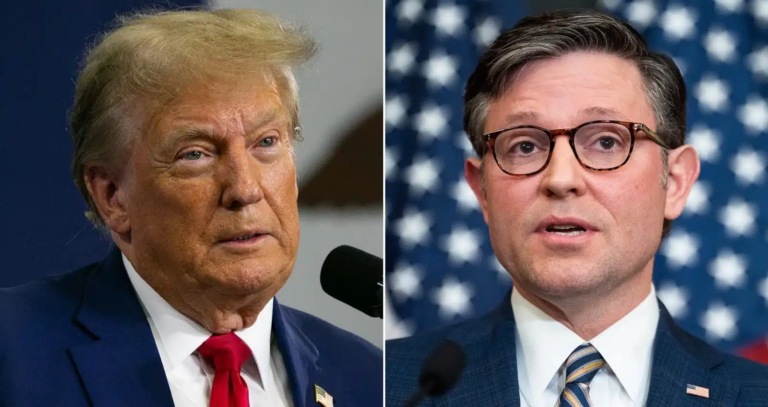
Speaker Johnson: GOP Will Attempt To Codify Trump Orders Into Law

House Speaker Mike Johnson announced Thursday that congressional Republicans plan to codify President Donald Trump’s executive orders to prevent future presidents from “unwinding” his agenda.

Trump has signed 108 executive actions in his first four weeks in office, including 73 executive orders, 23 proclamations, and 12 memorandums. During his appearance at the Conservative Political Action Conference, the House speaker revealed that Congress would organize these orders into a systematic code to safeguard them from being overturned by future administrations.

“The president [has] 300 executive actions already, and we’re going to codify so much of what he’s doing so the next team can’t unwind it,” Johnson said to applause from the audience.

On his first day in office, Trump signed 11 executive orders addressing the border crisis, which included declaring a national emergency at the U.S.-Mexico border, revoking birthright citizenship for children born to illegal immigrants, reinstating the previously revoked Remain in Mexico policy, and ending catch and release.

Additional executive orders directed the Office of Management and Budget to end diversity, equity, and inclusion initiatives, required federal agencies to recognize only two sexes, and withdrew the U.S. from the Paris Climate Accord, the Daily Wire reported.

Trump also created the Department of Government Efficiency to investigate and reduce wasteful spending by downsizing federal agencies. The newly established agency reported on Monday that it saved the federal government $55 million, dismantled the U.S. Agency for International Development for wasting funds on left-wing causes, and fired four employees from the Federal Employment Management Agency after discovering they spent $59 million of taxpayer money on housing illegal immigrants in luxury hotels.

The president also signed an executive order on February 5 banning men from competing in women’s sports. This action reversed the Department of Education’s proposed measures under former President Joe Biden to expand Title IX protections to include discrimination based on gender identity.

The president’s agenda, while much of it has gone through thus far, has been challenged in court by Democrat-aligned left-wing groups, to some degree of success. Those successes have led Vice President JD Vance to send another warning to “rogue” federal judges who he feels are abusing their authority to improperly impede the constitutional authority of the Executive Branch.

So far, the courts have blocked Trump’s efforts to end birthright citizenship, freeze federal grants, and overhaul federal agencies.

Last weekend, the administration faced another setback when a federal judge temporarily restricted Elon Musk’s Department of Government Efficiency from accessing the Treasury Department’s extensive federal payment system, which holds sensitive information about millions of Americans, ABC News reported.

Musk accused the judge of corruption and called for his immediate impeachment.

Vance has also spoken out against several of the judges who he believes are improperly encroaching on Executive Branch authority.

“If a judge tried to tell a general how to conduct a military operation, that would be illegal. If a judge tried to command the attorney general in how to use her discretion as a prosecutor, that’s also illegal. Judges aren’t allowed to control the executive’s legitimate power,” Vance said over the weekend, per ABC.

On Sunday, Trump was asked about Vance’s comments and his court setbacks.

“When a president can’t look for fraud and waste and abuse, we don’t have a country anymore,” Trump told reporters. “So, we’re very disappointed, but with the judges that would make such a ruling. But we have a long way to go.”

“No judge should, frankly, be allowed to make that kind of a decision,” the president added. “It’s a disgrace.”

Republicans are largely united in their support of the president. Arkansas Sen. Tom Cotton criticized the judge who blocked DOGE’s access to Treasury data, calling him an “outlaw.” Rep. Jim Jordan, chairman of the House Judiciary Committee, mostly defended Musk’s actions on CNN Sunday, asserting that he was “carrying out the will” of the president who appointed him.

Viewers have the same thought after Zelenskyy explained why he didn’t wear a suit to the White House

As one president accused another of ‘gambling with World War III’, there’s a very different matter that people have been questioning during their meeting.  Donald Trump and Volodymyr Zelenskyy ended up in a heated argument at the Oval Office yesterday (28 February) as the Ukrainian ended up leaving the White House early.

But while the world watched on as the US president accused him of ‘gambling with the lives of millions of people’, one journalist questioned him on something completely unrelated.

And now viewers are sharing the same thought as Zelenskyy explained why he wasn’t wearing a suit. Yes, that’s what the Ukraine president was questioned over ahead of a planned meeting to sign a minerals agreement.

Chief White House Correspondent for conservative outlet Real America’s Voice, Brian Glenn, is a prominent journalist in providing what is mostly pro-Trump coverage. Glenn, who is also the partner of Congresswoman Marjorie Taylor Greene, questioned the Ukrainian over his outfit choice.

“My second question for President Zelenskyy, do you ever, why don’t you wear a suit? Why don’t you wear a suit?” Glenn asked.

“You’re the highest level in this country’s office and you refuse to wear a suit. Just want to see if you, do you own a suit?

A Past Warning from Kamala Harris About Trump Is Making Waves Again

A recently resurfaced video from last year’s presidential debate is reigniting discussions about Kamala Harris’s sharp criticism of Donald Trump’s relationship with Vladimir Putin. During the debate, Harris strongly condemned Trump’s seemingly favorable stance toward the Russian president, referring to him as a “dictator” and warning that Trump’s approach to foreign policy could dangerously tilt toward authoritarianism. At the time, her remarks were seen largely as a political jab, but with recent reports suggesting a potential meeting between Trump and Putin, her words are gaining new relevance.

The revival of this clip has sparked a wide array of reactions across social media. Some praise Harris for her foresight, viewing her comments as a prescient warning about Trump’s style of global leadership. Others dismiss her remarks as partisan rhetoric, arguing that diplomacy with adversarial leaders is necessary, even if it involves engaging with controversial figures like Putin.

Compounding the debate are Trump’s recent ambiguous statements regarding Putin and Russia. His hesitation to explicitly label Putin as a dictator, coupled with his controversial comments on Ukraine, has raised questions about his stance on global democracy and authoritarianism. Critics are particularly concerned about where Trump truly stands on issues related to international governance and human rights.

This renewed discussion highlights the ongoing tension between diplomacy and democratic values. While engagement with global powers is undeniably important, the nature of that engagement carries significant consequences, especially when dealing with autocratic leaders. The potential for a Trump-Putin meeting has stirred concerns over how U.S. foreign policy could shift should Trump secure a second term.

The resurfacing of Harris’s debate comments underscores how political rhetoric can leave a lasting mark on public discourse and international relations. As the debate over U.S.-Russia relations continues, the central question remains: where should the line be drawn between pragmatic diplomacy and the unwavering defense of democratic principles?

My Mother’s Intuition Uncovered a Secret No One Expected—And I Refused to Stay Silent

A Trust Betrayed

It was a crisp October morning—a day so bright and full of promise that it seemed to whisper of new beginnings. Mia, a devoted nurse with long and unpredictable shifts, had always prided herself on caring for others. That morning, however, her heart was heavy with worry. Like clockwork, she had entrusted her four‐year‐old son, Eli, to the care of her mother‑in‑law, Agnes. Over the years, despite Agnes’s sometimes overbearing ways, Mia had taken comfort in the thought that family was always there to help, especially during the chaotic rhythms of her nursing schedule.

Agnes, a proud woman with a lifetime of caring experience, had always been a dependable if stern caregiver. Living only two roads away, she was only a phone call away—and for many years, Mia had reassured herself, “That’s what family is for.” Even when Agnes’s authoritative manner made Mia raise an eyebrow, she chalked it up to the old-fashioned values of a generation that prized order and discipline. Under Agnes’s care, Eli was safe, fed, and entertained. The little boy was generally happy, and despite the occasional stern word or a dismissive glance, Agnes ensured that he was well cared for. Mia even appreciated the structure that Agnes imposed—after all, discipline was part of growing up.

For a long while, everything seemed to run smoothly. Mia’s hectic schedule meant that every spare moment was precious, and having Agnes help with Eli allowed her to focus on her responsibilities at the hospital. Yet, as the months passed, Mia began to notice subtle changes in her son’s behavior. It started with small things: Eli became unusually clingy, following Mia everywhere with wide, uncertain eyes. He hesitated when it was time to leave Agnes’s side and sometimes, inexplicably, his little face twisted into a look of fear that Mia could not explain.

At first, Mia dismissed these signs as typical separation anxiety—a four‑year‑old’s natural reaction to changes in routine. But then, one chilly morning before one of her long night shifts, everything changed. As Mia was getting ready to leave for work, Eli suddenly burst into tears. His small body shook, and his voice, trembling and filled with fear, pleaded in his native tongue, “Mami, no quiero que la abuela se quede conmigo.”

Mia’s heart clenched. She knelt beside him, gathering him in her arms. “Eli, my love, don’t be afraid,” she said softly, recalling how Agnes used to surprise him with brownies and ice cream. Yet, as she tried to comfort him, Eli’s tear‑stained eyes darted anxiously toward the door—as if he expected something terrible to happen the moment Agnes arrived. “¿Por qué, mi cielo? What did she do?” he whispered between sobs.

In that moment, a chill of dread slithered down Mia’s spine. She could not understand what “cosas raras” (strange things) meant, but the terror in her son’s eyes was unmistakable. The thought that the woman she had long trusted to care for her child could be responsible for such fear was both inconceivable and horrifying. With her heart pounding, Mia tried once more to soothe him, but the memory of his frightened words left her with an overwhelming need to uncover the truth.

That day, as Agnes arrived at the house to take Eli, Mia resolved to observe more closely. From a distance, she watched the familiar scene unfold. Agnes greeted Eli with her usual authoritative smile, but as soon as she stepped inside, Eli’s demeanor changed abruptly. He clung to Mia, his eyes darting nervously between his mother and his grandmother, and his tiny hands trembled as if trying to shield himself from an invisible threat. The sight filled Mia with a growing sense of alarm—what was it that was unsettling her son so deeply?

Mia’s mind raced as she tried to piece together these small yet disturbing signs. Had something happened during previous visits that she had overlooked? Or was it possible that Agnes’s methods—once merely strict—had become invasive in ways Mia had never imagined? The more she thought about it, the more she realized that her son’s distress was not an isolated incident; it was a signal that something was terribly wrong.

In that quiet moment of realization, Mia knew she could no longer ignore the unsettling behavior. The trust she had placed in her mother‑in‑law was beginning to crumble, and with it, the fragile illusions of a perfect routine. As she embraced Eli tightly, promising silently to protect him at all costs, she steeled herself for what was to come—a painful journey toward uncovering a betrayal that would force her to take a stand for her son and for herself.

Uncovering the Hidden Agenda

Later that same morning, with Eli finally calm but his eyes still haunted by fear, Mia resolved to get to the bottom of his strange behavior. Determined and protective, she decided to gently question him about what he had witnessed. That evening, as they sat together on the worn sofa in their cozy living room, Mia leaned toward her son and softly asked, “Cariño, can you tell me what it is that scares you when your abuela is here?”

Eli hesitated, his small fingers twisting around the strap of his favorite teddy bear. Finally, with a quivering voice, he mumbled, “Porque… la abuela hace cosas raras.” His words were few, but their meaning was enough to ignite a fierce worry in Mia’s heart.

Unable to let the mystery rest, Mia resolved to watch more carefully the next time Agnes came to care for Eli. The following morning, as routine dictated, Agnes arrived at their home. Mia’s eyes, now sharpened by concern, followed every move. At first, Agnes greeted Eli with a practiced smile and a warm “Buenos días,” but almost immediately, Mia noticed a change. Eli’s smile vanished, replaced by a look of deep anxiety. He clung to Mia, his gaze darting around as though he expected something dreadful to occur at any moment.

Mia’s heart ached with worry. Determined to understand, she began to observe Agnes’s interactions more keenly. She noted every detail: the way Agnes would lean in too closely when speaking to Eli, the slight frown that crossed her face when he resisted, and, most disturbingly, a peculiar insistence Agnes displayed about “testing” things. At one point, Mia overheard a whispered conversation as Agnes spoke quietly to herself in the kitchen—a conversation about “bastoncillos de algodón” (cotton swabs) and “pruebas de ADN” (DNA tests). The words sent a jolt through Mia’s mind. What could she possibly mean by that?

Unable to contain her mounting anxiety, Mia decided to confront Agnes directly. That afternoon, after Eli had been put down for his nap, Mia approached her mother‑in‑law in the quiet sanctuary of their home. “Agnes, necesito hablar contigo,” Mia said firmly, her voice steady despite the turmoil swirling inside her.

Agnes looked up from the magazine she was reading, her eyes widening slightly in surprise. “¿Qué pasa, Mia? Is something wrong?” she asked, trying to sound casual.

Taking a deep breath, Mia pressed on. “Eli has been acting very strange whenever you’re with him. Today, before I left, he burst into tears and said he doesn’t want you to stay. He even mentioned that you do something—something with cotton swabs—to his mouth. Please, Agnes, what is going on?”

For a long, tense moment, Agnes’s face went blank. Then, her voice trembled as she replied, “I…I only wanted to check something. You know, sometimes I worry about his health. I thought that maybe a simple test might help me understand if everything is as it should be.” Her words came out haltingly, as if she were choosing them carefully.

Mia’s pulse raced. “What kind of test?” she demanded, her voice rising with a mixture of anger and disbelief.

Agnes’s eyes darted away for a split second before she whispered, “I… I wanted to see if his features truly match with what I’ve expected. I know it sounds strange, but I was always curious—maybe even a little concerned—about whether he really is who you say he is.”

Mia’s heart pounded in her ears. “You mean to say you suspect that Eli might not be Marcus’s child?” she asked, barely able to keep her voice steady. The implication was devastating—a betrayal that struck at the very foundation of her family.

Agnes’s eyes filled with tears. “I didn’t mean to hurt you, Mia. I was afraid… afraid that something was off. I didn’t know how else to put it. I never wanted to accuse anyone, but I couldn’t help worrying about the truth.”

The shock of her confession hit Mia like a tidal wave. In that moment, the comfortable routine and the trust she had placed in her family caregiver shattered into a million pieces. Mia felt an icy dread spread through her, realizing that the very person she had relied on to care for her son might have been secretly testing him—testing his identity, his lineage, in a way that no mother should ever have to endure.

With tears streaming down her face, Mia demanded, “Agnes, how could you do this behind my back? How could you jeopardize the trust of our family by conducting these tests without my knowledge?”

Agnes’s voice was barely audible as she murmured, “I only wanted to protect him… to protect all of us. I thought that if there was something to be discovered, I could help fix it before it became a bigger problem.”

Mia’s anger and sorrow mingled into a storm of emotions. The betrayal cut deeply—not only had her trusted caregiver overstepped boundaries, but she had also violated the sanctity of her family’s very identity. As the confrontation reached its peak, Mia realized that nothing would ever be the same. The fragile illusions of safety and trust had been irrevocably shattered, and the painful process of reclaiming her family and her self‑worth had just begun.

A Family Torn Apart

In the aftermath of that explosive confrontation, Mia’s world seemed to tilt on its axis. The revelation that Agnes had been secretly testing Eli—trying to verify his lineage by a method as invasive as using cotton swabs for a DNA test—left Mia reeling. Her heart ached with betrayal, and she felt the weight of a secret that threatened to tear her family apart. Determined to confront the full extent of this deception, Mia immediately called Marcus, her husband, whose own trust had been shaken by the unfolding events.

When Marcus answered the phone, his voice was tentative. “Mia, what is it? You sound upset.” His concern was genuine, but the words he heard next cut through him like a knife. “Marcus, I just found out that Agnes has been doing these… tests on Eli. She even mentioned something about his DNA—and I’m beginning to wonder if he’s really yours,” Mia said, her voice trembling with fury and heartbreak.

A long silence followed on the other end before Marcus finally replied, “Mia, I—I never suspected anything. I always trusted Agnes with Eli’s care. I’m going to speak with her right away.” His tone was laced with disbelief and a dawning horror that everything they had believed might be built on a lie was in jeopardy.

Soon after, Marcus confronted Agnes in the family home. The conversation that ensued was heated and laced with accusations. Marcus’s voice grew stern as he demanded, “Agnes, how could you do this? You’ve been meddling in our family matters, testing our child without our permission. Have you lost all sense of decency?”

Agnes’s face fell, and tears welled in her eyes. “I only did it because I was afraid. I always thought I was protecting you all, even if it meant overstepping boundaries. I never intended to hurt anyone,” she sobbed. But Marcus’s anger was unrelenting. “Protection does not mean violating our trust, Agnes. How can I be sure that the child I love is truly mine when you secretly questioned his identity?”

The confrontation left the room thick with tension and sorrow. Mia, who had arrived on the scene, stood silently, her heart breaking as she witnessed the unraveling of the family she had worked so hard to hold together. The accusations and bitter words flew back and forth, each one a reminder that the foundation of their family—built on years of trust and shared dreams—was now cracking under the strain of hidden motives and betrayal.

In the days that followed, the fallout was profound. The once-united family was torn apart by anger and hurt. Marcus’s doubts, though eventually assuaged by DNA tests that confirmed Eli was indeed his biological son, could not fully erase the sting of Agnes’s betrayal. The tests, while relieving one aspect of the mystery, did nothing to mend the deep emotional wounds inflicted by her secretive behavior.

Mia felt betrayed not only by Agnes but also by the system that allowed such unchecked actions to occur within her own home. The revelation had shattered the illusion of safety and love that she had once taken for granted. Every smile and comforting word that had once defined her relationship with her mother‑in‑law was now tainted by the memory of that fateful day.

That evening, as the family sat in tense silence at dinner, the air was heavy with unspoken grief. The children, confused by the raised voices and lingering bitterness, looked to their parents for guidance—a guidance that now seemed uncertain. Mia’s eyes filled with tears as she struggled to reconcile the love she still felt for her family with the betrayal that had upended their lives.

Unable to bear the mounting pain, Mia made a decision. “I refuse to let this secret destroy our family,” she declared, her voice wavering between determination and despair. “If Agnes is so convinced of her suspicions, then we will have the tests done openly—with all of us present. There can be no more hidden agendas.” Her words, though harsh, carried the desperate hope that transparency might eventually mend the fractures that had formed.

Agnes, cornered by the confrontation and the insistence for truth, reluctantly agreed. In that moment, as the family prepared for an intrusive journey toward definitive answers, Mia felt both a glimmer of hope and an overwhelming sense of loss. The day that had begun with promise had now transformed into a battle for the very soul of her family—a battle in which every word, every tear, and every accusation would shape the future of their lives.

The Fallout and a Vengeful Plan

In the tense weeks that followed the explosive confrontation, the air in Mia’s home was thick with unresolved anger and lingering sorrow. The open decision to have DNA tests performed on little Eli was both a desperate bid for the truth and a vengeful act against the betrayal that had shattered their family’s trust. Though the tests eventually confirmed that Eli was indeed Marcus’s biological son, the damage was done—and the revelation did nothing to erase the deep wounds left by Agnes’s covert actions.

Mia’s heart burned with a mixture of fury and heartbreak. The notion that someone she had trusted implicitly had been meddling with her child’s identity was a betrayal she could not easily forgive. Yet, amid the devastation, a steely resolve began to take shape. She decided that if Agnes was so determined to validate her suspicions in secret, then Mia would take control of the narrative and reclaim her family’s dignity once and for all.

One afternoon, after the tests had been confirmed and the tense atmosphere had only grown heavier, Mia confronted Agnes again—this time with a determination that left no room for negotiation. “Agnes,” she said, her voice low and firm, “if you’re so certain about your suspicions, then you will allow us to conduct every test in full view—right here, in the open, with Marcus present.” Her eyes flashed with a mixture of hurt and anger. “And if you believe that Eli’s DNA does not belong to Marcus, then you will submit yourself to the same scrutiny. No more secrets. No more hidden tests.”

Agnes’s face paled, and for a long moment, the room was filled with a heavy silence. Finally, with tears welling in her eyes and a trembling voice, she whispered, “I…I never meant to cause harm. I only wanted to protect him. I thought that by knowing the truth, I could prevent something terrible from happening.” But Mia’s expression remained unyielding. “Protection is not worth destroying a family,” she retorted. “I will not allow you to manipulate my son’s life or our future any longer.”

The ultimatum hung in the air like a gauntlet thrown at Agnes’s feet. Marcus, who had been silent until now, spoke up with a voice full of sorrow and resolve. “Mia, I trusted you both, and I believed in our family. This… this is tearing us apart.” His words, though laden with pain, underscored the gravity of the situation. The confrontation had not only exposed hidden motives but also forced every member of the family to face the consequences of neglect and betrayal.

In the days that followed, as the tests were repeated in full view and every detail was laid bare for all to see, Mia began to gather evidence of Agnes’s actions. She documented every conversation, every suspicious remark, and every subtle hint that had led to this moment. Her journal became a chronicle of heartbreak and determination—a testament to a mother’s fierce need to protect her child and reclaim her family’s honor.

Mia’s plan was not driven solely by a desire for vengeance. Deep within her, a longing to restore the fractured bonds of trust and love fought against the bitterness. She knew that even if the tests confirmed what she already suspected, the emotional fallout would be immense. Yet, in that knowledge, she also found a strange sense of empowerment. By forcing the truth into the open, Mia hoped to rebuild a foundation that was no longer marred by secrets and lies.

The process was painful and public. Friends and family were forced to take sides, and whispered conversations in hushed tones filled the corridors of their once-happy home. Yet, through it all, Mia remained steadfast. “I refuse to let betrayal dictate our future,” she declared repeatedly, her voice resonant with a determination born of deep hurt and an unyielding love for Eli. “Our family deserves transparency and truth—no matter how painful it may be.”

As the final round of tests concluded and the results confirmed what Marcus had long believed—that Eli was indeed his biological son—the tension in the household slowly began to ease. But the emotional scars remained, and the bitter taste of betrayal lingered in every interaction with Agnes. The fallout from that day became a turning point—a moment when Mia realized that reclaiming control over her family’s destiny required more than just exposing hidden agendas. It required a fundamental shift in the way they all communicated and valued one another.

In that painful crucible of confrontation and evidence, Mia resolved to begin the long, arduous process of healing. The path ahead was uncertain, and the wounds of the past would not vanish overnight. Yet, by taking a stand and demanding absolute transparency, she had reclaimed a measure of control—a first step on the journey to restoring her family’s self‑worth and unity.

The Aftermath—Healing and Reconnecting

In the weeks that followed the public revelations and the bitter fallout, the atmosphere in Mia’s home was heavy with sorrow and a tentative hope for renewal. The open display of the DNA tests and the raw confrontation with Agnes had laid bare the painful truth: while the tests confirmed that Eli was Marcus’s biological son, the damage done by the betrayal was deep and far‑reaching. The family was fractured, trust had been shattered, and each day was a struggle to piece together what once was.

Mia spent long hours in quiet reflection, torn between anger and the desperate need to heal. She found herself revisiting every moment of the past few months—the subtle signs of fear in Eli’s eyes, the hushed whispers between family members, the cold finality in Agnes’s confession. Every recollection was a reminder of how fragile trust could be and how quickly a family could be torn apart by secrets and neglect.

Determined to reclaim her family and restore her sense of self‑worth, Mia knew that healing had to begin with her son. Eli, who had been deeply affected by the unsettling events, now wore a permanent trace of fear and confusion in his eyes. The little boy, once full of innocent joy, now seemed burdened by a weight he should never have had to bear. Mia resolved that she would do everything in her power to help him recover—not only physically but emotionally as well.

She began by creating a safe, nurturing space at home for Eli. Their once-sterile routine was gradually replaced by small moments of connection: reading stories together before bed, taking long walks in the nearby park where the air was fresh and the trees whispered secrets of resilience, and even simple activities like baking cookies that filled the home with warmth and the smell of home‑cooked love. Each smile from Eli, each giggle that broke through the remnants of fear, was a small victory—a sign that healing, however slow, was possible.

At the same time, Mia recognized that she could not heal in isolation. The emotional fallout from Agnes’s betrayal and the subsequent confrontations had left deep scars on her own heart. Seeking solace, she reached out for professional counseling. In therapy sessions, Mia poured out her anguish, her regrets, and her fierce determination to protect her son and rebuild their life. With the guidance of a compassionate counselor, she began to confront the painful truth that neglect and betrayal, however harsh, did not have to be the final word in her story.

Marcus, too, was on his own journey of healing. Although the public tests had vindicated his paternity, the emotional damage lingered. He admitted that, in his single‑minded pursuit of success, he had failed to be the present, loving father and husband that their family needed. In quiet moments, he expressed remorse for the long hours at work that had kept him away and for the neglect that had allowed secrets to fester. Determined to make amends, Marcus committed himself to being more involved in Eli’s life and to supporting Mia in every way possible.

Together, Mia and Marcus began to reconnect in the small, everyday moments that they had once taken for granted. They shared long, honest conversations about their hopes, fears, and the mistakes that had led them to this painful juncture. Slowly, the bitter aftertaste of betrayal was tempered by the sweetness of forgiveness—a forgiveness that did not erase the past but allowed them to move forward with a renewed sense of purpose.

Mia also found strength in the support of friends and community. Neighbors, colleagues, and even distant relatives reached out with kind words and offers of help, reminding her that she was not alone in her struggle. These gestures of solidarity, however modest, were like rays of sunlight piercing through a stormy sky, slowly warming her heart and reaffirming her belief that even the deepest wounds could heal.

In the quiet moments before sleep, as Mia cradled Eli close, she whispered promises of a better tomorrow. “We will rebuild, my love,” she would say softly. “Our family is worth every effort, every tear. We will find our way back to happiness, together.” And though the road ahead was uncertain and marked by painful memories, those promises were the first fragile seeds of hope in a barren landscape.

The Long Road to Reconnection

As time trudged forward, the journey of healing became a slow, deliberate process—a painstaking effort to mend what had been broken. Mia, determined to reclaim not only her family but also her own sense of identity, began to invest herself fully in the process of reconnection. She knew that rebuilding trust and reestablishing the bonds of love would require more than just words; it would demand tangible actions and heartfelt sacrifices.

One of the first steps was to create new routines that prioritized family time over the relentless pace of daily life. Mia made it a point to have dinner with Eli every evening, even if it meant foregoing extra shifts at the hospital. Those shared meals, filled with conversation and gentle laughter, gradually became the cornerstone of a renewed home. Slowly, the empty rooms that once echoed with silence began to fill with the warm sound of voices—small, tentative voices that spoke of hope and the promise of a better future.

Marcus, too, made significant changes in his own life. Realizing the true cost of his neglect, he reduced his work hours and dedicated himself to being a more active presence in their household. He began to attend school events, read bedtime stories to Eli, and even joined Mia in cooking meals. Each day, as he looked into his son’s eyes—eyes that still carried traces of fear but were gradually beginning to shine with joy—Marcus felt a renewed determination to be the father he had always promised to be.

Meanwhile, Mia’s journey of self‑discovery continued. She started journaling again, pouring out her innermost thoughts and feelings onto paper. In those pages, she recounted every painful moment, every regret, and every small victory along the way. Writing became a form of therapy—a way to process the tumult of emotions and to chart the slow, steady progress of healing. Over time, she began to see patterns in her behavior, the ways in which neglect and over‑commitment had driven a wedge between her and her family. With each journal entry, she promised herself that she would never again let the demands of her work eclipse the love she held for those closest to her.

In an effort to rebuild bridges that had long been burned, Mia reached out to old friends and family members. She apologized for any hurtful words or actions from the past and sought to reconnect on a deeper, more genuine level. These acts of contrition were not always easy; some wounds ran deep, and not everyone was ready to forgive. But each small reconciliation, every tentative smile shared with a long‑lost friend, reminded Mia that forgiveness was possible—and that the love that bound them was stronger than any mistake.

The process of rebuilding also involved difficult, raw conversations with Marcus. Late at night, when the house was quiet and the only sound was the soft hum of the refrigerator, they would talk—really talk—about what had gone wrong and what they could do to mend it. Marcus admitted that his obsession with work had blinded him to the quiet needs of his family, and Mia expressed the loneliness and hurt that had festered in her heart. Through these vulnerable exchanges, they discovered a new foundation of honesty—a commitment to listening, understanding, and truly being present for one another.

For Eli, the transformation was more subtle but no less profound. Over time, the little boy began to trust again. The fear that had once clouded his eyes slowly gave way to smiles, shy at first but growing more genuine with each passing day. Mia made sure to celebrate every small moment of joy—a spontaneous hug, a burst of laughter during playtime, even a simple drawing that Eli proudly showed her. These small victories were the building blocks of a healed heart, evidence that even in the aftermath of betrayal, resilience could bloom.

As the months turned into a year, the family began to find a rhythm that was uniquely their own—a rhythm that honored the pain of the past while embracing the promise of the future. Their home, once a scene of heartbreak and shattered routines, was gradually transformed into a sanctuary of togetherness. Every shared meal, every quiet evening spent in each other’s company, served as a reminder that the bonds of family, though tested by time and neglect, could be mended with patience and love.

Mia looked at her son and husband with a bittersweet tenderness, knowing that while scars may never fully fade, they could serve as reminders of the strength it took to overcome adversity. In the soft glow of evening light, as she held Eli close and listened to Marcus’s gentle laughter, she felt a renewed sense of purpose. Their journey of reconnection was far from over, but each step they took together brought them closer to a future defined not by the mistakes of the past, but by the promise of a love reborn.

Reconnecting Through Love and Perseverance

As the family continued their journey toward healing, Mia found that every day presented a new opportunity to rebuild what had been lost. The process was neither quick nor easy, but it was marked by small moments of triumph that rekindled the spirit of togetherness within their once-fractured home.

One bright Saturday morning, Mia decided to organize a family day—an event dedicated entirely to reconnecting with each other. She prepared a picnic in the park, complete with simple homemade treats and a portable radio playing soft, cheerful tunes. Marcus and Eli, initially quiet and reserved, gradually warmed up as they sat together on a checkered blanket under the shade of a sprawling oak tree. The park, with its vibrant bursts of color and the sound of children playing in the distance, offered a welcome respite from the weight of past sorrows.

During that picnic, as Mia watched Marcus and Eli share playful banter and gentle laughter, she felt a spark of hope. In that moment, she realized that the journey of reconnection was as much about cherishing the present as it was about healing old wounds. Every shared smile, every burst of laughter, was a step toward reclaiming the family they had once known—a family built not on perfection but on the enduring strength of love.

Later that day, as the family gathered around the dinner table at home, they began to talk—really talk—about the memories they cherished and the dreams they still held dear. Mia asked Marcus about his earliest memories of their wedding day, and he spoke softly of the promises they had made, the joy that had filled their hearts, and the silent vows to stand by each other through thick and thin. Even Eli, with his simple, unfiltered questions, contributed to the conversation by asking, “Mommy, why do we always laugh when Daddy tells stories?” His innocent inquiry, though simple, was a poignant reminder of the pure, untainted bond they shared.

That night, as the family settled into a quiet routine, Mia sat with her journal once again. She recorded the day’s events with a mix of gratitude and cautious optimism. Every word on the page was a testament to their resilience—a declaration that, despite the scars of the past, the promise of a brighter future was within reach. She wrote about the power of forgiveness, the importance of being present, and the healing magic that emerged when hearts came together in love and understanding.

Marcus, too, began to open up about the regrets that had haunted him since the turmoil began. In long, heartfelt conversations with Mia, he admitted that he had allowed his ambition to overshadow the needs of his family, that he had been so consumed by his work that he had lost sight of what truly mattered. His admissions, though painful, became the seeds of change. Together, they vowed to prioritize their family above all else—making time for each other, for simple moments of connection, and for rebuilding the trust that had once seemed irretrievably lost.

As the days turned into weeks, the transformation was gradual but unmistakable. Their home, once echoing with silence and the ghosts of neglect, slowly filled with the warm chatter of everyday life. The children’s laughter, once stifled by confusion and sorrow, now rang out freely, a melody of renewal that uplifted everyone around them.

Mia began to host small family reunions, inviting relatives and friends to share in the celebration of new beginnings. These gatherings, though sometimes tinged with the bittersweet memories of the past, became a powerful symbol of unity and hope. The shared stories of reconciliation and the tender moments of reconnection inspired everyone present, reinforcing the belief that even the deepest wounds could eventually heal with love and perseverance.

In the quiet hours of the night, when the world outside was still and the stars shone with gentle light, Mia would reflect on the journey they had undertaken. She realized that the process of reconnecting was not about erasing the past, but about honoring it—about acknowledging the pain while also embracing the lessons it had taught them. Every moment of vulnerability, every tear shed in anger or sorrow, had ultimately led them to this point—a moment when love, in all its imperfect glory, was triumphantly reclaiming its rightful place in their lives.

Healing Through Forgiveness and Community

In time, as the family began to find its footing once more, Mia discovered that the path to healing extended beyond the confines of her home. The long, arduous journey toward reconciliation had taught her that forgiveness was a process—one that not only involved the immediate family but also required the support and understanding of the wider community.

Mia started a blog to document her experiences—raw, honest, and unfiltered. In her posts, she wrote about the betrayal, the pain of discovering hidden motives, and the slow, painful process of rebuilding trust. Her words resonated with countless readers who, like her, had experienced the sting of neglect and the heartache of family strife. Messages of gratitude and stories of similar struggles poured in, creating a tapestry of shared experience that transcended the individual pain of any one person.

Buoyed by the support of her online community, Mia organized small gatherings at the local community center. These meetings were intimate affairs where families came together to share their stories, offer comfort, and learn from one another. In the soft glow of community hall lights, with gentle music playing in the background, Mia saw firsthand the transformative power of shared vulnerability. Neighbors, friends, and even strangers spoke of their own journeys of reconciliation, of how small acts of kindness had sparked hope amid despair. The community became a network of support, a reminder that while the road to healing was fraught with challenges, no one had to walk it alone.

Mia also began to volunteer at local shelters and health clinics, channeling her energy and empathy into helping others. In caring for those who had been similarly betrayed by life’s harsh twists, she discovered that the act of giving often had a way of healing the giver. Every time she comforted a frightened child or listened to the woes of an elderly patient, she felt a quiet reaffirmation that love and compassion were the true measures of one’s worth.

Within her family, the journey of healing took on new dimensions. Marcus, now more attuned to the emotional needs of both Mia and Eli, began to set aside his old habits of overwork and isolation. Together, they established regular family nights—simple gatherings where the focus was on sharing stories, playing games, and simply being together. These moments, though small, were imbued with the promise of a future where the wounds of the past could be mended through patience, understanding, and mutual respect.

One particular evening, as the family sat together on the porch watching the sunset, Mia felt a surge of gratitude. The sky, painted in hues of orange and purple, was a reminder that every day ended with the promise of a new beginning. “We’re not the same people we were,” she told Marcus softly. “But maybe that’s okay. We’ve grown through our pain, and now we have the chance to build something even stronger.” Marcus squeezed her hand in agreement, and for a moment, in that quiet twilight, the burdens of the past seemed to lift.

Mia’s blog posts and community engagements not only brought her comfort but also inspired others to seek reconciliation in their own lives. Her story—of betrayal, heartache, and ultimately, of forgiveness and reconnection—became a beacon of hope. People began to see that while neglect could tear families apart, the courage to face hard truths and the willingness to forgive could pave the way for redemption. In every comment and message, Mia read words of encouragement and solidarity that reinforced her belief in the enduring power of family and community.

As the months turned into a year, Mia realized that healing was not about forgetting or erasing the past. It was about embracing every scar, every tear, as a reminder of the resilience of the human spirit. The journey had been long and painful, but it had also been transformative—leading her to understand that true redemption lay in the courage to forgive, to reconnect, and to build a future defined not by old wounds but by the promise of new beginnings.

A Legacy of Reconnection and Redemption

Now, as Mia looks back on the long, winding road that brought her family back from the brink, she is filled with a deep sense of gratitude and hope. The journey—from the initial shock of betrayal to the painstaking process of healing—has been transformative. It is a story of how fragile illusions can be shattered by harsh truths, yet also how those very truths can become the stepping stones to a future defined by love, forgiveness, and resilience.

Mia reflects on the painful moments when she discovered that a simple, everyday task had turned into a harrowing ordeal—a betrayal committed by someone she had trusted implicitly. The memory of that chilling morning, when her son Eli cried out in terror as he clung to her, remains etched in her heart. But so, too, are the memories of the gradual, tender steps that followed: the long conversations with Marcus about missed opportunities, the quiet dinners that slowly filled the empty rooms of their home, and the heartfelt gatherings with neighbors who had become like family.

In these final reflections, Mia understands that the true legacy of any family is not measured by material wealth or professional success, but by the strength of the bonds that connect its members. Her journey has taught her that neglect comes at a high price—a price paid in shattered dreams and broken trust. Yet, it has also shown her that the power of reconnection can mend even the deepest wounds. Through forgiveness, honest communication, and a willingness to embrace vulnerability, she and Marcus have begun to rebuild a foundation that is stronger and more resilient than ever before.

Their home, once a symbol of isolation and loss, now stands as a testament to the enduring spirit of family. It is filled with reminders of what truly matters—a family photo on the mantelpiece, laughter echoing through the halls during impromptu game nights, and the gentle smiles shared between a mother and her son. Every day is a reminder that, even after the harshest betrayals, there is always an opportunity for renewal.

Mia has also committed herself to ensuring that their story inspires others. Through her blog, community workshops, and support groups, she shares the lessons learned from her journey. She reminds everyone that true wealth lies not in financial gain, but in the love and connection that we nurture with those around us. “Cherish your loved ones,” she writes, “and never let the busyness of life blind you to the simple joys of togetherness.” Her words resonate deeply, touching hearts and encouraging people to reach out to those they hold dear.

As Mia envisions the future, she is filled with cautious optimism. The scars of the past remain—each one a reminder of the challenges they have overcome—but they no longer define her family. Instead, they serve as a powerful reminder of what it takes to rebuild trust: empathy, humility, and a steadfast commitment to love unconditionally.

Marcus, now a changed man, has embraced a future where family is the highest priority. He has redefined success for himself—not in terms of promotions or paychecks, but in the quiet moments shared with Mia and Eli. Together, they have forged a new beginning, one built on mutual respect and a deep understanding of each other’s worth. Their journey has not been easy, but it has made them stronger, more compassionate, and more determined to create a legacy of love and resilience.

In the final analysis, Mia’s story is a modern parable—a call to action for anyone who has ever felt betrayed, neglected, or alone. It is a reminder that no matter how dark the night may seem, the promise of a new day is always on the horizon. Reconnection is not an easy path, but it is one that leads to redemption, healing, and the enduring power of family.

As Mia closes her journal and looks out the window at the setting sun, she feels a profound sense of peace. The road ahead is uncertain, but she knows that with love, perseverance, and the support of her community, every challenge can be overcome. Her family’s journey—from betrayal to reconciliation—stands as a testament to the unbreakable bonds that unite us all.

May this story inspire you to cherish your loved ones, to confront hard truths with courage, and to never lose hope in the possibility of redemption. Our destiny is not predetermined by the mistakes of the past, but is forged in the choices we make every day—a legacy of reconnection, empowerment, and a future defined by love.
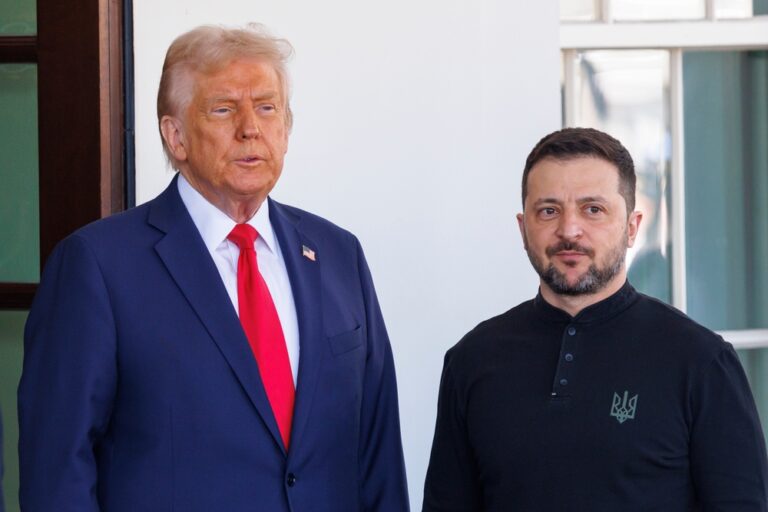
Observers have identified a troubling detail in a newly released photo of Donald Trump at the White House.

In a striking development that has captured the attention of social media users and political observers alike, a recently circulated photograph of former President Donald Trump at the White House has revealed an unexpected detail that some are calling “creepy.” The image, which shows the 78-year-old Republican president smiling while positioned in front of a series of portraits of past presidents and holding a model plane, has become the subject of lively online discussion due to an unusual element detected in its background.

The Unusual Detail Upon closer inspection—specifically, when the left-hand side of the image is magnified—it becomes apparent that an ornate, gold-framed mirror is visible just behind Trump’s right shoulder. In a twist that has both amused and unsettled viewers, the mirror’s reflection appears to capture none other than Elon Musk. The sight of Musk’s reflection in the mirror, as reported by eagle-eyed users on X (formerly Twitter), has triggered a flurry of commentary online.

Senator Adam Schiff unloads the cannons on Donald Trump over his “shameful” Oval Office confrontation with Ukrainian President Volodymyr Zelenskyy

This is what all of us are feeling…

“I literally just got off the plane and of course, read all the clips about what just took place in the Oval Office,” said Schiff. “I can’t think of a more shameful display by President of the United States in my lifetime.”

“When I think about all that the Greatest Generation did, the values that it fought for, when I think of what the country has stood for since, how we have defended democracy around the world, how we have come to the aid of our allies and friends, to see that all so shamefully betrayed is just heartbreaking,” he continued.

“What will it take to wake the conscience of this country? Is this now what America is?” asked Schiff.

“We are reduced to some kind of a extortionary protectionist racket where a leader of a country whose citizens have fought and died valiantly standing up to a Kremlin dictator, is so abused where we stand for nothing but using our might to extort the weak or the vulnerable,” he went on.

“Is this where we are right now? Because this is what we witnessed in the Oval Office today,” said Schiff. “Decades of hard work and sacrifice by our parents and grandparents all to be betrayed in such a tawdry fashion.”

“If the President of the United States won’t defend American allies and friends and interests, then the Congress needs to step up and do our damn job,” he concluded.

Well said senator. Trump’s disgraceful performance today was not only antithetical to America’s interests and values, it was a profound act of disrespect towards all of the honorable generations that have come before.

If Americans do not stand up together and denounce this stunning betrayal by Trump the stain of shame will never wash out of our national fabric.

History is watching and history judges harshly.

DOGE Questions Clinton’s Handling of USAID Funds

A Heated Online Debate Over Government Spending and Transportation Reform: A Comprehensive Analysis

In recent weeks, the nation’s digital landscape has been rocked by a series of sharp online exchanges between prominent political figures. At the center of the debate is a clash over the oversight of government spending and the future of America’s transportation infrastructure. This contentious debate began when a member of President Donald Trump’s administration engaged in a public spat with former Secretary of State Hillary Clinton. The disagreement focused on the work carried out by an agency called DOGE—a group assigned to use cutting‑edge technology to identify and eliminate wasteful spending at the U.S. Agency for International Development (USAID). The controversy escalated when Transportation Secretary Sean Duffy replied to an online jab from Clinton. She had criticized the department’s ability to manage an ambitious aviation systems upgrade following several deadly plane crashes.

This article presents a detailed account of the online exchange, examines the key policy issues involved, and explores the broader implications for U.S. transportation safety, infrastructure reform, and governmental accountability. As political leaders continue to debate the best ways to control federal spending and manage vital transportation systems, their heated words not only reveal deep divisions over priorities and methods but also highlight the challenges that lie ahead in modernizing government operations.

I. The Background: Government Spending and Efficiency Initiatives

A. The Role of DOGE and Efforts at USAID

The disagreement centers on government efforts to reform spending and improve efficiency. DOGE—an acronym that refers to a newly created agency within the Department of Government Efficiency—is tasked with using modern technology to sift through USAID spending records and root out wasteful expenditures. Proponents of this initiative say that it is a bold step forward in modernizing government operations and ensuring that taxpayer dollars are spent in the most effective way possible. They argue that for too long, inefficient spending and outdated practices have burdened federal agencies, and it is now time to bring these systems into the 21st century.

Supporters of DOGE assert that by employing advanced data analytics and innovative monitoring tools, the agency can uncover hidden inefficiencies and even instances of misappropriated funds. They believe that such transparency is essential not only for saving money but also for restoring public confidence in government. In contrast, critics worry that the personnel working at DOGE are too inexperienced to handle such a complex task. Former Secretary of State Hillary Clinton, in a series of online posts, argued that many of the team members “aren’t even old enough to rent a car.” Her criticism implied that managing projects like an aviation system upgrade—especially after recent fatal plane crashes—requires seasoned experts rather than a youthful, untested team.

B. Transportation Safety: The Broader Policy Debate

At the same time, transportation safety has become a pressing issue. During his brief tenure as Transportation Secretary, Sean Duffy has faced fierce criticism following two fatal plane crashes. These incidents have raised questions about the safety and reliability of America’s transportation systems, prompting widespread calls for improvements and reforms. Duffy’s administration has promised to modernize these systems using innovative technology, a plan that aligns with the broader objectives of reducing wasteful spending and streamlining government operations.

Critics, however, are skeptical. They argue that recent safety failures indicate deep-rooted problems within the transportation system that cannot be solved by simply injecting new technology or younger talent into the process. For them, the solution lies in balancing fresh ideas with the wisdom and experience of veteran professionals who understand the complexities of managing a national infrastructure. In their view, relying too heavily on new methods without sufficient oversight risks undermining public safety even further.

II. The Online Exchange: Barbs, Retorts, and Partisan Clashes

A. Hillary Clinton’s Criticism of the Current Approach

The online debate was sparked when Hillary Clinton took to social media to criticize the work being done by DOGE and the overall approach to government spending reform. Clinton’s posts were direct and pointed. In her messages, she challenged the competence of the current team working on the USAID spending review and questioned whether such a group had the requisite experience to manage projects as critical as upgrading aviation systems. She contended that the department’s condition had “deteriorated” under the leadership of Transportation Secretary Sean Duffy. Clinton’s criticism was not just about a single issue; it was part of a broader narrative that questioned the ability of the current administration to manage complex governmental functions effectively.

In one particularly pointed message, Clinton questioned whether the department should entrust such sensitive work to a team that, in her view, lacked proper experience. Her words were intended to remind critics of the potential consequences of poor oversight in an area as vital as transportation safety. By drawing attention to the supposed inexperience of DOGE personnel, she sought to highlight the risks inherent in replacing seasoned experts with a younger, more technologically focused team.

B. Sean Duffy’s Forceful Rebuttal

Transportation Secretary Sean Duffy did not let Clinton’s critiques go unanswered. He fired back with a series of impassioned online responses, arguing that the current issues in the nation’s transportation infrastructure are not the result of inexperience but rather the outcome of decades of bureaucratic inefficiency. Duffy pointed to the failures of established Washington practices as the true source of the problem, suggesting that the “experienced” bureaucrats in Washington had long obstructed progress.

Duffy’s response was both defensive and aggressive. He maintained that the need for change was urgent and that incorporating new, younger professionals into the team was essential for breaking free from outdated methods. In a particularly scathing remark, he accused the Clintons of having a personal agenda, asserting that DOGE’s investigations had uncovered evidence of “extreme grifting” by both Bill and Hillary Clinton through USAID. His message was clear: the current plan was not only necessary to restore safety and efficiency in transportation but also a direct challenge to those who had failed to address the systemic problems in federal spending.

C. The Broader Debate: Experience Versus Innovation

At the core of the online exchange is a fundamental debate that goes beyond personal attacks—it is a clash between two different visions for government reform. On one side, critics like Hillary Clinton argue that government work, especially projects involving public safety and infrastructure, demands the experience and judgment of long‑time professionals. They believe that newer methods and technologies, while promising, cannot replace the deep institutional knowledge that has been built over decades.

On the other side, supporters of the current approach, represented by Sean Duffy and his allies, insist that innovation is crucial for moving forward. They argue that many of the inefficiencies in the federal system are rooted in outdated practices that have persisted for too long. For them, a fresh, technology‑driven approach—employing tools like advanced data analytics and real‑time monitoring—is the key to modernizing government operations and making them more efficient. Duffy’s vision includes recruiting a new generation of professionals, even if they are as young as 22, to inject dynamism and creative problem‑solving into the system.

This clash of perspectives reflects a broader tension in American governance. The debate is not simply about a single project or agency; it is about the direction the country should take in managing its complex infrastructure and ensuring that federal spending is both effective and transparent. In a time when many Americans are frustrated by government inefficiency and waste, this debate has struck a chord—highlighting the urgent need for reform even as it exposes deep partisan divides.

III. Transportation Infrastructure and Safety Challenges

A. Aviation System Upgrades: A Critical Priority

One of the central points of contention in the debate is the pressing need to upgrade the nation’s aviation systems. Recent deadly plane crashes have underscored the vulnerabilities in the current system, prompting calls for an overhaul of safety protocols. Transportation Secretary Duffy has stated that his administration is committed to modernizing aviation safety by harnessing innovative technology and improving oversight at agencies like the Federal Aviation Administration (FAA).

During his confirmation hearing before the Senate Committee on Commerce, Science, and Transportation, Duffy stressed that the FAA must implement a robust safety plan to restore confidence in U.S. aviation. The recent incidents have not only sparked public outcry but also raised serious questions about the overall reliability of the nation’s transportation networks. The need for a sweeping, technology‑driven reform of the aviation system is seen by many as vital for preventing future tragedies.

B. Broader Transportation Incidents and Infrastructure Concerns

The debate over transportation safety extends beyond aviation. Across the country, there have been numerous incidents that highlight the state of America’s infrastructure. These include rail accidents, highway mishaps, and even chemical spills near small towns—all of which have drawn criticism from both political leaders and everyday citizens.

For instance, recent rail accidents have prompted calls for improved safety measures and better maintenance of aging tracks. Similarly, incidents involving major highways have led to demands for increased funding for infrastructure repair and modernization. In the wake of these challenges, Transportation Secretary Duffy’s administration is under pressure to deliver concrete improvements that can restore public trust in the nation’s transportation systems.

Critics argue that the current administration’s approach—focusing on aggressive cost-cutting and personnel changes—might not be enough to address the deep‑rooted issues that plague the country’s infrastructure. They contend that meaningful reform requires not only innovative technology but also the wisdom that comes from years of experience in managing complex systems.

C. The Role of Technology in Modernizing Infrastructure

Supporters of Duffy’s strategy emphasize the potential of modern technology to transform transportation safety. Advanced data analytics, real‑time monitoring systems, and automated inspection tools can all play a role in identifying issues before they become catastrophic. By integrating these technologies, Duffy believes that the U.S. can not only prevent future accidents but also streamline the overall management of its infrastructure.

One example of this approach is the incorporation of younger professionals who are more comfortable with digital tools and innovative methods. Duffy’s defense of hiring “22‑year‑olds” is based on the idea that a fresh, tech‑savvy team can bring new insights and approaches to longstanding problems. For these supporters, embracing technology is not just a cost‑cutting measure—it is a necessary evolution that can lead to safer, more efficient transportation systems for all Americans.

IV. Congressional Oversight and the Future of Government Spending

A. The Importance of Accountability

The online spat between Hillary Clinton and Transportation Secretary Sean Duffy has drawn attention to the broader issue of government accountability. Many lawmakers and analysts agree that ensuring taxpayer dollars are spent wisely is crucial for restoring public trust. The current debate has forced a renewed examination of how agencies like USAID and the Department of Transportation manage their budgets and whether wasteful spending can be eliminated through better oversight.

For proponents of the current reform efforts, the aggressive measures being taken by the administration are seen as a necessary step to hold federal agencies accountable. They argue that without strong oversight, inefficiencies and corruption can persist unchecked, leading to a misallocation of resources and a loss of public confidence.

B. Legislative Actions and Future Reforms

The controversy is likely to have significant implications for future legislation. Lawmakers from both parties are closely watching the debate, with some calling for increased funding for technological upgrades and more rigorous oversight measures. Potential legislative responses could include:

    • Enhanced Auditing Processes: Implementing regular, independent audits of federal spending to ensure that funds are used effectively.
    • Modernization Initiatives: Providing increased funding for modernizing government databases and infrastructure, particularly in sectors like transportation and foreign aid.
    • Stronger Regulatory Oversight: Enacting stricter regulations to prevent wasteful spending and ensure that public funds are allocated according to clear, transparent guidelines.
    • Public Accountability Measures: Requiring agencies to publish detailed reports on spending, along with explanations for any significant discrepancies or inefficiencies.

These potential reforms highlight the pressing need for a more accountable and transparent federal government—one that uses modern tools and innovative strategies to address challenges while preserving the experience and expertise of seasoned professionals.

C. Balancing Innovation with Experience

At the heart of the debate is the question of whether government reform should prioritize innovation over experience. While many supporters of Duffy’s strategy argue that fresh ideas and modern technology are essential for progress, critics counter that long‑standing institutional knowledge is indispensable for managing complex systems. The tension between these two perspectives is a recurring theme in discussions about federal efficiency and safety.

Hillary Clinton’s criticism reflects a belief that the current team lacks the necessary experience to manage critical projects like an aviation systems upgrade. In contrast, Duffy’s defense centers on the idea that innovation is needed to break free from outdated bureaucratic practices. Finding the right balance between these approaches is a challenge that policymakers will face in the coming years—a challenge that will determine the future direction of U.S. government reform.

V. The Interplay of Political Narratives and Public Opinion

A. Digital Media and the Power of Online Debate

The vigorous online exchange between political figures such as Hillary Clinton and Sean Duffy is a prime example of how digital media now shapes political discourse. Social media platforms provide a public arena where every comment is amplified, and every detail is scrutinized by millions of users. In this digital environment, even minor policy differences can become flashpoints for intense debate.

In this case, Clinton’s pointed remarks about the inexperience of DOGE personnel have sparked a wave of responses from supporters and critics alike. Memes, screenshots, and heated discussions have emerged on platforms like X, reflecting the deeply divided opinions among Americans regarding the best path forward for government reform. This digital debate underscores the broader challenge of maintaining civil discourse in a hyper‑polarized political landscape.

B. The Role of Political Narratives in Shaping Policy

The public debate over government spending and transportation reform is not just about numbers and budgets—it is also about competing political narratives. On one side, the narrative champions a modern, tech‑driven approach that promises to eliminate waste and improve efficiency. On the other, there is a counter‑narrative that values the wisdom of seasoned experts and cautions against too much disruption to established systems.

These narratives are deeply intertwined with the identities of the political figures involved. For example, Hillary Clinton’s long‑standing reputation as a seasoned policymaker contrasts with the youthful, innovative image that Sean Duffy and his team aim to project. This clash of images is at the heart of the current debate, influencing not only policy discussions but also public perceptions of leadership and competence.

C. Broader Implications for U.S. Governance

The outcome of this debate will have lasting effects on the future of U.S. government operations. If innovative, tech‑driven approaches prove successful in modernizing transportation systems and curbing wasteful spending, it could pave the way for sweeping reforms across all sectors of government. On the other hand, if the risks associated with sidelining experienced professionals become apparent, it may prompt a rebalancing of priorities, emphasizing a more cautious and measured approach to change.

For many citizens, the stakes are high. The efficient and transparent use of taxpayer dollars is essential for maintaining public trust in government institutions. The debate over whether to prioritize innovation over experience—and how to integrate both effectively—will be a key factor in shaping public policy for years to come.

VI. The Future of Transportation, Infrastructure, and Government Spending

A. New Technology and Its Potential Benefits

Advocates for the current reform strategy highlight the potential benefits of integrating new technology into government operations. Advanced data analytics, real‑time monitoring systems, and digital tools can provide unprecedented insights into how public funds are being used. By identifying wasteful spending and streamlining bureaucratic processes, technology can help federal agencies operate more efficiently and transparently.

For the transportation sector, technology offers the promise of safer, more reliable infrastructure. Upgraded aviation systems, improved safety protocols, and better data management can all contribute to preventing accidents and reducing risks. Proponents argue that a youthful, tech‑savvy team can drive these changes more effectively than an older, more traditional workforce that may be resistant to change.

B. The Importance of Preserving Institutional Knowledge

While innovation is critical, many critics stress the importance of preserving institutional knowledge. Experienced professionals bring a deep understanding of the complex regulatory and operational challenges that govern U.S. transportation systems. Without this experience, there is a risk that new initiatives may overlook key details, leading to unintended consequences.

Policymakers must find a way to blend new technology with the valuable insights of seasoned experts. This could involve training programs, mentorship initiatives, and collaborative efforts between new hires and long‑time employees. The goal is to ensure that modern solutions are implemented without discarding the wisdom that has been built over decades of public service.

C. Policy and Legislative Reforms

In addition to internal agency changes, the debate over government spending and transportation reform is likely to influence future legislation. Lawmakers from both sides of the aisle are calling for comprehensive reviews of federal spending practices and a more rigorous oversight framework. Possible legislative measures include:

    • Independent Audits: Regular, independent audits of federal agencies to ensure transparency and accountability.
    • Technology Upgrades: Increased funding for modernizing government data systems and infrastructure, particularly in critical sectors like transportation.
    • Stricter Regulatory Standards: Implementing stricter standards for spending and accountability to prevent waste and ensure that public funds are used effectively.
    • Enhanced Oversight: Establishing oversight committees dedicated to monitoring government efficiency and holding agencies accountable for mismanagement.

These potential reforms aim to strike a balance between encouraging innovation and preserving the essential expertise that keeps government operations running smoothly. The debate will undoubtedly play a central role in shaping the direction of future policy, as both sides push for a vision of government that is both modern and efficient.

VII. Implications for Political Discourse and Public Opinion

A. The Influence of Social Media

The online exchange between Hillary Clinton and Sean Duffy is a vivid example of how social media now shapes political narratives. Platforms like X (formerly Twitter) allow political figures to communicate directly with the public, bypassing traditional media channels. This direct communication style has the power to amplify every word, turning even a brief tweet into a major talking point.

The widespread discussion of the debate over DOGE’s oversight and transportation safety reflects the growing role of digital media in political discourse. Whether users find Clinton’s criticisms justified or Duffy’s rebuttals refreshing, the fact remains that social media is driving a broader conversation about government reform. This environment of rapid, often polarized commentary makes it clear that public opinion is more dynamic and contentious than ever before.

B. Shaping the Future of U.S. Governance

The debate over government spending and transportation infrastructure reform is not limited to online platforms; it is also influencing the broader direction of U.S. governance. As federal agencies strive to modernize and become more efficient, the discussions sparked by high‑profile exchanges will help shape policy decisions for years to come. The outcome of these debates will determine how effectively the government can adapt to the challenges of the modern world while maintaining the trust of its citizens.

Public opinion, as reflected in these online exchanges, serves as a barometer for the success or failure of government initiatives. When citizens see that their leaders are willing to embrace innovative solutions and hold agencies accountable, it can boost confidence in government operations. Conversely, if reforms are perceived as purely partisan or if experienced professionals are sidelined in favor of untested ideas, public trust may erode further.

C. A Call for Collaborative Reform

Ultimately, the path forward requires a balanced approach that brings together the best of both worlds—innovation and experience. Policymakers, federal agencies, and stakeholders from the private sector must work collaboratively to develop solutions that address both the immediate challenges of wasteful spending and transportation safety, as well as the long‑term needs of a modern government. This collaborative effort should focus on:

    • Embracing New Technologies: Leveraging advanced tools to improve data accuracy, monitor spending, and enhance safety protocols.
    • Preserving Institutional Wisdom: Ensuring that reforms do not come at the expense of the valuable expertise of seasoned professionals.
    • Promoting Transparency: Keeping the public informed through regular audits, clear communication, and open debates about policy directions.
  • Legislative Oversight: Enacting laws that support both modernization and accountability, ensuring that government reforms are sustainable and effective.

Such a collaborative approach will not only help address current issues but will also lay the foundation for a government that is agile, accountable, and responsive to the needs of its citizens.

VIII. Conclusion: Finding Balance in Reform

The recent online debates over government spending oversight and transportation infrastructure reform have illuminated deep-seated divisions within American political discourse. As former Secretary Hillary Clinton criticizes the perceived inexperience of a tech‑driven approach and Transportation Secretary Sean Duffy defends his plan to overhaul the nation’s aging systems with innovative technology, the conflict underscores a broader question: How do we modernize government without sacrificing the institutional knowledge that has long ensured stability and safety?

At its core, this debate is about accountability. Taxpayer dollars must be spent wisely, and federal agencies must be held to high standards of transparency and efficiency. Yet, reforms must be implemented in a way that preserves the expertise built over decades of dedicated service. The challenge for American leaders is to strike a balance between embracing new ideas and technologies and retaining the seasoned professionals who understand the intricate details of managing complex systems.

As these issues continue to play out online and in congressional hearings, the future of U.S. governance will depend on our ability to integrate innovation with experience. The ongoing discussions over spending reforms, transportation safety, and governmental oversight are not just abstract policy debates—they are issues that affect millions of Americans every day.

Looking ahead, lawmakers may propose a series of legislative and administrative reforms aimed at modernizing critical infrastructure and ensuring that federal spending is both effective and accountable. Whether through enhanced oversight measures, technological upgrades, or more rigorous auditing processes, the goal is to create a government that operates with both efficiency and integrity.

The public’s response to these debates—reflected in social media exchanges, public opinion polls, and commentary from political analysts—will play a crucial role in shaping the direction of future policy. In a time when the nation is deeply divided on many issues, restoring trust in government institutions is essential for maintaining a healthy democracy.

As we continue to watch these debates unfold, it is clear that the balance between innovation and experience is a central theme in modern American governance. The road ahead is challenging, but with a collaborative effort among policymakers, federal agencies, and the public, there is hope that meaningful reforms will emerge—reforms that not only address immediate challenges but also lay the groundwork for a more effective and trustworthy government.

What are your thoughts on the debate between innovation and experience in government reform? Do you believe that new technology can truly solve decades‑old problems, or is there still too much value in the tried and tested methods of the past? Share your views and join the conversation as we explore the future of American governance and the ongoing quest for accountability and transparency.

In summary, the heated online exchanges over government spending oversight and transportation infrastructure reveal a deep ideological divide. As former Secretary Hillary Clinton and Transportation Secretary Sean Duffy clash over the merits of a modern, tech‑driven approach versus the need for experienced oversight, the debate underscores critical questions about accountability, safety, and efficiency in government. The outcome of these discussions will help shape the future of U.S. infrastructure policy and federal spending reforms. Join the conversation and share your thoughts on how best to balance innovation with experience in creating a more effective government for all Americans.

Russia Issues a Bold Retort Following Trump’s ‘World War III’ Claim Against Zelensky

In a dramatic turn of events that has quickly reverberated across international media, Russian leaders and officials have reacted strongly to former President Donald Trump’s recent accusations against Ukrainian President Volodymyr Zelenskyy. During an ill‑fated meeting at the White House—intended to negotiate a minerals deal—Trump leveled harsh criticisms at Zelenskyy, accusing him of “gambling with World War III.” This statement, delivered in the charged atmosphere of the Oval Office, has since become a lightning rod for debate and has prompted notable responses from Moscow, where several political figures have seized on Trump’s remarks to question Zelenskyy’s leadership and reaffirm Russia’s longstanding geopolitical positions.

Below is a comprehensive analysis of the events leading up to the confrontation, the explosive comments made by Trump, and the subsequent reactions from prominent Russian officials and media outlets. We also explore the broader implications these developments may have on U.S.–Ukraine relations, the international energy and security landscape, and the future of diplomatic engagement in an increasingly polarized world.


I. The White House Confrontation: Setting the Stage

On Friday, 28 February, tensions in the Oval Office reached a boiling point during a high‑stakes meeting between U.S. President Trump and Ukrainian President Zelenskyy. The primary purpose of the gathering was to negotiate a minerals deal that would help strengthen economic ties and advance energy security initiatives between the two countries. However, the discussion quickly spiraled into a public dispute when Trump accused Zelenskyy of risking global stability.

A. Trump’s Accusations and Their Immediate Impact

During the meeting, Trump issued a stark warning, stating, “With us, you have the cards. You’re gambling with the lives of millions of people! You’re gambling with World War III! What you’re doing is very disrespectful to this country.” These words, punctuated by his signature blunt style, shocked those present and soon found their way into public discourse. Trump’s comment implied that any decision by Zelenskyy to act independently or oppose U.S. interests could lead to catastrophic international consequences. His criticism was not just a personal attack—it was a clear signal that he believed Ukrainian leadership was endangering global security by not aligning with American priorities.

B. The Aftermath of the Meeting

The contentious exchange ended without any concrete agreement being signed. Zelenskyy left the White House without securing the minerals deal, a failure that has cast a long shadow over the negotiations. This outcome not only damaged the prospects for enhanced U.S.–Ukraine economic cooperation but also set the stage for the explosive political reactions that followed, both in Washington and abroad.


II. Russian Reactions: Voices from Moscow

Following the meeting, Russian officials were quick to comment on the unfolding drama. Their responses have been characterized by a mixture of approval for Trump’s outspoken stance and harsh criticism of Zelenskyy’s perceived shortcomings.

A. Dmitry Medvedev’s Scathing Response

Former Russian President Dmitry Medvedev, now serving as deputy chairman of Russia’s Security Council, wasted no time in expressing his approval of Trump’s remarks. Taking to social media, Medvedev described Zelenskyy in sharply derogatory terms. In his now-viral post, Medvedev referred to Zelenskyy as an “insolent pig,” stating that the Ukrainian leader had finally received a “proper slap down” in the Oval Office. He went on to affirm, “@realDonaldTrump is right: the Kiev regime is ‘gambling with WWIII.’”

Medvedev’s blunt language resonated with many of his supporters in Russia, who have long criticized the Ukrainian government as being overly influenced by Western interests. His remarks not only served as a rebuke of Zelenskyy but also reinforced Moscow’s narrative that Ukraine is mismanaging its own national affairs while provoking unnecessary international conflict.

B. Additional Reactions from Russian Officials and Media

Other Russian voices soon joined the conversation. Maria Zakharova, the spokeswoman for the Russian Foreign Ministry, issued a statement on Telegram that combined cynicism with cautious praise for Trump’s handling of the situation. Zakharova questioned Zelenskyy’s claims that Ukraine had been isolated in 2022, suggesting instead that his actions revealed a broader failure to secure support from key allies. She remarked, “How Trump and his team held back from hitting that scumbag is a miracle of restraint,” echoing the sentiment that Ukraine’s leadership was not only flawed but also incapable of safeguarding its national interests.

Television commentators such as Vladimir Solovyov also weighed in, with Solovyov promising special programming that would detail what he described as “Zelenskyy’s suicide in the White House.” Such commentary has further fueled the Russian media’s portrayal of Zelenskyy as a weak and ineffective leader, unworthy of the international stage.


III. Geopolitical and Diplomatic Implications

A. The Impact on U.S.–Ukraine Relations

Trump’s incendiary remarks and the strong Russian reactions have significant implications for the relationship between the United States and Ukraine. At a time when Ukraine is already embroiled in conflicts and struggles for stability, the public airing of such disputes complicates the diplomatic landscape. Critics in Washington argue that the incident undermines the credibility of U.S. leadership and may hinder efforts to forge strong alliances in Eastern Europe.

For Ukrainian officials, the fallout is twofold. First, there is the immediate diplomatic embarrassment of having been publicly chastised by Trump in such dramatic terms. Second, the incident feeds into existing narratives in Russia that portray Ukraine as unstable and mismanaged—a portrayal that Moscow has used to justify its own policies in the region.

B. Broader Energy and Security Considerations

The confrontation also has ramifications beyond the immediate U.S.–Ukraine dynamic, extending into the realms of international energy and security policy. Ukraine’s role as a key transit country for Russian natural gas—and its broader strategic importance in the energy markets—means that any instability in Ukrainian leadership could have far‑reaching economic consequences.

Russian leaders have used Trump’s remarks to bolster their criticisms of Western energy policies. By emphasizing that Zelenskyy is “gambling with World War III,” Russian officials suggest that reckless leadership in Kyiv could destabilize the energy supply lines that many European countries depend on. This argument supports Russia’s broader narrative that the West is divided and that Ukrainian mismanagement poses a risk to global energy security.

C. Historical Context: A Long-Standing Struggle

The current exchange must be understood within the broader historical context of post‑Cold War geopolitics. Since the annexation of Crimea in 2014 and the ongoing conflict in Eastern Ukraine, Moscow has viewed Kyiv as a battleground for influence between Russia and the West. Every public disagreement, every instance of internal discord, becomes fodder for Moscow’s narrative of Western weakness and Ukrainian instability.

Trump’s remarks, combined with Medvedev’s harsh responses, echo past episodes where rhetoric was used to signal strength and resolve. These events are not isolated; they form part of a continuum in which international leaders use public statements to influence perceptions and assert their positions in the global power struggle.


IV. Analysis: The Rhetoric of Threats and Its Implications

A. Understanding Trump’s Provocative Language

President Trump’s choice of words during the meeting was both provocative and unprecedented. By stating that Zelenskyy was “gambling with World War III,” Trump was not merely making a political dig; he was issuing a stark warning about the potential global consequences of unilateral actions that could undermine American interests. For his supporters, this language is seen as a bold assertion of American power, a way of reminding international leaders that U.S. interests come first.

However, such language is also fraught with danger. Threatening rhetoric, even if later retracted or downplayed, can have destabilizing effects on diplomatic relations. When a sitting president makes sweeping statements that appear to threaten catastrophic outcomes, it can create an environment of uncertainty and fear among both allies and adversaries. In this instance, Trump’s words have been seized upon by Russian officials as evidence that the U.S. is not united in its approach to international security, thereby bolstering Moscow’s own position.

B. The Russian Perspective: A Calculated Response

Russian reactions to Trump’s remarks have been swift and measured, reflecting a deep-seated strategic interest in portraying Ukraine as a weak link in Western diplomacy. Dmitry Medvedev’s harsh condemnation of Zelenskyy—using terms like “insolent pig”—is part of a broader effort to undermine Ukrainian credibility. By publicly praising Trump’s criticism, Russian officials are signaling that they welcome any challenge to Ukrainian leadership, thereby justifying their own geopolitical maneuvers in the region.

Maria Zakharova’s commentary further illustrates this point. By highlighting what she describes as the shortcomings of Ukraine’s approach and by questioning Zelenskyy’s assertions about isolation, Zakharova is contributing to a narrative that paints Ukraine as inept and easily manipulated. Such messaging serves multiple purposes: it not only diminishes the standing of Ukrainian leaders but also reinforces the notion that Russia remains the dominant power in the region.

C. The Role of Media and Public Perception

The fallout from the Trump–Zelenskyy exchange has been amplified by the media on both sides of the Atlantic. In Russia, state‑backed outlets and social media channels have vigorously covered the incident, often emphasizing the confrontational language used by Trump and the subsequent derision of Zelenskyy. This coverage has helped to shape public opinion in Russia, where many citizens view Ukraine’s leadership with skepticism.

In the West, however, reactions have been mixed. Some commentators have criticized Trump for using such incendiary language, arguing that it undermines diplomatic efforts and creates unnecessary tension. Others have defended his remarks as part of a robust, unapologetic approach to foreign policy. The divergent views underscore the powerful role that media plays in framing political narratives and influencing public perception.


V. Broader Geopolitical Implications

A. U.S.–Ukraine Relations in a Turbulent Era

The dramatic exchange in the White House has significant implications for U.S.–Ukraine relations. At a time when Ukraine is facing immense pressure from Russian aggression and striving to secure its sovereignty, internal discord within the U.S. administration can weaken the country’s diplomatic position. Trump’s public criticism of Zelenskyy not only damages the personal reputation of the Ukrainian leader but also casts doubt on the United States’ ability to maintain a coherent, united stance on international issues.

For Ukrainian officials, this incident may serve as a catalyst to reexamine their own diplomatic strategies. If Western leaders appear divided or inconsistent, it could embolden adversaries and complicate efforts to secure much‑needed support from the international community. The situation underscores the critical importance of maintaining strong, unified leadership in the face of external threats.

B. The International Energy and Security Landscape

Beyond the immediate U.S.–Ukraine dynamic, Trump’s remarks have broader implications for global energy and security policy. Ukraine plays a crucial role in the transit of Russian natural gas to Europe, and any instability in the country can have ripple effects on international energy markets. Russian officials have seized on Trump’s language to argue that Ukraine’s erratic leadership poses a risk not only to its own security but also to that of its European neighbors.

By framing Zelenskyy’s actions as reckless and dangerous, Russian leaders are attempting to sway global opinion in favor of a more cautious, measured approach to energy and security policy. This strategy is designed to highlight the risks of unilateral decision‑making in a complex international environment—a message that resonates with many in Russia and among its allies.

C. Historical Echoes and the Future of Diplomatic Engagement

The current episode is reminiscent of past diplomatic confrontations where provocative language has had far‑reaching consequences. Throughout history, leaders have used strong rhetoric to assert national interests, sometimes with unintended consequences. In the post‑Cold War era, the delicate balance between power, influence, and diplomacy has only grown more complex. Trump’s remarks, combined with the sharp responses from Russian officials, serve as a reminder that the words of political leaders carry immense weight—especially when they are delivered in the world’s most powerful offices.

Looking forward, this incident is likely to influence future diplomatic engagements. The risk that public statements may escalate into broader international tensions is a cautionary tale for all leaders. It emphasizes the need for careful, measured language in high‑stakes negotiations and highlights the potential consequences of letting partisan rhetoric spill over into international relations.


VI. Analyzing the Rhetoric: Lessons for Political Discourse

A. The Impact of Provocative Language

Trump’s use of terms like “gambling with World War III” represents a departure from traditional diplomatic language. While some view such bold rhetoric as a sign of strength and resolve, others warn that it can be dangerous. When political leaders make statements that appear to threaten catastrophic outcomes, it risks setting off a chain reaction of responses that can destabilize international relations. In this case, the incendiary language has been used to cast Ukraine’s leadership in a highly negative light—a move that Russian officials have readily embraced.

B. The Power of Retrospective Criticism

Russian leaders have not only accepted Trump’s characterization of Zelenskyy but have amplified it to serve their own political narratives. By labeling Zelenskyy as reckless and irresponsible, figures like Dmitry Medvedev and Maria Zakharova aim to erode Western confidence in Ukrainian leadership. Their commentary reflects a broader strategy to portray Ukraine as a weak link in the security chain, thereby justifying Russia’s own geopolitical maneuvers in the region.

C. The Role of Social Media in Shaping Narratives

In today’s digital era, social media plays a critical role in disseminating and amplifying political messages. The rapid spread of images, quotes, and memes related to the Trump–Zelenskyy exchange has ensured that the incident remains a hot topic of conversation. Platforms like X (formerly Twitter) allow both supporters and critics to voice their opinions in real time, creating a dynamic and often chaotic public debate. This environment not only influences public perception but also forces political leaders to be more cautious (or, in some cases, more provocative) in their communications.


VII. Looking Ahead: Diplomatic and Policy Implications

A. The Future of U.S.–Ukraine Relations

The fallout from the contentious White House meeting is likely to have lasting effects on U.S.–Ukraine relations. As Ukraine continues to navigate the challenges posed by Russian aggression, the need for strong, cohesive support from the United States is more critical than ever. However, internal disputes and public confrontations, like the one witnessed in the Oval Office, could weaken the foundation of that support. Ukrainian officials will need to work hard to reassure both their domestic audience and international partners that they remain committed to effective, independent leadership—even in the face of external criticism.

B. Shaping Global Energy and Security Policies

The international implications of the dispute extend into the realm of energy and security policy. With Ukraine serving as a key transit route for Russian natural gas, any instability in the region could have significant consequences for European energy security. Russian officials have used Trump’s remarks to argue that Ukrainian mismanagement poses a risk to global energy supplies. This narrative, if it gains traction, could shift the balance of power in energy policy and alter the strategies of Western nations as they seek to secure their energy needs.

C. The Role of Diplomatic Messaging

This episode underscores the importance of diplomatic messaging in today’s interconnected world. The language used by political leaders can either defuse tensions or exacerbate them, and the recent exchange between Trump and Zelenskyy serves as a cautionary tale. Future diplomatic engagements will likely be influenced by the lessons learned here: that careful, measured language is essential when dealing with issues of national and international security, and that the public airing of disagreements can have unforeseen consequences.


VIII. Conclusion: A Cautionary Tale of Words and Power

The dramatic confrontation in the White House between President Trump and President Zelenskyy, and the strong reactions it has provoked from Russian leaders, serve as a stark reminder of the power of words in the realm of international diplomacy. Trump’s bombastic claim that Zelenskyy was “gambling with World War III” has not only cast a long shadow over U.S.–Ukraine negotiations but has also resonated deeply in Russian political circles. Figures like Dmitry Medvedev have seized on the moment, using it to criticize Ukrainian leadership and to reinforce longstanding narratives about the instability of Kyiv.

This episode highlights several key lessons for the global political landscape. First, it demonstrates how high‑stakes negotiations can quickly devolve into public disputes when strong rhetoric is employed. Second, it shows the enduring impact that political language can have on international relations—where a single statement can alter perceptions and fuel long‑standing geopolitical debates. Finally, it underscores the role of media and social platforms in shaping the narratives that define our understanding of power and leadership.

As the international community continues to assess the fallout from this incident, the broader implications for U.S.–Ukraine relations, global energy policy, and the conduct of diplomacy remain uncertain. What is clear, however, is that in today’s digital age, every word uttered by a political leader is subject to immediate scrutiny and interpretation—an environment in which the stakes are as high as ever.

The current situation serves as a cautionary tale for all political leaders: the words chosen in moments of tension can reverberate far beyond the room in which they are spoken. As policymakers and diplomats work to rebuild trust and forge new alliances, they must do so with an acute awareness of the power of language—and the lasting impact that bold statements can have on the international stage.

In conclusion, the fallout from Trump’s remarks against Zelenskyy—and the subsequent reactions from Russian leaders—offers a vivid illustration of how intertwined the worlds of politics, media, and international diplomacy have become. The incident is more than just a brief flashpoint in a contentious meeting; it is a reminder that in our globalized, digitally connected world, every public utterance matters. As nations navigate the complexities of modern geopolitics, the challenge will be to harness the power of language in ways that promote stability, foster cooperation, and ultimately, safeguard global security.

What are your thoughts on the explosive reactions from Russian leaders to Trump’s accusations? Do you see this as a turning point in U.S.–Ukraine relations or merely another episode in the ongoing power struggle between the West and Russia? Share your insights and join the conversation as we continue to explore the ever-changing landscape of international diplomacy and the profound impact of political rhetoric.


In summary, the dramatic exchange at the White House—where President Trump accused Ukrainian President Zelenskyy of “gambling with World War III”—has sparked strong reactions from Russian political figures. This incident, now analyzed in detail, highlights the power of provocative language and its far‑reaching implications for international relations, energy policy, and global security. As Russian leaders like Dmitry Medvedev and Maria Zakharova respond sharply to Trump’s remarks, the incident underscores the deep divisions and enduring challenges of navigating diplomacy in a complex, interconnected world. Join the discussion and share your views on the future of U.S.–Ukraine relations and the role of political rhetoric in shaping global events.

Shania Twain – from poverty to fame

One well-known celebrity whose name is well-known throughout the world is Shania Twain. Her life was not always as glamourous as one might think, though. Finding out more about the early years of your favorite star is always intriguing.

Although she may presently rule the charts and tour the globe, that was not always the case. Her life was not always simple.

You might be surprised to learn more about the singer’s early years if you continue reading.

She had a difficult upbringing in Timmins, Ontario, where she was born into a family struggling with poverty. Things were made much more difficult by her mother’s despair and her stepfather’s low-paying forestry job. She had to learn to live without from an early age because she was only one of five children.

She started performing and singing in bars, but after a while she would be responsible for much more than simply occasional jobs. She soon found herself in charge of her siblings.

She was accustomed to living without even necessities like food, heating, and power because her family had always suffered financially.

When she would go without lunch and glance at her classmates, hoping they would leave some food uneaten so she could eat it, she recognized her life was different from theirs.

Usually, the young girl would inform her instructor that she had forgotten her lunch at home or at her locker. As an escape from the terrible reality of her existence, she turned her attention to music.

She would take her guitar into the forest, start a tiny fire, and then let her music consume her. She was able to forget the severity of her real life, where she was burdened by poverty and her duties, thanks to the music she sang.

Initial performance experience
When she was just eight years old, her mother started taking her to local taverns to perform after noticing her talent. Since she was legally prohibited from being in an establishment where alcohol was being actively supplied to people at that age, she would perform after midnight, when the customers would already have their alcohol served to them.

She received permission to perform earlier in the evening when she was eleven years old, but she wasn’t paid until she was fourteen. Additionally, she began working at McDonald’s, which she subsequently called her “saving grace” because it paid her and gave her regular meals—something she was unaware of.

She had a very hectic schedule that left her weary; she would work at McDonald’s after school and then sing at bars. She hoped for a brighter life, nevertheless, and concentrated on her music.

But poverty wasn’t the only hardship her family faced. She and her siblings were formally adopted by her stepfather. Because of his harshness and abuse, the children found their household to be extremely toxic and frightening.

She remembers being left on her own to deal with his violence. She remembered a particular instance in which she defended herself by throwing a chair at him. She subsequently remarked, “I think a lot of that was anger, not courage.”

It was just one aspect of her anguish, and the assault continued for some time. Her stepfather started abusing her sexually when she was ten years old. She concealed the abuse, which continued to haunt her for years until she found the courage to discuss it in public.

Her mother and stepfather perished in a vehicle accident when she was 22 years old, leaving some of her trauma unsolved. It was left to Shania Twain to look after her younger siblings. She was in charge of the younger kids because she was the second oldest.

A new position
She accepted a singing job at a neighboring resort, which allowed her to have a little home, because she wanted to make sure they were all together. Her life was really difficult at the moment. She got up to get her siblings to school, cut wood to heat the house, and then sang till the wee hours of the morning.

For her employment, the teen had to keep up a polished, feminine image as a vocalist. Her employment now forced her to take care of herself, something she had never had time to do previously.

The significant break
She was able to concentrate more on her own job as her siblings became older and more self-sufficient. She emailed a demo she had recorded to record labels. Her efforts were rewarded when she was signed by Mercury Nashville. Her musical career began at this point.

She met a well-known music producer when her career in music first began. They worked together, and their relationship quickly became amorous as they were married. Soon after, they co-wrote and co-produced Twain’s songs, helping to shape his sound.

As a result, she quickly became well-known and her music was heard by large audiences.

However, as her popularity grew, she became aware of some difficulties with her voice. She was diagnosed with Lyme illness, which had impacted her vocal chords, but it took an additional ten years.

She had to stop singing and have surgery, which made her voice more raspy than before. She accepted this distinction and concentrated on her music. She continued to have a successful creative collaboration with her husband, music producer Robert “Mutt” Lange. Eja D’Angelo Lange is the couple’s son. The pair was succeeding personally in addition to artistically, until Twain found out her husband was having an affair.

He was having an affair with Marie-Anne Thiébaud, a close friend of his who had served as their secretary in the past. Thiébaud’s husband, who was equally taken aback by the affair, turned out to be Shania Twain’s surprise ally. Their mutual destruction marked the beginning of her relationship with Frédéric Thiébaud.

But their relationship quickly blossomed into a romantic one, and they were married in 2011 to start a new chapter in their lives.

Twain disclosed that she no longer has animosity toward her former spouse and his extramarital affair. She is grateful for his contributions to her music career and their shared child.

In her lifetime, the singer has witnessed it everything! She has experienced both the greatest and the lowest points of her life! We wish the vocalist all the best in her future endeavors. Spread the word about this to other Shania Twain admirers who might not be aware of it.

Trump Declares ‘Invasion’ Of Illegal Migrants Over After Historic Drop

President Donald Trump took to social media to announce, “The Invasion of our Country is OVER,” on Saturday following his first full month in office, during which U.S. Customs and Border Protection (CBP) recorded just 8,326 apprehensions of illegal immigrants—a historic low.

In a post on Truth Social, Trump highlighted the number of apprehensions at the southern border by Border Patrol, all of whom were “quickly ejected from our Nation or, when necessary, prosecuted for crimes against the United States of America.”

His statement comes after he declared an emergency along the U.S.-Mexico border his first day in office.

The Trump administration’s first full month of apprehensions reflects a 96% decrease from the Biden administration’s peak in December 2023, when CBP recorded 301,981 encounters at the southern border.

“This means that very few people came – The Invasion of our Country is OVER,” Trump wrote in the post. “In comparison, under Joe Biden, there were 300,000 Illegals crossing in one month, and virtually ALL of them were released into our Country. Thanks to the Trump Administration Policies, the Border is CLOSED to all Illegal Immigrants.

In fiscal year 2024, Immigration and Customs Enforcement (ICE) reported 271,484 removals, while the Department of Homeland Security (DHS) recorded approximately 700,000 removals and returns—the highest total for any fiscal year since 2010.

Under the Biden administration, single-day apprehensions frequently neared 10,000 illegal immigrants, exceeding the total recorded by the new administration for an entire month.

The accomplishments of the Trump administration resulted only from executive actions and stronger messaging not from any new legislation passed by Congress, Fox News noted.

“Anyone who tries to illegally enter the U.S.A. will face significant criminal penalties and immediate deportation,” the president wrote.

After making border security and illegal immigration a central focus of his campaign, Trump signed executive orders declaring a national emergency at the border and deploying the U.S. military to address the surge.

He also issued orders to end birthright citizenship, suspend refugee admissions, halt the use of an app that facilitated migrant entry through humanitarian parole, and restart border wall construction.

In response, the Pentagon deployed troops to the southern border and opened Guantánamo Bay to house migrants.

DHS overturned ICE restrictions previously implemented by the Biden administration, granting law enforcement broader authority to enter “sensitive” locations, conduct expedited removals, and reassess the parole status of migrants admitted under parole.

According to DHS data obtained by Fox News Digital, ICE made 11,791 interior arrests from Jan. 20 to Feb. 8, a 137% increase from the 4,969 arrests during the same period in 2024.

A series of high-profile raids in “sanctuary” cities resulted in more than a thousand daily arrests, including those of violent criminals and gang members.

The country has also seen financial gains from Trump’s new border policies, including the recovery of tens of millions of dollars previously allocated to New York City for housing migrants in hotels. A recent executive order directed all federal agencies to identify federally funded programs that provide financial benefits to illegal immigrants and to “take corrective action.”

The order aims to ensure that federal funds are not used to support sanctuary policies or facilitate illegal immigration.

Trump’s full Truth Social message read: “The month of February, my first full month in Office, had the LOWEST number of Illegal Immigrants trying to enter our Country in History – BY FAR! There were only 8,326 apprehensions of Illegals by Border Patrol at the U.S. – Mexico Border, all of whom were quickly ejected from our Nation or, when necessary, prosecuted for crimes against the United States of America. This means that very few people came – The Invasion of our Country is OVER. In comparison, under Joe Biden, there were 300,000 Illegals crossing in one month, and virtually ALL of them were released into our Country. Thanks to the Trump Administration Policies, the Border is CLOSED to all Illegal Immigrants. Anyone who tries to illegally enter the U.S.A. will face significant criminal penalties and immediate deportation.”

I Refuse to Give Up My Rights Just Because I Wasn’t a “Devoted Daughter”

I Refuse to Give Up My Rights Just Because I Wasn’t a “Devoted Daughter”

Here’s Cara’s letter:

My single sister, 38, cared for our sick mother for 12 years because I was busy raising 4 kids. Mom died, so I want her out of the home to sell and share 50/50. But she said, “You don’t deserve a penny! You were not a devoted daughter!”

I ignored her. But when I arrived to the house, the locks were changed. I could see a shadow from the window, but I froze when I realized the house was almost empty.

For illustrative purpose only.

I forced myself in and was shocked when I discovered my sister packing the last box of belongings. “What are you doing?” I asked. She just smiled and said, “Oh, didn’t I tell you? I sold the house.”

I was furious and told her she should have consulted me first because the house belonged to both of us. But then she handed me a document—a paper signed by our mother, stating that she would inherit 100% of the property. That’s when I realized the truth: my sister had convinced Mom to give the house entirely to her.

Smirking, she told me she had been waiting to see how I would act after Mom’s death. When she saw that I was so quick to kick her out and sell the property, she decided I didn’t deserve anything.

The house is legally hers, and I have no way to fight it. I feel lost. What should I do?

Tucker Carlson SHOCKED As Guest EXPOSES Michelle Obama’s Dirty Secret

In a recent episode of his widely watched program, Tucker Carlson found himself in an unexpected and dramatic exchange when guest Patrick Bet-David presented claims concerning former First Lady Michelle Obama that have since ignited intense discussion among viewers and political commentators. The conversation, which quickly became one of the most talked-about segments of the night, centered on revelations that Bet-David described as exposing a significant secret about Michelle Obama. While the specifics of his allegations have generated controversy and debate, the exchange underscores the current polarized state of political discourse in America.

Setting the Stage for a Provocative Discussion
Tucker Carlson’s program, known for its in-depth analysis and often provocative interviews, has long served as a platform for challenging discussions on politics and current events. On this particular evening, Carlson welcomed Patrick Bet-David—a successful entrepreneur, author, and public speaker renowned for his incisive commentary on political and economic issues—as his guest. The episode was billed as an exploration of political narratives and the influence of prominent figures on public opinion.

As the discussion unfolded, Bet-David transitioned from general political commentary to a subject that immediately captured the attention of both Carlson and the viewing audience. With a measured tone that belied the sensational nature of his claim, Bet-David alleged that there was a “dirty secret” involving Michelle Obama that had been hidden from the public eye for years. The remark, delivered with an air of conviction, prompted an immediate reaction from Carlson, whose initial expression of shock quickly gave way to a series of pointed questions aimed at clarifying the basis of Bet-David’s assertions.

DHS Cracks Down on Leakers: Noem Vows Termination and Consequences

In a resolute and uncompromising statement, Department of Homeland Security (DHS) Secretary Kristi Noem announced that several individuals responsible for leaking sensitive information about immigration enforcement operations have been identified and are now facing termination. “I have found some leakers,” Noem declared on a recent press briefing. “We are continuing to get more. They will be fired and there will be consequences.” This stern warning comes in the wake of mounting concerns that unauthorized disclosures of operational details have endangered law enforcement personnel and compromised national security.

Noem detailed that her agency employed every available tactic—ranging from polygraph tests to exhaustive reviews of communications such as emails—to track down the sources of these leaks. The revelations follow a series of controversial incidents, including a report by the Los Angeles Times based on a leaked internal memo that outlined plans for a “large-scale” ICE raid in the Los Angeles area. Noem has previously accused the FBI of leaking information related to immigration enforcement operations, and she did not hesitate to call out the agency on social media, asserting, “The FBI is so corrupt.”

In this comprehensive report, we explore the full context and implications of Noem’s statements, the methods used to identify leakers, the political and legal ramifications, and the broader impact on federal immigration enforcement and national security.

In an era where the flow of information can dramatically influence public opinion and compromise national security, the Department of Homeland Security (DHS) has taken a decisive stand. DHS Secretary Kristi Noem’s recent announcement that individuals responsible for leaking sensitive information about immigration enforcement operations are being identified and will face termination is a clarion call to those who would undermine the integrity of federal operations. Noem’s firm declaration reflects a broader commitment to protecting law enforcement personnel and ensuring that critical national security details do not fall into the wrong hands.

BREAKING: Trump’s Economic Report Shocks Critics—Is This the End of Democrat 2026 Hopes?

In a stunning economic update that could reshape the political landscape, President Donald Trump has unveiled a report from the U.S. Bureau of Economic Analysis that appears to put a significant dent in Democrats’ prospects for the 2026 elections. The Personal Consumption Expenditure (PCE) Index—a key measure of inflation—showed only a 0.3% increase last month, signaling that inflation may be easing faster than many had feared. With this promising sign, Trump’s administration is positioning itself as the champion of economic revival, while critics warn that the situation remains precarious.

A Closer Look at the PCE Index
The PCE Index, which measures changes in the prices of goods and services consumed by Americans, has long been a reliable indicator of inflationary trends. In the latest report, the index rose by a modest 0.3% in the last month. When compared to the same period last year, the index has increased by 2.5% overall—or 2.6% when excluding the volatile food and energy sectors. Economists say that while these numbers were broadly in line with expectations, they are a marked improvement over the rapid inflation seen during the Biden administration.

Harvard economist and former advisor to President Barack Obama, Jason Furman, weighed in on the figures via a series of posts on X (formerly Twitter). “Nothing in these data changes the narrative much,” Furman remarked. “Inflation appears to be gently slowing, and that could give optimists hope that it will continue to ease.” However, he also noted that core inflation remains stubbornly above 2.5%, much higher than the 2.1% forecast just a year ago, suggesting that the challenge of taming inflation is far from over.

Mixed Signals in Personal Income and Spending
The economic report also revealed that personal income increased by 0.9% in January. However, a simultaneous decline in personal spending and a rise in personal savings have raised concerns among analysts. Chris Zaccarelli, Chief Investment Officer for Northlight Asset Management in Charlotte, N.C., described the report as “a double-edged sword.” While the modest rise in the PCE Index is seen as positive, the significant drop in consumer spending could signal a weakening economy. “It’s concerning because a steep fall in spending might indicate that Americans are tightening their belts, which could slow economic growth further,” Zaccarelli explained.

When Silence Speaks The Day I Overheard the Unthinkable

I had just gotten home one cool autumn evening. The house was unusually quiet—a deep, almost eerie silence that made every step I took seem amplified. My three-year-old son, Leo, was sound asleep in his room, cocooned in soft blankets that smelled faintly of his favorite lavender lotion. I tiptoed through the hallway, careful not to disturb him, and felt a sense of relief knowing he was resting peacefully. I had been looking forward to this moment all day: a brief respite from a hectic schedule, a chance to unwind in the warmth of our home.

But as I reached the end of the hall, a set of hushed whispers drifted from the kitchen. At first, I assumed my tired mind was playing tricks on me. Yet, as I listened closer, the voices became unmistakable. They were voices I knew too well—my husband’s, steady and familiar, and another, equally familiar yet imbued with a cold urgency. It was my mother-in-law.

I froze in place. My heart began pounding erratically as the conversation unfolded. I had never wanted to eavesdrop on them; I truly had not. But in that moment, the silence of the house demanded attention. I leaned against the wall, straining to catch every word, each syllable slicing through the quiet with painful clarity.

Then I heard it—my name. “She has no idea,” my mother-in-law whispered. I could barely breathe as my stomach sank.

The shape of your belly button reveals your personality

Have you ever stopped to notice the shape of your belly button? Although it often goes unnoticed, it carries more than just a trace of our embryonic development. Some beliefs suggest that the shape of the belly button reveals intriguing aspects of our personality, indicating behavioral traits and even the way we relate to the world around us.

Whether you are a sensitive and gentle person or someone with an adventurous spirit, there is a theory for each type of belly button! Are you curious to know more? See below which description you identify with most and discover a little more about yourself!

1. Oval or rounded belly button

If your belly button is more oval or rounded in shape, this suggests that you have a sensitive and gentle soul. You are a caring, empathetic person and enjoy helping others. However, this does not mean that you allow people to take advantage of your kindness. When someone tries to take advantage of your generous nature, they are surprised to realize that you also have a firm and determined side.

You get along very well with children and value the pure and spontaneous way they see the world. It would be wonderful if everyone maintained this innocence and joy throughout their lives!

2. Deep belly button

If your belly button is deeper, you are probably a strong and fearless person. However, behind this appearance of security and independence, there is a more introverted side. You enjoy the company of friends and enjoy socializing, but deep down, you really value your alone time. There is nothing like being at home, wrapped up in a blanket with a good cup of coffee, reading a book or watching a series.

However, when you are in a group, you like to attract attention and be noticed. Your personality is charismatic, and you always have interesting stories to tell. It is no wonder that others are naturally attracted to your energy!

3. Small belly button

If your belly button is small, you are an adventurous person full of dreams. Traveling the world is one of your greatest desires, and you are constantly seeking new experiences and challenges. Your life is driven by the desire to discover new things and reinvent yourself every day.

Despite your independence, you also have a small group of people who are extremely important to you. You protect and value these relationships, ensuring that your closest friends and family feel loved and cared for. Your free spirit does not prevent you from creating deep bonds with those who really matter!

4. Belly button sticking out

If your belly button sticks out more, you are probably a captivating and charming person. People see you as a sweet and attractive being, but your seductive and confident side makes you even more irresistible. You value beauty, fun and, above all, romance.

You believe that everyone deserves to be pampered from time to time, and you also enjoy receiving affection and attention. Your charming way makes you admired by many, and you know how to enjoy the good moments in life!

5. Wide belly button

If your belly button is wider, you are an extremely confident and determined person. You know what you want and are willing to work tirelessly to achieve your goals. Your confidence and enthusiasm make those around you see you as a true leader.

You have a strong sense of purpose and inspire those around you to also seek their own achievements. Your natural charisma makes you respected and admired both in the professional environment and in your personal life.

6. Shallow belly button

If your belly button is shallower, your greatest quality is empathy. You have an impressive ability to understand and feel the emotions of others, which makes you an incredibly kind, loving and generous person.

Because of this sensitivity, you are likely to be quite popular. Your honesty and kind heart make others trust you and seek your advice in difficult times. Anyone who has you around can consider themselves lucky!

What does this mean for you?

Although this analysis is based on popular beliefs and has no scientific basis, it is fun to explore different forms of self-knowledge. The way we see ourselves and identify with certain personality traits helps us better understand our desires, behaviors and relationships with others.

And you, did you identify with any description? Share this article with your friends and discover together what your belly buttons can reveal about your personality!

Princess Beatrice welcomes baby – her name has everyone talking

Princess Beatrice and her husband, Edoardo Mapelli Mozzi, are officially parents of two. On January 22, 2024, they welcomed their second child.

Born prematurely, she weighed only 4 pounds and 5 ounces, but both she and her mother are “healthy and doing well,” according to Buckingham Palace.

”What a beautiful name..”

It’s clear that the royal baby’s arrival has brought much joy, not only to her family but to royal fans around the world. The proud parents shared the news with fans on January 29th, and social media exploded with well-wishes and admiration.

While the birth came a few weeks early (with her due date set for early spring), Princess Beatrice and Edoardo couldn’t be more in love with their new bundle of joy.

“We welcomed Baby Athena into our lives last week. She is tiny and absolutely perfect,” Edoardo shared on Instagram, expressing the deep love he and Beatrice feel for their daughter.

“What a beautiful name. Congratulations!” said one commenter, while another wrote, “I love Athena’s name. So happy they’re all healthy!”

The name Athena Elizabeth Rose Mapelli Mozzi has taken the world by storm, and it’s not just because of its elegance. There’s a deeper, historical significance behind it that’s got everyone talking.

In Greek mythology, Athena is the goddess of wisdom, war, and practical reason. But beyond its mythological roots, the name also has a personal connection to the British royal family’s heritage. Athena, born to Princess Beatrice and Edoardo Mapelli Mozzi, isn’t just a beautiful name — it connects her to the House of Windsor’s Greek ancestry.

Princess Diana connection

Here’s the royal twist: Beatrice’s grandfather, Prince Philip, was born in Corfu in 1921 into the Greek royal family. He was the son of Prince Andrew of Greece and Denmark and Princess Alice of Battenberg. So, naming their daughter Athena is seen as a tribute to that Greek lineage.

But that’s not all — baby Athena’s birth has moved her up the royal line of succession. She is now 11th in line to the throne, bumping her Aunt Princess Eugenie down to 12th place.

And this isn’t the first time Athena has graced royal circles. Lady Kitty Spencer, niece of the late Princess Diana, also named her daughter Athena in 2024, keeping the name within the family.

Reaction from the public

The reaction from the public has been overwhelmingly positive, with fans taking to social media to shower Athena and her parents with love. One fan commented, “Oh, welcome to the world beautiful tiny tot. Congratulations to you all xxx,” while another gushed, “Awwww! So happy for them! She is gorgeous!!!!”

Even those close to the family couldn’t help but praise Beatrice’s nurturing side. “She’s extremely nurturing and involved with both kids’ lives. It’s lovely to see my best friend growing into this next stage of her life,” said Gabriella Peacock, Beatrice’s good friend.

Three children

This is Beatrice and Edoardo’s second child together after daughter Sienna was born in 2021. But Athena has a big brother, too.

Edoardo’s son, Wolfie, from his previous relationship, is already completely “besotted” with his little sister, as Edoardo put it.

Edoardo has been a devoted father to Wolfie since 2016, and Princess Beatrice, who is 9th in line to the throne, has been a wonderful stepmother. Friends and sources close to the couple have spoken highly of their parenting skills. “Bea has such a good heart and she’s such a kind person, so motherhood came very naturally to her,” said a close friend. “She’s a fantastic mom.”

It’s clear that Princess Beatrice and Edoardo are building a strong, loving family, and Athena is the perfect addition to their world. With their hearts “overflowing with love,” as Edoardo put it, they’re enjoying every moment with their precious daughter.

Athena is truly a name full of history, beauty, and deep-rooted royal significance. It’s clear that this little one is already making waves, and she’s not even a month old yet! We can’t wait to see what the future holds for this precious princess.

Let’s show the royal family some love and celebrate Baby Athena’s arrival! What do you think of her name? Drop your thoughts in the comments! 🎉👑👶

Viewers React Similarly After Zelenskyy Explains His Decision to Skip the Suit at the White House

Ukrainian President Volodymyr Zelensky faced questioning and comments over his choice to wear combat gear during a Friday White House visit originally etched out for peace meetings but instead marked by a heated exchange in the Oval Office.

“Why don’t you wear a suit? You’re in the highest level of this country’s office, and you refuse to wear a suit? I just want to see, do you own a suit?” Brian Glenn, a commentator for the Real America’s Voice outlet, asked Zelensky.

“A lot of Americans have problems with you respecting this office.”

The foreign leader quickly jabbed back with a sarcastic remark.

“I will wear costume after this war will finish,” Zelensky said, possibly using the word “kostyum,” meaning “suit” in Ukrainian, per Google Translate.

“Maybe something like yours, yes, maybe something better, I don’t know,” Zelensky added.

Upon his arrival, Trump appeared to jokingly tell reporters Zelensky was “all dressed up today” while greeting the leader at the North portico. Zelensky’s attire consisted of an all-black slim cargo uniform and combat boots.

Zelensky notably wore similar clothing for his past meetings with former President Biden, members of Congress and other appearances in the U.S.

Before today, the Ukrainian leader had visited the White House four times since September 2023. However, none of the trips has ended as abruptly and as uncertain as Friday’s botched bilateral meeting.

Zelensky tangled with Trump and Vice President Vance in front of cameras and was pressed to show gratitude for the U.S. dollars poured into security assistance packages and weaponry to the war-torn country.

The Ukrainian leader declared his gratitude but was ultimately roughed up by the president, who said Zelensky has no playing cards or current standing in peace negotiations.

“Don’t tell us what we’re going to feel because you’re in no position … to dictate what we’re going to feel,” Trump said, chiding Zelensky.

“We’re going to feel very good and very strong. You’re right now, not in a very good position.”

After the conversation, hopes for a ceasefire quickly faded as the Ukrainian leader quickly left the premises.

White House officials claimed it was at the president’s dismissal.

Zelensky also canceled his appearance at the Hudson Institute, a D.C.-based think tank.

Trump Overhauls Social Security Amid DOGE Controversy Top Official Quits, New Leaders in Place

Since returning to office last month, President Donald Trump has embarked on a series of bold changes that extend even into the heart of the federal bureaucracy. In one unexpected turn, the top official at the Social Security Administration (SSA) has quit over the weekend—an exit linked to pressures from Elon Musk’s Department for Government Efficiency (DOGE), which has been pushing to access private records of Americans.

A Major Reshuffle at the SSA
Michelle King, who had served as acting commissioner of the SSA for 30 years and was responsible for managing benefits for 73 million retirees and disabled Americans, has stepped down from her role. According to USA Today and confirmed by the White House, her resignation comes amid mounting pressure from DOGE, which is aggressively pursuing cost-cutting and anti-fraud measures across federal agencies.

In a swift move to ensure continuity of leadership, President Trump replaced King with Leland Dudek—an experienced official from Social Security’s anti-fraud office. Additionally, Trump has nominated Frank Bisignano, president and CEO of Fiserv, to lead the SSA on a full-time basis, pending Senate confirmation. In a statement, White House spokesperson Harrison Fields declared, “President Trump is committed to appointing the best and most qualified individuals who are dedicated to working on behalf of the American people, not to appease the bureaucracy that has failed them for far too long.”

DOGE and the Push for Government Efficiency
Elon Musk’s Department for Government Efficiency has been busy making waves across various federal agencies. DOGE’s mission is to cut government costs, modernize federal technology, and root out fraud and waste. One of its more eyebrow-raising initiatives has been its attempt to access IRS computer systems that store sensitive private data—a move that has sparked controversy and drawn sharp criticism from privacy advocates.

Cardiologist: How to Quickly Lose a Hanging Belly (Watch)
Wellness Explorer
Within the SSA, DOGE has been closely scrutinizing spending and operations. Musk himself has been vocal about his belief that significant fraud exists within the Social Security system, alleging that payments are being sent to deceased individuals listed with impossible ages. Acting head Leland Dudek has even taken to social media to praise DOGE’s efforts, lauding their role in cutting government costs and improving efficiency.

A Broader Political Context
Trump’s restructuring of the SSA is just one part of a sweeping agenda aimed at reining in government waste and boosting productivity. Since his return, Trump has signed an unprecedented number of executive orders, and his administration has embarked on efforts to drastically cut federal spending. Critics, however, argue that such moves are politically motivated, often drawing comparisons to similar budgetary skirmishes from previous administrations.

Senate Majority Leader Chuck Schumer recently used a Delta Air Lines crash in Toronto to blame Trump for FAA workforce cuts—a charge that Trump’s administration has fiercely denied. Leavitt, the White House Press Secretary, dismissed those allegations as “irresponsible” and “politicized.” While the FAA remains under intense scrutiny, these disputes underscore the broader partisan debates over government efficiency and public safety.

Trump’s Steady Approval Amid Turbulence
Amid these administrative shake-ups, President Trump’s approval ratings have managed to hold steady, even showing signs of stabilization after previous declines. According to several recent surveys—including one from SurveyUSA and another from Morning Consult—Trump’s job performance approval hovers around the 50-percent mark, with a net positive rating in some polls. Republican-leaning surveys, such as one conducted by Napolitan News, have reported approval ratings as high as 55 percent. These figures reflect a divided yet determined electorate, as Americans navigate the rapidly evolving political landscape.

What Lies Ahead?
With the SSA now under new leadership, all eyes will be on the incoming appointee, Frank Bisignano, as he seeks Senate confirmation to lead the agency full-time. His appointment is viewed by supporters as a potential turning point—one that could streamline operations and restore public confidence in Social Security benefits management.

As DOGE continues its aggressive campaign to eliminate waste and modernize government agencies, questions remain about how far these initiatives will go and what the long-term impacts might be on privacy, bureaucracy, and efficiency. Critics warn that efforts to access private records could set a dangerous precedent, while supporters argue that bold reforms are essential for a government that truly serves the American people.

Conclusion
The departure of Michelle King from the Social Security Administration marks a dramatic moment in President Trump’s efforts to overhaul federal bureaucracy. With new leadership stepping in—Leland Dudek as acting commissioner and Frank Bisignano as the nominee for full-time leadership—the administration is signaling a renewed commitment to cutting waste, modernizing technology, and improving overall efficiency. At the same time, the controversial push by Elon Musk’s DOGE to access private records continues to spark fierce debate over privacy and government oversight.

As the investigation into these initiatives unfolds, the coming months will reveal whether these bold moves will result in lasting improvements or if they will further fuel the partisan battles that have become a hallmark of modern American politics.

What do you think about the changes at the Social Security Administration? Is Trump’s focus on efficiency a step in the right direction, or does DOGE’s aggressive tactics cross a line? Share your thoughts on Facebook and join the conversation about the future of federal governance.

GOP’s Brandon Gill Calls For Deporting Ilhan Omar Back To Somalia

First-term GOP Rep. Brandon Gill of Texas is calling on the Trump administration to send Rep. Ilhan Omar (D-Minn.) back to her homeland of Somalia.

“America would be a better place if @IlhanMN were deported back to Somalia,” Gill wrote Tuesday on the X platform.

Included in Gill’s tweet was a video clip featuring Omar, where she appears to be coaching fellow Somalis living in the U.S. — perhaps illegally — how to resist federal immigration officials. The video was posted by conservative influencer Greg Price, who wrote: “Ilhan Omar is now hosting workshops for Somalians living in the country illegally to advise them on how to avoid being deported.”

Several X users backed Gill.“100%! She’s anti-American as they come. She pledged allegiance to the United States and has only ever acted against it. She’s a fraud, liar, and traitor to this country!” one wrote.

“Isn’t this against the law? Expel her!” said another.

Another user offered: “She is committing federal crimes by telling illegal immigrants how to avoid ice. She deserves to be investigated and prosecuted.”

Later, Gill wrote that “we should have never let Ilhan Omar into our country.”

A spokesperson for Gill told The Hill, “Representative Omar’s conduct raises questions about to whom she is most loyal- the American people or illegal aliens from Somalia. Representative Gill simply stated that it is disgraceful for a sitting Congresswoman and US citizen to facilitate the invasion of our country by illegal alien Somalis.”

In the clip, Omar outlined what Somalians who are “undocumented or who their documentation might have lapsed” should do if they are questioned by U.S. Immigration and Customs Enforcement (ICE) officers.

“You are not obligated to answer their questions. Just state that your are advised by a lawyer not to answer questions,” Omar told the reporter. “Disclosure of your name, immigration status, and the mode of entry is not mandatory. Learn the laws and prepare yourself and refrain from disclosing information that you prefer them not to know.”

Omar was asked about Gill’s comments on Monday, where she told Zeteo’s Mehdi Hasan that, “These people are just idiots.”

Advertisement

“You and I have discussed people attacking you in the past, but you have this new freshman Congressional Representative, this lawmaker Brandon Gill, Republican who tweeted out that video of you and wrote America would be a better place if Ilhan Omar were deported back to Somalia. I mean I thought I’d seen everything, and I’ve seen a lot of attacks on you. But now you have a Republican colleague, dare I say, in the House saying to deport an American citizen, an American lawmaker, and an elected representative. How do you deal with that?” Mehdi asked.

“These people are just idiots — I really am at the point where it has become really hard to have an intellectual debate with any of these people because the level of stupidity that they are displaying every single day is frankly, embarrassing. Not just in Congress but as Americans, and the fact that these people are allowed to say just the most ridiculous things tells you that the dumbing of the United States has arrived, because how else do we get a Trump presidency again?” Omar declared.

WATCH:

“I am at the point where it has become really hard to have an intellectual debate with any of these people because the level of stupidity that they are displaying every single day is frankly, embarrassing,” Omar said. “Not just in Congress, but as Americans.”

“And the fact that these people are allowed to say just the most ridiculous things tells you that the dumbing of the United States has arrived, because how else do we get a Trump presidency again?”

Zelensky Says He’s Ready to Sign ‘Minerals Deal’ After White House Debacle

Ukrainian President Volodymyr Zelensky announced that he is ready to sign a deal with the White House giving the United States access to his country’s rare earth minerals just hours after a huge blow-up on live television with President Donald Trump and Vice President JD Vance earlier Friday.

“We are ready to sign the minerals agreement, and it will be the first step toward security guarantees. But it’s not enough, and we need more than just that. A ceasefire without security guarantees is dangerous for Ukraine. We’ve been fighting for 3 years, and Ukrainian people need to know that America is on our side,” the Ukrainian leader began in an X thread.

“I cannot change Ukraine’s position on Russia. The Russians are killing us. Russia is the enemy, and that’s the reality we face. Ukraine wants peace, but it must be a just and lasting peace. For that, we need to be strong at the negotiation table. Peace can only come when we know we have security guarantees, when our army is strong, and our partners are with us,” he continued.

“We want peace. That’s why I came to the United States, and visited President Trump. The deal on minerals is just a first step toward security guarantees and getting closer to peace. Our situation is tough, but we can’t just stop fighting and not having guarantees that Putin will not return tomorrow,” Zelensky added.

“It will be difficult without the U.S. support. But we can’t lose our will, our freedom, or our people. We’ve seen how Russians came to our homes and killed many people. Nobody wants another wave of occupation. If we cannot be accepted to NATO, we need some clear structure of security guarantees from our allies in the U.S.,” he said. “American people helped save our people. Humans and human rights come first. We’re truly thankful. We want only strong relations with America, and I really hope we will have them.”

For his part, President Trump also addressed the situation on his Truth Social account and indicated that Zelensky would be welcomed back to the White House when he’s ready for “peace.”

““We had a very meaningful meeting in the White House today. Much was learned that could never be understood without conversation under such fire and pressure. It’s amazing what comes out through emotion, and I have determined that President Zelenskyy is not ready for Peace if America is involved, because he feels our involvement gives him a big advantage in negotiations,” Trump wrote. “I don’t want advantage, I want PEACE. He disrespected the United States of America in its cherished Oval Office. He can come back when he is ready for Peace.”

Zelensky sat down for an interview with Fox News anchor Bret Baier Friday evening and addressed calls for his resignation from U.S. leaders.

“So [Sen. Lindsey Graham] says you need to consider resigning. Is that on the table?” Baier said to the dejected Ukrainian president.

“I don’t know if he will be happy after my words. This decision can do only people of Ukraine,” Zelensky said, indicating that only the people of his nation can make the choice by voting for someone else.

“You’re not going to step down to do a peace deal?” Baier pressed.

“No, I was always ready. I’m not sure that it’s a good idea for such proposals. But anyway, I always said if the United States will support NATO, I think that it’s enough for Ukraine,” the Ukrainian president said.

Ocasio-Cortez Sends Panicked Letter To DOJ After Homan Threat

New York Democrat Rep. Alexandria Ocasio-Cortez appears to be very concerned following reports that she could become a target of a federal investigation for allegedly aiding and abetting illegal immigrants in avoiding Immigration and Customs Enforcement (ICE) apprehension.

The controversial Democrat penned a letter to Attorney General Pam Bondi this week demanding to know whether she was the subject of such an investigation after border czar Tom Homan announced he had referred her to the Justice Department for potential criminal charges.

“I write to request clarity on whether the Department of Justice (DOJ) has yielded to political pressure and attempts to weaponize the agency against elected officials whose speech they disagree with. Over the past two weeks, ‘Border Czar’ Tom Homan has gone on multiple forums threatening political prosecution against me, citing resources I distributed informing my constituents and the American public of their constitutional and legal rights,” she said to begin her letter.

“On February 13, 2025, Mr. Homan announced that he had asked the Deputy Attorney General to open an investigation, and that I will be ‘in trouble now.’ It has been 14 days since Mr. Homan first threatened to weaponize your agency, but I have not yet heard any referral from the federal government. Homan’s actions undercut core Constitutional rights and further transparency is necessary,” AOC added before quoting the First Amendment of the Constitution.

“Indeed, last week, Vice President Vance said that ‘we may disagree with your views, but we will fight to defend your right to offer it in the public square.’ Mr. Homan’s repeated attempts to use your agency to politically intimidate duly elected officials are a textbook threat to the right to free speech in the United States. Threatening criminal proceedings for exercising the First Amendment is itself a violation of the First Amendment,” she continued.

“Educating the public about their rights, especially in a time of rising uncertainty, is a key part of our responsibility as elected officials. A government that uses threats of DOJ investigations to suppress free speech is a threat to all, regardless of political ideology. Please respond no later than March 5, 2025, with an update on the Department of Justice’s response to Mr. Homan’s request and transparency as to whether my office or myself is actively under investigation for exercising their First Amendment rights and executing on our congressional responsibilities,” Ocasio-Cortez wrote.

The controversy began after the representative hosted an Instagram Live webinar titled “Know Your Rights” earlier this month that Homan believes may have been designed to instruct illegal immigrants on how to avoid being detained by federal immigration officers.

The webinar, which was done in English and Spanish, featured attorneys from the Immigrant Defense Project and instructed illegal immigrants on how to respond to ICE enforcement actions.

Her office has also handed out flyers advising illegal immigrants of tactics used by ICE and what their legal options are.

In an interview with Fox News host Sean Hannity, Homan said that he referred Ocasio-Cortez to the deputy attorney general for investigation.

“She wants to go out and say she’s teaching people the constitutional rights. Yeah, you can call it that,” the border czar said.

“We all know what she’s up to. She wants to tell these people how to evade arrest, how to evade ICE, and we still got child predators we’re looking for in New York and her district. People convicted of child sex crimes, people who’ve been convicted of rape, and she wants to say she’s educating them in constitutional rights,” Homan added.

“We’re trying to enforce the laws that Congress enacted. I believe she’s a member of Congress, so if they’re writing laws they don’t want enforced, I can think they got better things to do at a time, but as a member of Congress, you would think she’d want ICE to enforce laws, laws they enacted, that they appropriate us funding to do, and that’s what we’re trying to do, and she’s making it more difficult and more dangerous,” he said.

Hannity said that the representative could likely make a free speech case but asked, “When does it cross a line into aiding and abetting lawbreaking?”

“That’s exactly the question I posed to the Deputy Attorney General. I asked him to look into it. I said, you know, I know through my career someone steps in front of you and between you and the person you’re arresting or beating,” Homan said.

Patel Responds After AG Bondi Says FBI Agents Withholding Epstein Files

FBI Director Kash Patel has responded after the disappointing release of Phase 1 of the Jeffrey Epstein files to conservative influencers earlier this week.

His response comes after Attorney General Pam Bondi revealed in a letter to him that she had been told by sources that FBI agents in the New York field office were withholding “thousands” of Epstein-related documents after she requested that all materials related to the late convicted pedophile be turned over to her for eventual release.

In the letter, she did not blame Patel, who was sworn in as FBI Director on February 21, and acknowledged that her request for the documents predated his arrival.

“Before you came into office, I requested the full and complete files related to Jeffrey Epstein. In response to this request, I received approximately 200 pages of documents, which consisted primarily of flight logs, Epstein’s list of contacts, and a list of victims’ names and phone numbers,” she said in the letter.

“I repeatedly questioned whether this was the full set of documents responsive to my request and was repeatedly assured by the FBI that we had received the full set of documents. Late yesterday I learned from a source that the FBI Field Office in New York was in possession of thousands of pages of documents related to the investigation and indictment of Epstein. Despite my repeated requests, the FBI never disclosed the existence of these files. When you and I spoke yesterday, you were just as surprised as I was to learn this new information,” the Attorney General said.

“By 8:00 a.m. tomorrow, February 28, the FBI will deliver the full and complete Epstein files to my office, including all records, documents, audio and video recordings, and materials related to Jeffrey Epstein and his clients, regardless of how such information was obtained. There will be no withholdings or limitations to my or your access. The Department of Justice will ensure that any public disclosure of these files will be done in a manner to protect the privacy of victims and in accordance with law, as I have done my entire career as a prosecutor,” Bondi said.

“I am also directing you to conduct an immediate investigation into why my order to the FBI was not followed. You will deliver to me a comprehensive report of your findings and proposed personnel action within 14 days,” the Attorney General said.

“I appreciate your immediate attention to this important matter. I know that we are both committed to transparency for the American people, and I look forward to continuing to work with you to serve our President and our country,” she said.

Patel responded within hours to the Attorney General’s request, promising full cooperation in a post on X.

“The FBI is entering a new era—one that will be defined by integrity, accountability, and the unwavering pursuit of justice. There will be no cover-ups, no missing documents, and no stone left unturned — and anyone from the prior or current Bureau who undermines this will be swiftly pursued,” Director Patel said.

“If there are gaps, we will find them. If records have been hidden, we will uncover them. And we will bring everything we find to the DOJ to be fully assessed and transparently disseminated to the American people as it should be. The oath we take is to the Constitution, and under my leadership, that promise will be upheld without compromise,” he said.

Inflation ‘Slowing’ As Trump Takes Control Of Economy: Report

The U.S. Bureau of Economic Analysis released its Personal Consumption Expenditure (PCE) Index, a key measure of inflation, showing just a fractional a 0.3% increase last month as President Donald Trump begins to tackle the economy.

Since inflation typically rises over time, economists focus not on whether it increased, but on the pace of the increase. The latest figures aligned with expert expectations, according to The Center Square.

The index increased by 2.5% compared to the same time last year, or 2.6% when excluding food and energy costs. While economists had anticipated a steeper decline in inflation by now, the current figures remain significantly lower than the rapid inflation rates experienced during the Biden administration.

“Nothing in these data change the narrative much. Inflation appears to be gently slowing and that could give optimists hope that it will continue to do so,” Harvard economic professor and former advisor to President Barack Obama, Jason Furman wrote on X.. “But core inflation is also stuck above 2.5% — much higher than the 2.1% that forecasters had expected just a year ago.”

Personal income increased by 0.9% in January, while personal spending decreased and personal savings rose.

“This is the ultimate double-edged sword report: PCE came in line with expectations and is relatively good news, but Personal Spending came in much lower than expected and is cause for concern, because of the steep drop in consumption,” Chris Zaccarelli, Chief Investment Officer for Northlight Asset Management in Charlotte, N.C., noted in a statement, per the outlet.

“Given how sanguine investors are about the economy – assuming GDP will stay above 2% for the foreseeable future – and how concerned they are about inflation remaining sticky, we are at risk of an out-of-consensus situation, where we may be experiencing a deteriorating economy with inflation that will be less of an issue than is currently feared,” he noted further.

One of Trump’s biggest selling points on the campaign trail ahead of the November election was taming inflation and reversing the economic decline and malaise during the Biden-Harris administration. But, as Semafor notes, that won’t be easy.

“Some Republican lawmakers and CEOs are fretting over sagging consumer sentiment as Trump’s proposed tariffs and federal layoffs stress a system taxed by persistent inflation and a slowing labor market. Stock markets are subdued, and new data shows that people in the US are feeling less optimistic about the economy, with surging expectations of higher prices and fewer jobs,” the outlet reported on Friday.

“While GOP leaders — and Trump himself — blame former President Joe Biden for rising prices, thanks to his trio of pricey government stimulus laws, there’s a time limit on that argument. Once Trump fully owns the economy, his party will have to answer for the broader economic effects of his policies,” the outlet added.

Trump also has a national debt problem to solve, though that also won’t be easy. “Inflation comes from debt, and so if you add more debt, you’ll get more inflation,” Sen. Rand Paul (R-Ky.) said recently.

Sen. Thom Tillis, R-N.C., facing one of the toughest 2026 reelection races next year, warned in an interview with Semafor that “the tariff regimen has to be right, or it’s going to be inflationary.” He added that it’s critical to manage Trump’s proposed tariffs, along with preventing tax increases; otherwise, it could “end up being a very, very difficult cycle for us.”

Tillis expressed confidence that President Trump’s newly confirmed U.S. Trade Representative, Jamieson Greer, would manage tariffs effectively. Greer faces an immediate test following Trump’s Thursday announcement threatening increased tariffs on Mexico, Canada, and China as early as next week.

Meanwhile, the Trump administration has directed federal agencies to plan for further downsizing after already implementing mass dismissals and buyouts affecting tens of thousands of workers. At the same time, inflation and jobless claims are on the rise, the outlet said.

Melania Says She’ll Expand ‘Be Best’ Campaign: ‘We Have A Lot To Do’

With President-elect Donald Trump’s return to the White House just one week away, Washington, D.C. is experiencing significant change.

Melania Trump, the soon-to-be first lady, is prepared to return to the role she held from 2016 to 2020, armed with more experience and eager to broaden her “Be Best” initiative for the country.

During an exclusive interview with Fox News’ Ainsley Earhardt, Melania Trump discussed the Trump transition and how she offers advice to her husband.

“I feel I was always me the first time as well. I just feel that people didn’t accept me. Maybe they didn’t understand me the way maybe they do now, and I didn’t have much support. Maybe some people, they see me as just the wife of the president, but I’m standing on my own two feet, independent. I have my own thoughts. I have my own ‘yes and no.’ I don’t always agree with [what] my husband is saying or doing, and that’s okay,” Melania Trump said.

“I give him my advice. And sometimes he listens. Sometimes he doesn’t. And that’s okay,” she added in the interview.

During Trump’s first time as president, Melania’s “Be Best” initiative, which promotes youth health and safety and fights cyberbullying, became a big part of who she was as first lady.

She wants to “continue” and “expand” the program because it was hard for her the first time.

“I didn’t have much support from anyone. I invited all of the streaming platforms to the White House. I had the roundtable, and I didn’t have much support from them. And imagine what we could do in those years if they will rally behind me and teach the children and protect them about social media and their mental health.”

The company said in a statement that a behind-the-scenes Amazon Prime documentary about the life of the new first lady will be released in theaters and on the streaming service later this year. The movie comes after her best-selling biography, “Melania,” which came out in October of last year and quickly became a bestseller.

“It’s an exciting time,” Melania said.

Trump will become the first president since Grover Cleveland to serve two terms that are not consecutive when he is sworn in on January 20. Melania said that being first lady will be easier this time because she has already been one during her husband’s first term.

“I know where I’m going. I know the rooms where we’ve been living. I know the process. The first time was challenging. We didn’t have much of the information. The information was upheld for us from [the] previous administration. But this time I have everything.”

“Everything needs to be planned to the minute,” she said, since the transition team only has five hours to get rid of the Bidens and bring in the Trumps. When the guards change, Melania has to pack, set up her team, and make the White House her home again.

Since President Biden and First Lady Jill Biden took office on January 20, 2021, the Trump family’s lives have been turned upside down. They have been charged with crimes, had attempts on their lives, and are now running for office again.

Trump beat Vice President Kamala Harris in November, winning all three12 electoral votes and all of the key swing states. The plan for his first 100 days in office is still very much in the spotlight. It focuses on taxes, immigration, and inflation.

“I think it will be an exciting four years, and we have a lot to do and put the country back in shape,” Melania said.

Paris Jackson opens up about

“Ever since I was born, daddy has been the best father you could ever imagine. And I just wanted to say I love him so much.” These were the words then 11-year-old Paris Jackson uttered at the funeral of the person who meant the whole world to her, her father.

Losing a father at that age is heartbreaking. For Paris and her brothers, it meant that now all eyes were on them. All of a sudden, every magazine wanted to have a piece of Michael Jackson through them, and they received incredible media attention. Michael cared for their privacy a great deal, and now, they found themselve under the spotlight.

After his death, his children ended up in the legal care of his mother, the kids’ grandmother, Katherine Jackson. Paris lived with her until her 19th birthday, after which she moved to her father’s private studio at the family compound, which she transformed into a dorm-style bedroom.

Paris, who turned 23 on April 3, opened up about Michael Jackson in a YouTube interview with supermodel Naomi Campbell which aired recently. Among the rest, she spoke of her modeling career, her new album, and her upbringing.

Stop Doing These 8 Things — They’re Destroying Your Kidneys

For the body to enjoy overall health, each organ must perform its function well. There are some daily actions that we repeat that damage the kidneys. The latter cleanse the blood of toxins and excess water, so you should stop doing these habits:

1. Not drinking enough water

Not drinking the right and recommended amount of water can seriously endanger the health of the kidneys. Water serves as a cleanser of the body from toxins and metabolic waste, as well as to balance red blood cells.

This habit hinders blood circulation and accumulates poisons in the body.

2. Alcohol ab-us:e

Excessive alcohol consumption is one of the factors that causes kidney disease. This habit, if repeated, also affects the user’s life since alcoholic beverages contain many toxins.

3. Excessive use of salt

When we say salt, our mind goes directly to kidney health! It is not a myth, nor an urban legend. Salt really endangers kidney health. Limit its intake to high amounts!

4. Hold in your urine

Do not tolerate this for any reason. It should not become a habit, because when you feel the need to go to the toilet, you should definitely do so. Otherwise, holding in too much pressure would damage kidney function.

5. Drinking coffee

You should drink no more than 1-2 cups of coffee every day, in order to ensure healthy kidney function.

6. Ignoring colds and flu

Ignoring the symptoms of flu or cold would also endanger kidney health.

7. Enduring pain

Try to relieve pain and avoid the remedies that cause you such pain because they can damage kidney function.

8. Excessive protein intake

Consuming high amounts of protein-rich foods damages the kidneys, as it increases metabolic burden. So, make sure to limit your intake to high amounts!

Aneurysm: Symptoms You Shouldn’t Ignore

Brain health is a fundamental aspect of the well-being of the entire family. Identifying warning signs and seeking medical help quickly can prevent a tragedy. A brain aneurysm is a condition that can occur at any age, and understanding its symptoms is essential to taking action in time.

What is a brain aneurysm?

A brain aneurysm occurs when there is a weakening in the wall of a blood vessel in the brain, leading to the formation of a bubble. This bubble can remain stable or rupture, causing a brain hemorrhage. The severity of the condition depends on the location and size of the affected vessel.

When the aneurysm ruptures, internal bleeding occurs in the brain, which can be fatal or cause serious damage. However, even an unruptured aneurysm can press on brain structures, causing serious symptoms.

Headache: the main symptom

People who have survived a brain aneurysm report that one of the main signs before the rupture was an extremely intense and sudden headache. Differentiating an aneurysm from a migraine can be challenging, but some characteristics may indicate a higher risk:

Severe headache, described as the worst headache of your life;
Sudden onset and no history of migraines;
Accompanied by other neurological symptoms.
If you or someone close to you has an unusual headache, seek medical attention immediately.

Other symptoms of a brain aneurysm

In addition to a sudden, severe headache, other signs may indicate an aneurysm. Watch for the following symptoms:

– Sudden drooping of the eyelids
– Double or blurred vision
– Unexpected seizures
– Pain in one eye
– Unexplained nausea and vomiting
– Stiff neck
– Extreme sensitivity to light
– Numbness in part of the face
– Ringing or loud noises in the head
– Momentary loss of consciousness

If someone has one or more of these symptoms, take them to the hospital immediately.

Risk factors for brain aneurysm

Some people are more likely to develop a brain aneurysm due to genetic factors or lifestyle habits. The main risk factors include:

– High blood pressure
– Family history of brain aneurysm
– Smoking
– Excessive alcohol consumption
– Use of drugs such as cocaine
– High cholesterol and cardiovascular disease
– Genetic diseases that weaken blood vessels

If you have one or more of these risk factors, talk to your doctor about preventive measures.

How is the diagnosis made?

To confirm the presence of an aneurysm, doctors use imaging tests such as:

javascript:'<html><body></body></html>’

– Computed tomography (CT): Detects bleeding in the brain;
– Magnetic resonance imaging (MRI): Shows details of blood vessels;
– Cerebral angiography: More accurate exam to visualize aneurysms.

If an aneurysm is suspected, the doctor will indicate the best exam for each case.

Available treatments

Treatment varies according to the size, location and risk of rupture of the aneurysm. Options include:

1. Monitoring

When the aneurysm is small and low risk, the doctor may only recommend regular monitoring to monitor its progress.

2. Surgery

Surgical clamping: Performed through an opening in the skull to close the aneurysm with a clip.
Endovascular embolization: Minimally invasive procedure that inserts coils into the aneurysm to block blood flow.

The type of intervention is defined by the neurosurgeon according to the patient’s condition.

How to prevent a brain aneurysm?

Although it is not always possible to prevent an aneurysm, some measures help reduce the risks:

– Control blood pressure with a balanced diet and exercise
– Avoid smoking and excessive alcohol consumption
– Reduce stress and seek moments of relaxation
– Keep medical exams up to date, especially if there is a family history

My Husband Refuses to Let My Mom Live With Us Unless She Pays Us Rent

Dad recently passed away, and mom feels very sad and lonely. To ease her pain, I suggested that she lives with us to be with her grandkids.

My husband refused at first but then agreed on the condition that she pays us rent. I was furious, as we own the house and pay no rent.

He smirked and declared, “Your mother is a leech. Once she moves in with us, she will never leave.”

He added, “She will eat our food, use our electricity, and it just doesn’t make sense for her to take advantage of it all for free. She needs to know that this house is not a hotel!”

I was furious. Him and I have both have contributed to buying this house, and we have equal rights to it. I cannot just ask my mom to pay us money; that’s senseless.

That said, I have to admit that my husband is not a bad person. Him and mom just never got along. The other night he said to me, “Your mother hated me ever since I met her. I wouldn’t be comfortable with her living with me now.”

I am torn between my husband and my mom who clearly needs her only daughter’s help now. What should I do?

Angelina Jolie, 49, is showing off her

Angelina Jolie, 49, and British rapper Akala, 40, are reportedly dating. Sources say the pair bonded over their love of history

with Akala introducing Jolie to Black British figures like Kelso Cochrane.

The two have been spotted together at events, including the London and New York Film Festivals.

While some deny a romantic connection, others claim the relationship is “the real deal.” Jolie remains private about her love life.

According to recent reports, Angelina Jolie and British rapper Akala are not dating, despite speculation; sources have confirmed that they are simply close friends who share a passion for history and activism, with some stating that Akala is already in a relationship with his partner, Chanelle Newman.

Key points about the situation:

  • No romantic connection:Multiple sources, including those close to both Jolie and Akala, have stated that they are not romantically involved and only maintain a friendly relationship.
  • Shared interests:The pair are said to bond over their common interest in historical topics and humanitarian causes.
  • Public appearances together:Their frequent sightings at events together have fueled dating rumors, but sources clarify that Akala’s partner is often present as

Musk Exposes Shocking Social Security Fraud—Could This Be the Largest Scam in History?

Elon Musk has sparked a fiery debate by alleging that the U.S. Social Security system is riddled with fraud. In a series of posts on his social media platform X (formerly Twitter), Musk presented data that appears to show millions of active Social Security numbers linked to individuals supposedly over 130 years old—a claim that challenges basic logic and long-established demographic facts.

Unprecedented Claims and Data Insights

Musk’s initial posts included an image of Social Security data broken down by age groups, with a “death” field set to FALSE for many records. In other words, according to the data he shared, the system still lists these individuals as alive. With a touch of humor, Musk wrote, “According to the Social Security database, these are the numbers of people in each age bucket with the death field set to FALSE! Maybe Twilight is real and there are a lot of vampires collecting Social Security.” This blend of humor and serious critique quickly caught the public’s attention, garnering hundreds of thousands of likes and sparking a torrent of comments from both supporters and skeptics.

In subsequent posts, Musk escalated his claims by asserting that there are far more “eligible” Social Security numbers than there are people in the United States. He went as far as to suggest that “this might be the biggest fraud in history.” According to Musk, the discrepancies indicate that the database is not accurately updated and may contain millions of records for individuals whose ages far exceed any realistic human lifespan.

Discrepancies and Demographic Impossibilities

To put Musk’s claims in perspective, U.S. Census data estimates that there are fewer than 80,000 centenarians (people aged 100 and over) in the country. Yet, the data Musk showcased allegedly lists over 20 million individuals as being 100 years or older. Even more startling, the figures for the oldest age brackets are astronomical: more than 3.9 million records for ages 130-139, over 3.5 million for ages 140-149, and more than 1.3 million for ages 150-159. These numbers are not only implausible from a demographic standpoint but also point to a major breakdown in the data management practices of the Social Security system.

Musk’s argument is that these inconsistencies reveal a systemic failure in internal auditing and data management. He reminded his followers that organizations like the Government Accountability Office (GAO) had flagged such discrepancies years ago, yet little has been done to address the issue. If the numbers are accurate, it raises the possibility that millions of dollars intended for legitimate beneficiaries could be misdirected to accounts that are outdated or even entirely fraudulent.

Technical Shortcomings of the Social Security System

Elon Musk did not stop at simply pointing out the numerical oddities; he also provided a technical critique of the Social Security system. According to Musk, the logic flow diagram that governs the system is overly complicated, to the extent that “no one person actually knows how it works.” He highlighted significant inconsistencies in how data is transferred between the Social Security Administration and the Treasury. These issues, he argues, may be allowing old or erroneous information to persist in the database, leading to the possibility of fraudulent benefit collection.

The technical shortcomings Musk described suggest that the problem may not be intentional fraud but rather a failure to modernize a system that has been in place for decades. Legacy systems and outdated record-keeping practices can result in data anomalies. However, given the sheer magnitude of the discrepancies Musk has presented, many see it as a sign that the flaws are far more severe than a few technical glitches.

Public and Expert Reactions

The public’s reaction to Musk’s claims has been sharply divided. Many social media users expressed shock and disbelief, with some demanding immediate action to audit the Social Security system. One commenter asked, “In decades, we haven’t created any internal auditing to catch this? There must be a basic report flagging deceased individuals!” For these critics, Musk’s revelations reinforce long-standing concerns about the integrity of government record-keeping and the potential for millions of dollars in taxpayer money to be lost to fraudulent claims.

Conversely, several data analysts and experts have urged caution. Some experts contend that the seemingly outlandish data might be the result of benign errors or misinterpretations inherent in a system that has evolved over many decades. One prominent analyst remarked that only someone unfamiliar with the intricacies of data systems would view such a table without suspecting a technical explanation behind the numbers. This view suggests that while discrepancies exist, they may not necessarily indicate that a massive fraud is occurring.

Historical Context and Systemic Flaws

The Social Security system was established to provide a safety net for American retirees and other vulnerable populations. Over the years, however, the system has faced criticism for its outdated data management practices. Critics have long argued that the system’s internal processes are antiquated and prone to errors. The presence of millions of “active” Social Security numbers for people whose ages defy biological possibility could be seen as a symptom of these broader issues.

In the past, efforts to modernize the system have been met with mixed success. The challenges include not only the technical aspects of updating legacy systems but also bureaucratic inertia and the complexity of the data itself. Musk’s allegations add a new dimension to these concerns by suggesting that the problem might be far more widespread—and potentially more exploitable—than previously thought.

Financial Implications and the Risk of Fraud

The potential financial impact of these discrepancies is enormous. Social Security is one of the largest government programs in the United States, and its proper administration is critical to the financial well-being of millions of Americans. If, as Musk claims, there are millions of fraudulent or outdated accounts, then funds intended for legitimate beneficiaries might be misallocated. This scenario not only represents a significant financial loss for taxpayers but also undermines public confidence in a system designed to support those in need.

Musk’s assertion that “this might be the biggest fraud in history” is based on a systematic review of the available data and reflects deep-seated concerns about how such an enormous discrepancy could occur. Whether these anomalies are due to intentional fraud, systemic oversight failures, or a combination of both, the stakes are undeniably high.

The Call for a Comprehensive Audit

In response to these revelations, many are calling for an independent, rigorous audit of the Social Security system. An audit of this magnitude would involve a complete review of how Social Security numbers are issued, maintained, and updated. It would also require an assessment of the internal controls currently in place to detect and correct anomalies in the data.

Such an audit could help verify the accuracy of the information in the Social Security database, identify the root causes of any discrepancies, and propose concrete measures to remedy the situation. By addressing these systemic issues, policymakers would not only protect taxpayer dollars but also help restore public trust in a program that is vital to millions of Americans.

The Role of Technology in System Modernization

Musk’s involvement in this debate is not surprising given his background in technology and innovation. His critique of the Social Security system aligns with his broader vision of leveraging modern technology to improve government operations. Many experts believe that integrating advanced technologies—such as blockchain for secure, tamper-proof record-keeping or artificial intelligence for anomaly detection—could revolutionize how government databases are managed.

Blockchain technology, for example, offers a decentralized ledger system that could help track Social Security records with a level of accuracy and transparency currently unattainable by legacy systems. Similarly, machine learning algorithms can be trained to identify irregularities in data, flagging accounts that appear inconsistent with demographic realities. These technological solutions hold the potential to not only fix current issues but also to prevent similar problems from arising in the future.

Alternative Perspectives and Criticisms

While many applaud Musk’s bold allegations as a wake-up call for necessary reforms, others remain skeptical. Some experts argue that the numbers presented might be misinterpreted due to the complex nature of the database and the way data is recorded. They caution that technical glitches, data migration issues, or legacy system artifacts could be mistaken for fraud, even if no intentional wrongdoing has occurred.

This debate highlights the difficulty of distinguishing between genuine fraud and benign errors in vast, decades-old data systems. It also underscores the need for more transparency from the Social Security Administration regarding how data is managed and updated.

The Broader Debate on Government Accountability

Musk’s claims have reignited discussions about government accountability and the management of large-scale public systems. In today’s political climate, where trust in government institutions is often in question, any hint of widespread fraud or administrative failure can have far-reaching consequences. If the allegations prove to be true, it would not only prompt a significant overhaul of the Social Security system but could also lead to increased scrutiny of other government programs.

For citizens, the integrity of the Social Security system is paramount. It is a program that provides critical support to millions of Americans, and any mismanagement or fraud within the system undermines the social safety net. The call for a comprehensive audit, therefore, is not merely about addressing a single issue—it is about ensuring that government resources are used efficiently and that public trust is maintained.

Government and Legislative Responses

In light of Musk’s revelations, lawmakers may be compelled to reexamine the processes governing the Social Security Administration. Previous efforts to modernize the system have met with resistance, but the scale of these alleged discrepancies could accelerate the push for reform. Potential legislative responses might include:

    • Increased Oversight: Establishing a dedicated oversight committee to regularly audit Social Security data and ensure that discrepancies are promptly addressed.
    • Technological Upgrades: Investing in new data management technologies to replace outdated systems and improve the accuracy and security of records.
  • Stricter Regulations: Implementing more rigorous standards for how Social Security numbers are issued and maintained, along with enhanced reporting requirements to prevent future anomalies.
  • Independent Audits: Mandating regular, independent audits of the Social Security Administration to provide transparent reports to Congress and the public.

Such measures would not only help correct existing problems but also serve as a safeguard against future data mismanagement.

The Importance of Public Trust

At the heart of this controversy lies the issue of public trust. Social Security is a linchpin of the American social contract, and any suggestion that it is vulnerable to fraud or mismanagement shakes the very foundation of that trust. For many Americans, the idea that millions of Social Security numbers could be erroneously linked to individuals whose ages defy biological possibility is deeply unsettling.

Restoring public confidence in the system requires a commitment to transparency and accountability. Whether through technological innovation, legislative reform, or both, it is essential that the government takes concrete steps to address these concerns. Only by ensuring that every dollar is allocated correctly and that every record is accurate can public trust be rebuilt.

Broader Implications for Government Data Systems

The issues raised by Musk’s posts extend beyond Social Security alone. They are indicative of a larger problem: many government databases were established decades ago and have not kept pace with modern technological advancements. This lag can lead to significant inefficiencies and inaccuracies, affecting everything from welfare programs to tax records.

In an era where data is a critical asset, modernizing these systems is not just a technical challenge—it is a matter of public policy and national security. By addressing the flaws in the Social Security system, the government could set a precedent for the modernization of all major data systems, ensuring that they are robust, secure, and capable of serving the public in the 21st century.

Public and Media Reaction

Public reaction to Musk’s allegations has been intense and divided. On social media, many users expressed shock and outrage, demanding an immediate and thorough audit of the Social Security system. Comments ranged from incredulous calls for accountability to humorous quips about “vampires collecting Social Security.” These reactions illustrate not only the public’s concern over potential fraud but also the polarized nature of contemporary political discourse.

Media outlets have also been quick to weigh in. Conservative commentators have hailed Musk’s posts as a long-overdue wake-up call, arguing that systemic flaws in government databases have been ignored for far too long. Meanwhile, some liberal analysts have urged caution, suggesting that the anomalies might be due to technical errors rather than intentional misconduct. This media debate underscores the broader challenge of ensuring that large-scale government systems are both accurate and transparent.

The Road Ahead: Implementing Reforms

The controversy sparked by Musk’s posts could serve as a catalyst for meaningful change. An independent audit of the Social Security system is likely to be a key step in addressing the alleged discrepancies. Such an audit would involve:

    • Comprehensive Data Analysis: Examining all records to identify any inconsistencies or anomalies that suggest outdated or fraudulent entries.
    • Reviewing Internal Processes: Investigating the methods used by the Social Security Administration to update and maintain records, with the goal of identifying weaknesses in the system.
  • Implementing Modern Technologies: Exploring the potential for technologies like blockchain and artificial intelligence to enhance the accuracy and security of government data.
  • Legislative Oversight: Increasing congressional oversight and mandating regular audits to ensure that any issues are promptly identified and corrected.

If these reforms are implemented effectively, they could not only resolve the current controversy but also improve the overall efficiency and reliability of government data systems. Such improvements would have far-reaching benefits, ensuring that public funds are used appropriately and that citizens can have confidence in the institutions that support them.

Conclusion: A Call for Transparency and Modernization

Elon Musk’s provocative claims about fraud in the Social Security system have ignited a debate that touches on issues of accountability, technology, and public trust. His posts suggest that millions of Social Security numbers might be tied to individuals whose ages far exceed any plausible human lifespan, pointing to potential flaws in data management and oversight. Whether these anomalies are the result of deliberate fraud, technical glitches, or a combination of both, the implications are significant.

The controversy highlights the urgent need for a comprehensive, independent audit of the Social Security system. Modernizing government data systems is essential not only for protecting taxpayer dollars but also for restoring public confidence in one of America’s most vital social programs. By embracing technological innovations and strengthening oversight mechanisms, policymakers have the opportunity to transform the Social Security Administration into a model of efficiency, transparency, and accountability.

As this debate continues, it will be crucial for government agencies, legislators, technology experts, and the public to work together to address these challenges. The integrity of the Social Security system—and the trust that millions of Americans place in it—depends on our ability to adapt to modern challenges and to ensure that outdated systems are brought into the 21st century.

What are your thoughts on Elon Musk’s claims about Social Security fraud? Do you believe that the discrepancies in the data are a sign of deep systemic failure, or could they be explained by technical errors? Join the conversation on social media and share your perspective on how best to modernize government data systems and restore public trust.

In summary, Elon Musk’s recent posts have raised serious questions about the accuracy and integrity of the Social Security system. By alleging that millions of Social Security numbers are linked to individuals who defy biological possibility, Musk has drawn attention to potential flaws in data management that may result in fraud. Whether these issues stem from technical glitches or more systemic problems, the call for a comprehensive audit and modernization of the system is clear. As the debate unfolds, it will be essential to balance technological innovation with rigorous oversight to ensure that this critical program continues to serve those in need effectively and transparently.

Toxii’s transformation: Before & after photos

A woman has left social media stunned after revealing her mind-blowing transformation over just four years.

Toxii, a self-proclaimed body modification enthusiast, is now almost completely covered in tattoos, with the upper half of her body entirely blacked out in ink. But that’s just the beginning of her extreme changes.

She has removed her nose, tattooed her eyes and tongue, had horn-like implants inserted into her forehead, and even split her tongue in half.

And in case you’re wondering — yes, she kept the removed body parts in little jars.

In a recent Instagram post, Toxii shocked followers by sharing a rare before-and-after glimpse of her transformation. The 2019 version of her was almost unrecognizable — long blonde hair, soft glam makeup, and zero visible tattoos or modifications.

Now, with jet-black locks, extensive ink, and striking body modifications, she confidently flaunts her look in tiny bikinis and embraces her new identity.

”Because I like to be imperfect, and I think that imperfections make you unique,” she explained when asked about her motivation, according to The Mirror.

Keeps her nose in a little jar

Toxii, who has almost 160,000 followers on Instagram, was recently interviewed by renowned street artist Devon Rodriguez, who asked her about the most painful part of her transformation.

”Did those hurt, the ones in the forehead?” he asked, referring to the horn implants.

”No, not at all,” she replied. ”I think that my nose removal was way worse.”

According to her, the healing process took around eight weeks. Rodriguez then followed up with the question on everyone’s mind: ”Did you keep the nose?”

Without hesitation, she answered, ”I have all my body parts, in like little jars, yeah.”

Social Media reacts

While some praised her confidence, many were left completely baffled by her dramatic transformation.

”You were so beautiful before,” one person wrote.

”What on Earth made you do this to yourself?”

Another commented, ”Why do you hate yourself?”

Some even questioned how she underwent so many procedures in such a short time. ”I think these decisions are best made over a longer period,” one user suggested. ”This quick impulsiveness breeds discontent and regret.”

But the reactions didn’t stop at personal opinions — some speculated about a darker, more supernatural influence.

”The only explanation for this is the fact that she’s possessed and has a deep strong poltergeist possessing her,” one commenter claimed.

Another added, ”There is no other need for this much body modification and Satanic rituals to be done without attachment of the Unknown.”

The final word

Regardless of the controversy, Toxii continues to embrace her extreme look and unapologetic self-expression.

While the internet debates whether her transformation is inspiring, shocking, or otherworldly, one thing is clear—she’s fully committed to being her version of unique.

Is Toxii’s transformation an empowering statement of self-expression, or does it raise deeper questions about body modification culture?

Are extreme changes like this a reflection of true individuality, or do they signal something else? Join the debate in the comments!

Avoid these 10 things before an gynecologist appointment

Most women will likely visit a gynecologist from time to time to ensure their health is in check and to help prevent any potential health issues.

And while we women know just how important this appointment is, we still tend to put it off. For most of us, it’s uncomfortable to undress in front of someone in that setting.

To make your visit a little more pleasant, here are some things you should avoid when going to the gynecologist…

1. Don’t panic

Do you feel nervous about your gynecologist visit because the thought of exposing yourself to your doctor feels totally uncomfortable? You’re definitely not alone—many women feel the same way. Honestly, there are few things more awkward than sitting in a gynecological exam chair, legs spread wide, while someone examines you. But here’s the thing: these exams are crucial because they’re the best way to detect and treat sexually transmitted diseases or cancers like breast and cervical cancer at an early stage.

That’s why you need to push past your fear. Remember, your doctor sees plenty of naked women every day—it’s just part of their job. They aren’t focusing on things like toned thighs, painted toenails, or whether or not you’ve shaved. They’re focused on your health. And that’s something you can remind yourself of the moment you start feeling self-conscious. Your doctor isn’t worried about how you look — they’re just there to make sure you’re healthy.

2. Showing up without showering?

Even though your doctor doesn’t care if you shave or have hair down there, they obviously don’t want to examine someone who hasn’t taken care of themselves.

Not only will this make your doctor’s job easier, but it will also make you feel better. So, put on fresh underwear that makes you feel comfortable. It’s all about ensuring you feel good during the appointment.

Shutterstock

However, many gynecologists don’t recommend douching at all, as it can disrupt the natural balance of vaginal flora and its acidity. Instead, it is advised to rinse or wash the vagina with just warm water before a pelvic exam. Additionally, it’s best to avoid using any vaginal creams or foams for 48 hours prior to the exam.

3. Hiding symptoms

Have you been feeling like something’s off down there for a while? Maybe you’ve been experiencing constant itching but don’t want to bring it up because it feels too uncomfortable? In this case, you need to step out of your comfort zone because your doctor can only help you if you’re honest with them.

There’s no point in hiding symptoms. If something feels wrong, talk to your doctor about it. They’re there to help, not judge.

4. Avoid sex

Some experts suggests refraining from sex for up to 24 hours before a gynecological appointment. Sex can sometimes cause skin irritation, which could interfere with the ability to accurately diagnose certain conditions.

While condoms can protect against infections, some types contain spermicide, which may affect the vaginal pH levels. Additionally, it’s best to avoid using personal lubricants before the appointment, as this helps ensure the accuracy of cervical screening tests.

4. Don’t Google

You’ve already spent hours online, searching for answers to your symptoms, and now you’re ready to launch into a long explanation to your doctor about everything you’ve read and all the diseases you think you might have.

But here’s the thing: your doctor is the expert, not Google. While it’s natural to want to understand what’s going on with your body, your doctor is trained to make the diagnoses. He doesn’t need you to walk him through your findings from the internet. Trust him to do his job. Let him guide the conversation and tell you what he thinks is going on. After all, that’s what he’s there for.

5. Having questions but not asking them

It’s natural to have questions, but holding them back can leave you feeling unsure. Don’t be afraid to ask your gynecologist anything that’s on your mind.

Do you have a lot of questions about your body, birth control, or future pregnancy, but feel too embarrassed to ask? There’s no need to worry! Your doctor is the perfect person to talk to about these things. Be brave and discuss what matters to you. Remember, every doctor is bound by confidentiality, so you don’t have to worry about them sharing your questions or concerns with anyone else.

6. The chair

Do you find the sight of the gynecological chair a bit intimidating? At first glance, especially during your very first visit, it can seem pretty daunting. But hey, it’s just a chair, so don’t let it scare you. When you’re positioned correctly, it allows your abdomen to be examined thoroughly. That’s why it’s important to stay relaxed and not tense up.

Shutterstock

The exam shouldn’t hurt, so there’s no need to be anxious. However, your doctor will let you know if you’re too tense or not sitting properly.

Here are a few tips to help you stay comfortable during the exam…

7. Slide forward

Gynecologists often have to remind patients several times to move further forward in the chair.

To make things easier for your doctor, make sure you’re sitting far enough forward so they can perform the examination properly. Simply shift your hips toward the doctor and slide forward a little. This will ensure a smoother and more effective exam.

8. First-time gynecologist visit

For a young woman who has never been to a gynecologist, scheduling an appointment could be a good idea – but that doesn’t mean you have to undergo a gynecological exam right away.

You could simply have an initial consultation with the gynecologist instead. It’s not assumed that an exam would take place during the first visit, so it’s important for younger women to understand this. Additionally, it’s recommended to bring a partner or a friend for support during the first appointment.

9. Write down your questions

For women who have been to the gynecologist before, there’s a helpful tip that some gynecologists recommend: prepare by writing down the questions you want answered, so you don’t forget to ask them due to stress.

Also, don’t choose your gynecologist based on their gender, unless you have specific reasons for doing so.

10. Remove your tampon

It’s important to remember to always remove your tampon after use.

”One rare situation that can happen is when someone forgets a tampon for several days. This can cause bacteria to grow, leading to a strong, unpleasant odor. But it’s not the body’s fault — it’s the tampon. Once you remove it, the issue is easily resolved. A forgotten tampon can smell pretty bad, but it’s a simple problem to fix. I don’t think it’s anything to be ashamed of either,” one gynecologist shares.

Do you dread going to the gynecologist? What are your biggest fears?

Are you worried about having to undress, or maybe concerned about the possibility of discovering a health issue?

Do you still go for regular checkups despite your fears? If you’d like, share your thoughts with us in the comments on Facebook!

Open Investigation in Santa Fe: The Mysterious Deaths of Gene Hackman and Betsy Arakawa

A quiet Santa Fe neighborhood has been thrust into the national spotlight following the sudden, unexplained deaths of legendary actor Gene Hackman and his wife, Betsy Arakawa.

In a case that has raised more questions than answers, the Santa Fe Sheriff’s Office confirmed that the investigation remains open as authorities work to determine the cause of death for the couple and their dog.

Although initial reports describe the scene as “suspicious enough in nature,” law enforcement emphasizes that there were “no apparent signs of foul play.”

Trump update on Zelensky meeting

In a dramatic turn of events, the anticipated collaboration between the United States and Ukraine has hit a significant roadblock. On February 28, 2025, a high-stakes meeting at the White House between U.S. President Donald Trump and Ukrainian President Volodymyr Zelenskyy devolved into a heated exchange, resulting in the abrupt cancellation of a pivotal minerals deal.​

The primary agenda of the meeting was to finalize an agreement granting the U.S. access to Ukraine’s vast reserves of rare earth minerals, essential for various industries, including defense and technology. This deal was also seen as a strategic move to reduce U.S. dependence on Chinese mineral imports. However, discussions took an unexpected turn when President Trump accused President Zelenskyy of “gambling with World War III” and displaying a lack of gratitude for U.S. support. In response, Zelenskyy maintained his stance, emphasizing Ukraine’s sovereignty and the necessity for robust security guarantees before any concessions could be made. ​

The fallout from the meeting was immediate. A scheduled press conference was canceled, and the minerals deal was left unsigned. President Trump suggested that the U.S. might withdraw military aid to Ukraine, further straining the already tense relations between the two nations. In the aftermath, European leaders swiftly rallied behind President Zelenskyy. French President Emmanuel Macron labeled Russia as the “aggressor” and reaffirmed support for Ukraine, while EU foreign policy chief Kaja Kallas emphasized Europe’s commitment to Ukraine’s sovereignty and territorial integrity.

The international community is now closely monitoring the situation, as the dissolution of the minerals deal not only impacts U.S.-Ukraine relations but also has broader implications for global geopolitical dynamics and the balance of power concerning critical mineral resources.